


January 11, 2026, 4:15 pm | Read time: 5 minutes
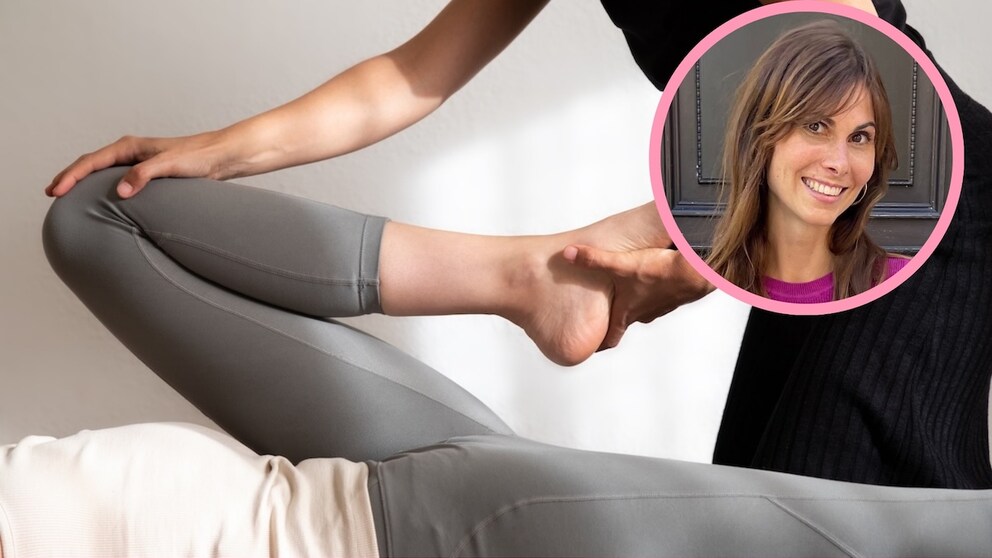
What lies behind “assisted stretching,” what it promises, and what it actually delivers—yoga instructor Nina Ponath wanted to find out. She was curious and tested this special stretching workout. She reports on this experience for FITBOOK.
Ever heard of “assisted stretching”? I hadn’t, until I recently saw an ad for it in my emails. This type of therapist-assisted stretching is apparently the big new wellness trend in major cities. No wonder, since we spend way too much time sitting, and our bodies retaliate with tension, stiffness, and the feeling of not being properly mobile anymore. Following the motto “After a long day at the desk, your back feels like a board,” “assisted stretching” aims to restore mobility.
Instead of struggling through complicated stretching exercises alone, with assisted stretching, you place your body in the hands of trained therapists. It’s comparable to a passive yoga session where someone else does the work—a real feel-good experience for stressed city dwellers.
What is Assisted Stretching?
In short: Someone else stretches you. A professional moves your joints through their full range of motion, guides your muscles into stretches you could hardly maintain on your own, and alleviates the fear that “something might snap.” The technique originates from physical therapy but has long since made its way into lifestyle studios. The goal is optimal mobility—not just passively, but in a way that allows you to maintain the new level of movement for as long as possible.
It sounds like wellness, and it partly feels that way, but its effect is more effective than any half-hearted stretching session you might lazily perform on your yoga mat at home after a long day. The professional support allows for much more precise work on deep-seated fascia and shortened muscle chains.
My Personal Experience with Assisted Stretching
I admit: I’m flexible. A former ballet student, now a yogini: hip openers and the like are usually no problem. That’s precisely why I consciously choose not one of the big chain studios that handle stretching like an assembly line. I opt for a small, personalized offering in Hamburg, where the therapist works alone and appointments are only made by personal arrangement.
As I lie down on the treatment table, my first thought is: “Okay, this will be like a gentle, very passive massage.” Let me reveal this much: It was much more intense.
My stretching therapist greets me with the note that the session goes “from head to toe.” And he means it literally. With calm but firm movements, he guides my legs, turning them in directions that feel familiar yet new. He repeatedly urges me: “Relax, I’ll do the work.” That’s surprisingly difficult, as the body tends to unconsciously resist. But as soon as I manage, I immediately notice this effect: I can’t reach this on my own.
He explains to me that this is the crucial point: “Alone, you eventually hit your ego limit or the pain threshold you don’t want to impose on yourself. We give that little extra push and hold the stretch longer to give the muscle time to yield.” And this extra push is held much longer—far longer than you could on your own. You become aware of your personal issues. For me, as a runner, it’s typically the shortened hamstrings (back of the thighs) that need more attention.

Why You Should Definitely Try This Yoga Exercise

BJJ black belt holder: “This is what Brazilian Jiu-Jitsu does to your personality”
Where Does Yoga End and Assisted Stretching Begin?
The basic feeling is not unlike yoga: it’s about letting go, breathing, stretching, and repeating. The focus is entirely on the moment.
The big difference, however, is the relinquished responsibility. In yoga, I am the actor who decides how deep to go. In Assisted Stretching, I am the recipient who surrenders to professional guidance. This is relaxing on one hand, but also a challenge: You must absolutely trust your therapist and completely relinquish control. This passive training leads to an active effect, resulting in more freedom of movement and fewer everyday tensions.
For me personally, there’s a catch: the effort. Driving somewhere, keeping an appointment, surrendering, driving back—while my yoga mat lies at home like my loyal dogs… No, thanks. I know I won’t stretch as effectively alone as with help, but I also know: practicality beats perfection.
If you have little time in your daily life, you should ask yourself whether you can maintain regularity or if you want to treat yourself to assisted stretching occasionally as a highlight.
Who is Assisted Stretching Suitable For?
For everyone who…
- is ineffective, impatient, or too ambitious when stretching.
- wants to improve their flexibility without risking pain.
- engages in sports and needs more range or flexibility.
- likes it when someone else takes over—passive training with an active effect.
However, it is not suitable for people like me, who are impatient, hate long commutes, and prefer to spontaneously jump on the mat rather than keep regular appointments.