


November 12, 2025, 8:58 pm | Read time: 5 minutes
Currently, there are over 600 new COVID-19 infections per day in Germany.1 Although most affected individuals recover well, around 5 to 10 percent of patients suffer from long COVID symptoms afterward. A recent study shows how a specific type of training can provide relief.
Using Strength Training Against Long COVID
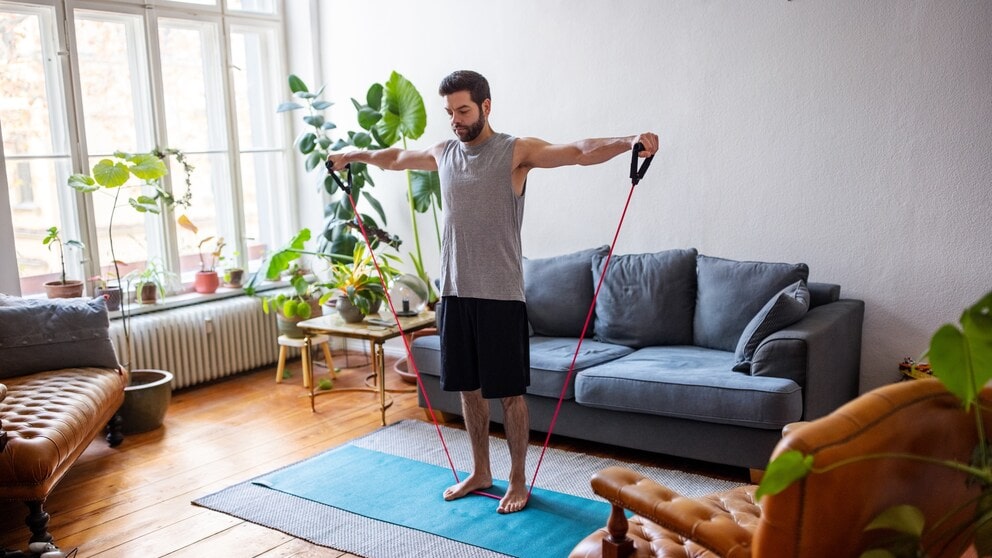
Scottish researchers have found in a study that strength training, in particular, can improve the physical and mental well-being of people with long COVID.2 It could be a potential therapy approach against the often months-long suffering of those affected. Reliable figures on long COVID cases are scarce, as there is no primary diagnosis of long COVID.3 By the end of 2024, it was estimated that there were six-figure numbers of affected individuals in Germany alone, according to the German Bundestag. According to the Robert Koch Institute and various studies, about five to ten percent of people with a previous SARS-CoV-2 infection develop long COVID.4 Therefore, it is crucial to develop effective therapies. However, there are several considerations to keep in mind, as the researchers explain in the study evaluation.
How the Study Was Conducted
The study was conducted under the leadership of the University of Glasgow in Scotland, in collaboration with the University of Dundee and three hospitals in the country. It included 233 patients who had been diagnosed with a COVID-19 infection within the 12 months prior to the start of the study at a regional health facility or hospital and who had since suffered from long-lasting symptoms (long COVID). There were 146 female and 87 male participants, with an average age of 53.6 years. The study participants were then randomly divided into two groups.
- The first group (117 participants) underwent personalized strength training in addition to the usual long COVID treatment.
- The second group (116 participants) did not undergo strength training but received the same usual treatment for symptoms as Group 1.
At the beginning of the study, researchers assessed each participant using the so-called “Shuttle Walk Test.” After the three-month training phase, all participants were reassessed using the same criteria. The Shuttle Walk Test measures physical performance by having a person walk or run back and forth on a 10-meter track. The test subject receives an acoustic signal that dictates the walking pace, which increases every minute. The test ends when the person is completely exhausted or can no longer reach the turnaround points of the 10-meter track quickly enough.
Training Program Showed Significant Improvement
The result after the three-month training period was impressive. Participants in Group 1 were able to walk 83 meters more than at the beginning of the study. Participants in Group 2 could only walk 47 meters more. On average, long COVID patients who underwent strength training were able to cover about 36.5 meters more distance in the test than participants without a training program. Not only that, but Group 1 also performed better in other examined factors thanks to the strength training. These included perceived quality of life, anxiety, depression, and grip strength.
“Our study shows the benefits of strength training for recovery after COVID-19 and suggests that people suffering from persistent symptoms after a COVID-19 infection could benefit from this type of training,” commented lead author Professor Colin Berry on the results. According to him, various studies since 2020 have shown that long COVID can significantly impact quality of life, affecting both mental and physical health. The current study could help develop better treatment methods.

Long-Term Effects of COVID-19: Recovered Patients Struggle to Differentiate Certain Memories

8 Different Trajectories Long COVID Can Take
Limitations of the Study
Although the study shows that strength training can positively influence the recovery of long COVID patients, making general recommendations is difficult. The training was individually tailored to each patient’s performance level. For example, bedridden patients trained while lying down. Participants in the recovery phase could perform exercises sitting or standing, depending on their condition. Additionally, upper body exercises were always performed first, followed by lower body exercises in the third week. Therefore, in practice, professional supervision would likely be necessary to optimally tailor the training to the patient’s condition.
“The exercises were designed to be safe, simple, and easy to perform wherever and whenever it was most convenient for the participants, meaning they can easily be extended to a larger group of people with long COVID,” explained Professor Stuart Gray, who co-developed the training program. Since long COVID patients exhibit varying degrees of symptoms and performance levels, the training program must be individually tailored. However, it remains unclear whether endurance training and other exercises would achieve similar success as strength training. Those suffering from long COVID should consult their treating physician for advice.
Could Endurance Sports Also Help with Long COVID?
Based on the study, Professor Berry, who was involved in the research alongside Professor Gray, also recommends tailored strength training programs as therapy for long COVID patients. In response to FITBOOK’s inquiry, he cautioned that he advises patients not to overexert themselves. They should “not use weights that exceed their individual strength.” The focus should be on strength exercises that are manageable and not overwhelming.
Additionally, Professor Berry considers it possible that endurance training could have positive effects on the well-being of long COVID sufferers. On the other hand, it cannot be ruled out that it could have negative effects. “Endurance training can lead to discomfort after the workout and be counterproductive, making some people feel less well,” he explained to FITBOOK.
In the present study, the effect of endurance training was not examined. As Professor Berry explained to us, he and his team focused on strength training because it is feasible for most people, whereas this is often not the case with cardio. Strength training is also easy to implement, adaptable to individual fitness levels, and can be done at home.