

October 6, 2025, 2:55 am | Read time: 4 minutes
Everyday life doesn’t always leave time for a lengthy workout. Busy individuals can rejoice over a new fitness trend: microdosing. It fits into any daily schedule and is said to be effective in keeping you fit. FITBOOK author Desirée Oostland spoke with a sports physician about the benefits and effects of fitness microdosing.
What Is Fitness Microdosing?
Fitness microdosing involves a few quick sessions spread throughout the day: a real way to stay fit without having to endure hours at the gym! The key lies in incorporating micro-movements or micro-workouts throughout the day. In other words, instead of training for one or two hours straight, you could incorporate five minutes of movement more frequently during the day.
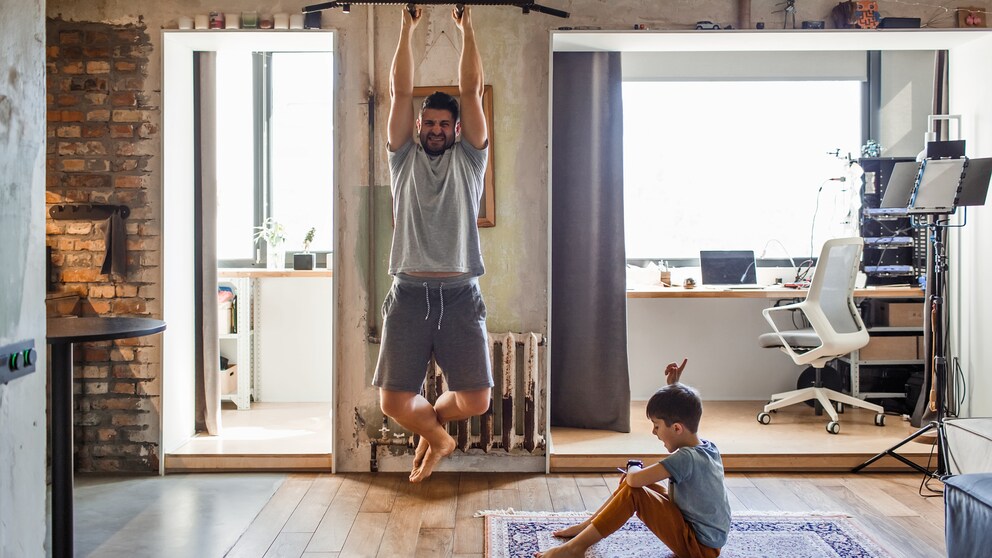
Whether it’s a 20-minute brisk walk during lunch, sit-ups or squats while watching a movie in the evening, or using the (long-ignored) pull-up bar every time you go to the kitchen. Or taking the stairs instead of pressing the elevator button. This integration of moderate-intensity exercises in small but consistent intervals can be very effective and bring significant health benefits in the long run—especially compared to the alternative of completely skipping exercise due to time constraints.
We asked Prof. Dr. Wilhelm Bloch about microdosing. He is a sports physician and professor at the German Sport University Cologne. “It makes sense to do small units of physical activity throughout the day,” he explains. “Small ‘doses’ of physical activity initiate adaptation processes in the body. It’s less about equating the sum of a sporting activity but rather about initiating corresponding adaptation processes. For example, microdoses can have a higher effect with various loads, such as jumps for bone density.
Benefits of Fitness Microdosing
Research shows that “microdosed workouts,” whether it’s high-intensity interval training, strength, or circuit training, are beneficial for personal fitness.1 The short and intense training sessions have a proven positive impact on maximum oxygen uptake (VO2max). A higher VO2max is generally associated with better cardiovascular health and increased well-being. These everyday movements can even make a difference in weight loss and help achieve a calorie deficit.
Prof. Dr. Wilhelm Bloch sees the advantage of micro-workouts, particularly in their integration into daily life. However, microdosing doesn’t yield success in every area, he says: “Microdosing is an alternative, even if not all processes can be adapted through microdoses.” Micro-workouts are not optimal for increasing fat metabolism—”muscle performance can be increased alternatively,” says the expert.
Additionally, several small exercises can be more sensible for some people than long, intensive training sessions and reduce the risk of injury: “Stimuli set during sports often lose their effect during longer exertions, and a break is needed to increase the effect again. For example, jumps for bone density. Furthermore, tissue and organ overloads can be avoided through continuous stress,” explains the sports physician in response to FITBOOK’s inquiry.

Boost Your VO2 Max with the Right Workouts

Walking continuously or at intervals – which burns more calories?
Important to Note!
For “microdosed workouts” to be fully effective, intensity is crucial. Muscles only grow when confronted with a new stimulus—such as increased load, longer duration, or additional weight. This aspect is particularly important for mini-workouts.
However, one should also be aware of the limits of microdosed training. Those training for a long hike, a bike tour, or even a marathon need more extended sessions. Joints, endurance, and muscles must be specifically accustomed to the strain of such distances.
And longer sports sessions can also be positive for the psyche. For instance, a moderately intense one-hour workout can significantly alleviate symptoms of anxiety and depression.2
Micro-Workouts: Practical Exercises for Everyday Life
So how do you integrate microdosed training into daily life? Let’s return to the (often ignored) pull-up bar. Some people have wedged one of these bars into the door frame, but don’t use it very often. How about doing a few pull-ups every time you walk past the bar? It’s important that you do as many pull-ups as you can manage in one go—whether that’s two or twenty depends entirely on your fitness level. Stick to this, and you can confidently skip the gym while still strengthening your muscles and keeping your cardiovascular system healthy.
But there are other ways to turn the trend into a daily exercise routine. It’s important that the exercises encompass basic daily movements: walking, squatting, lunging, pulling, and carrying. This could be a 20-minute (but brisk) walk during lunch, squats and lunges in the office or while watching a Netflix series, some stretching exercises after work, or squats while brushing your teeth. Those with more time and already high fitness levels can use small time windows for more intense sessions, such as 20 minutes of running with intervals or additional high-intensity exercises.