


May 20, 2026, 1:30 pm | Read time: 4 minutes
Depression can strike anyone unexpectedly. That’s why it’s crucial to recognize early warning signs and know the indicators. Researchers have now discovered that grip strength may be an indicator of depression risk.
“Whether someone becomes depressed or not is related to predisposition,” explained Prof. Dr. Ulrich Hegerl, a specialist in psychiatry and psychotherapy and chairman of the German Depression Aid Foundation, in an earlier FITBOOK article. And there are apparently indications of who is at higher risk of developing it. Researchers have now found that grip strength could be an indicator of depression risk.
Weak Grip Strength Apparently Linked to Depression Risk
A 2025 study already showed that overweight people with higher grip strength have a lower risk of serious illnesses (FITBOOK reported). Now, an international study with data from nearly half a million people shows that grip strength also indicates something about depression risk.1 Apparently, people with weak grip strength have a higher risk of developing depression.
As the researchers explain in their meta-analysis, there were already several individual studies suggesting that higher hand grip strength is associated with a lower risk of depressive symptoms. However, the overall findings were not clear. Therefore, the researchers evaluated the existing study data: They examined twelve different cohorts with a total of 497,336 participants. The average age of the participants was around 61 years, and about 54 percent were female.
Also interesting: How important is muscle failure for muscle growth?
A Simple and Cost-Effective Method to Predict Depression?
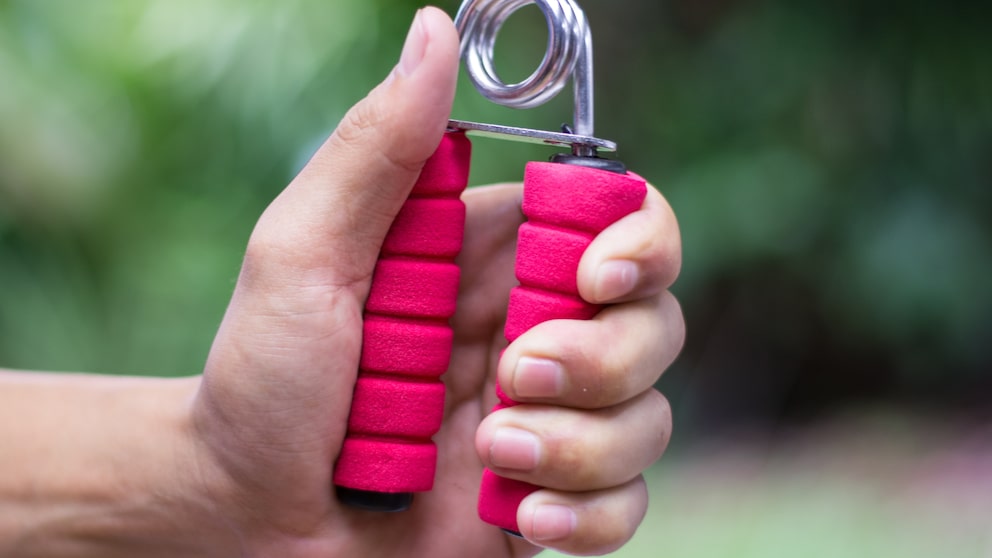
The goal was to investigate the relationship between hand grip strength and the occurrence of depressive symptoms or depression, as well as to identify possible moderators of this relationship. Common methods for diagnosing and predicting depression are not available to many people. They are complex and associated with higher costs. Therefore, the scientists wanted to identify a cost-effective indicator to predict the risk of depression using a simple method. The great advantage of grip strength is that it can be quickly, easily, and inexpensively determined with a small handheld device.

Voice May Indicate How Quickly the Body Ages

Study Finds Possible Reason Why Girls Are More Prone to Depression Than Boys
What the Data Analysis Revealed
For the meta-analysis, only cohort studies with a duration of at least one year were selected. Grip strength was measured using a hand dynamometer. Participants who were already suffering from depression at the start of the studies were excluded to ensure that the onset of depression was captured during the investigation.
The data analysis showed that weak grip strength serves as a silent marker for depression. People with weaker grips were about 26 percent more likely to develop depression over their lifetime. The relationship between grip strength and depression proved to be very consistent and was not influenced by age, gender, or smoking habits. However, the results do not mean that weaker grip strength necessarily leads to depression. The results merely indicate that lower grip strength can serve as a useful warning sign that a person may be more susceptible to depression in the future.
The researchers emphasize that while the relationship is statistically significant, its clinical significance is relatively low. This means that although the established relationship exists mathematically, it is of little importance for actual diagnosis.
Additionally, the researchers found that studies that followed participants over longer periods showed a slightly stronger relationship, even though the effect remained small. Nevertheless, these results suggest that grip strength could be a potential indicator of general health and depression risk, according to the responsible scientists.
That grip strength could reveal more about health than previously thought is also observed by FITBOOK Editor-in-Chief Nuno Alves, who addresses this topic in his book “Highway to Health – In 7 Steps to a Healthy Long Life”, set to be released on January 4. “Low grip strength is associated with a higher risk of mortality in studies,” he explains. “Those with strong hands are likely more physically capable.” Therefore, grip strength is more of a general marker for physical fitness.
Limitations of the Study
The study’s results raise some questions. For example, it would be necessary to define what constitutes healthy grip strength at different ages. A 30-year-old has different values than a 60-year-old. Additionally, the average age of the participants was relatively high at 61 years. So, is grip strength only an indicator of depression risk in older people, or do the relationships also exist in younger people, such as those aged 20 to 30? And, of course, the question of why grip strength says something about mental health needs to be clarified. The weak hand is not the cause of depression but rather a reflection of overall physical resilience. Further research is needed to better understand all these relationships and develop a practical early warning method for depression.