

August 9, 2025, 1:54 pm | Read time: 3 minutes
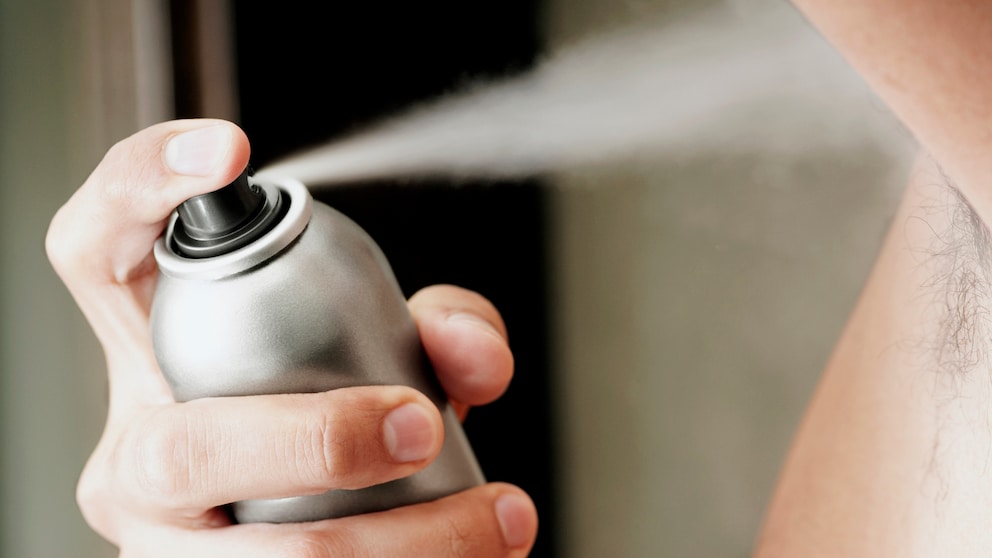
Whether it’s roll-on, stone, cream, or spray, deodorants come in many forms. But the spray form has its pitfalls. FITBOOK spoke with pharmacist and health expert Steffen Kuhnert about this.
How Harmful Are Propellants in Deodorants?
Volatile Organic Compounds—abbreviated as VOCs—are the compounds added to personal care products for atomization, as preservatives, or to enhance fragrances. These substances are considered precursors to harmful fine dust and are also involved in ozone formation. Is this a reason to avoid deodorant sprays?
Deodorants and hairsprays belong to the aerosol group—they release fine liquid droplets that disperse in the air. “This mist can be inhaled through the mouth and nose. Particularly small particles (under 5 micrometers) can penetrate deep into the respiratory tract and cause damage,” explains expert Kuhnert in conversation with FITBOOK.
Symptoms can include hypersensitivity reactions, respiratory irritation, and breathing difficulties, as well as headaches, fatigue, and sleep disturbances. However, a final assessment of the propellants is still pending, according to the expert: “Propellants based on hydrocarbons like propane, butane, and isobutane are considered health concerns. Propellants such as dimethyl ether are rated better,” says the expert.
Higher Consumption
Another disadvantage of sprays is the fact that consumption is generally higher than with a deodorant stone or roll-on. When sprayed, a significant amount ends up in the air rather than directly on the sweat pores. The consequence: Spray cans are quickly used up, leading to increased consumption, which costs money and produces more (plastic) waste. However, one advantage should not be overlooked: Because deodorant sprays do not come into direct contact with the skin, they are generally considered more hygienic than their solid counterparts.
Cautious Reassurance for Mineral Oil in Deodorant Sprays
The BfR concluded in its February 2018 statement that highly refined mineral oils used in cosmetics do not pose health risks when applied to the skin, according to current scientific knowledge.
Even for lip care products, where some may be ingested, the BfR sees no danger as long as the mineral oils used comply with Cosmetics Europe recommendations and are medium to high viscosity. The potentially ingested amount remains well below the acceptable limit (ADI).1
Are Long-Term Damages from VOCs to Be Feared?
Steffen Kuhnert cautiously comments to FITBOOK: “Long-term damages from VOCs are known, but it should be noted that these do not only originate from cosmetic sprays; countless sources—including natural ones—are also responsible.”
He continues: “The concern with cosmetic products, including cleaning agents, lies in indoor emissions.” However, he is not aware of any direct health damage from using deodorant or hairspray: “Ultimately, it’s the sum of all emissions we come into contact with daily,” says Kuhnert.

How Harmful Are Deodorant Sprays Really?

Beef Tallow in Skincare–Is the Hype Justified?
How Can the Risk of Deodorant Sprays Be Minimized?
In general, it’s advisable to ventilate the room well where products like sprays or pump sprays are used. When selecting sprays, one should try to avoid those with health-concerning propellants. Opt for better-rated products, according to the expert. Kuhnert also offers a practical tip: Apps like ‘CodeCheck’ allow consumers to scan and examine the ingredients in detail. For cleaning products, he recommends looking for the ‘Blue Angel’ environmental label.
Expert’s Conclusion
For deodorant sprays, the expert recommends alternatives like roll-ons or deodorant creams. He doesn’t necessarily advise against hairsprays, but suggests being cautious when purchasing and carefully reviewing the list of additives.
Kuhnert views the noticeable trend of using significantly more spray products in households critically. He recommends a more restrained use.