


August 31, 2026, 8:04 am | Read time: 2 minutes
More than 35,000 people die annually in Germany from sepsis, the most severe form of an infection. If left untreated, blood poisoning is always fatal. How you can recognize the warning signs yourself–and why quick help saves lives.
Currently, Norway’s King Harald is being treated for sepsis at Oslo’s Rikshospitalet. In Germany, according to the Patient Safety Action Alliance, one person dies from sepsis every six minutes.
Recognize Blood Poisoning in 4 Simple Steps
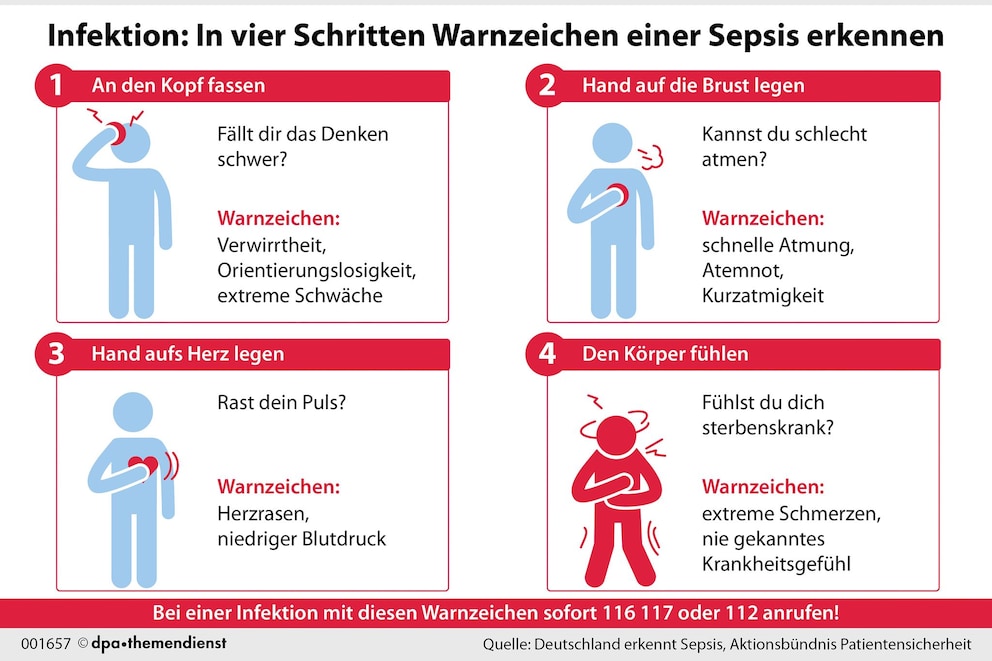
The #DeutschlandErkenntSepsis campaign has developed a mnemonic to help ensure that the symptoms of sepsis are not overlooked in severe infections, either in oneself or others:
- Touch your head: Is thinking difficult? Confusion and disorientation can be warning signs.
- Place your hand on your chest: Is breathing difficult? Shortness of breath, rapid breathing, or difficulty breathing are critical.
- Place your hand on your heart: Is your pulse racing? A rapid heartbeat or low blood pressure are also signs.
- Feel your body: Do you feel gravely ill? Unexplained severe pain or an extreme state of illness should be alarming.
Sepsis is an acute emergency. If one or more of these symptoms occur with an existing infection, emergency services (911) or the medical on-call service (116 117) should be contacted immediately.
Unsure? Online Check Can Help
On its website, the #DeutschlandErkenntSepsis campaign offers two checklists for identifying risk factors and signs of infection. You can select factors and indicate symptoms, then receive an assessment that can help in recognizing sepsis:
- Here is the checklist for adults.
- Here is the checklist for children.