


February 23, 2026, 4:11 pm | Read time: 8 minutes
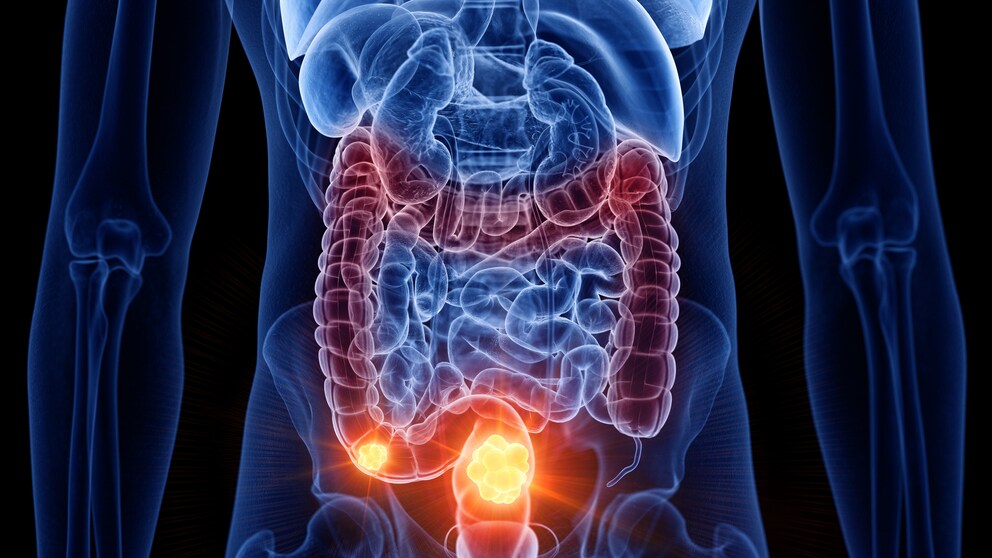
Cancer, in general, is associated with great fear of pain and suffering. In the case of bowel cancer, which often causes no symptoms for a long time, shame and taboo also contribute to the fact that it is often only discovered at an advanced stage. The chances of survival are then poor. None of this need be the case, says oncologist Dr. Rainer Lipp to FITBOOK. He makes a plea for proper screening, which can prevent bowel cancer from developing in almost all cases.
What do you think of when you hear the term “cancer screening”? It is often used as a generic term for all measures that have to do with cancer examinations. In Germany, for example, there is the cancer screening examination for men. This is actually a palpation examination for the early detection of prostate cancer. In fact, the two terms are somewhat blurred in the public eye. However, early detection measures and preventive measures are two completely different things. The latter is ingenious, to say the least. You just have to use it!
Overview
- Two Groups of Cancers
- “It’s Even Better to Prevent a Tumor From Developing”
- Maximizing Bowel Cancer Risk Reduction – Studies Demonstrate the Impact of Screening
- Colorectal Cancer Screening: Your Entitlements
- Colorectal Cancer Screening Before the Age of 50 if There Are 2 to 3 Cases in the Family
- Can’t Find an Endoscopist for Screening – What Now?
- Early Detection of Colorectal Cancer: Oncologist Recommends Stool Blood Test
- Sources
Two Groups of Cancers
Cancers can be divided into two groups: One is about detecting them as early as possible. Roughly speaking, the earlier it is detected, the greater the chances of recovery. These types of cancer include breast cancer, lung cancer, prostate cancer, skin cancer, and stomach cancer. The other group of tumors (colon cancer, liver cancer, cervical cancer) can largely be prevented from developing. In the case of bowel cancer, the third most common type of cancer worldwide, this chance is particularly high. A decisive advantage in the fight for a long, healthy life.
First of all, it is important to understand that there are cancer examinations that “only” serve to detect carcinogenic diseases at an early stage—such as skin cancer screening for melanoma (black skin cancer) or the above-mentioned palpation examination for the early detection of prostate cancer—and examinations that can actually prevent cancer. Early detection is good and increases the chances of recovery. However, it isn’t a measure that can prevent the development of cancer, worth its weight in gold in comparison.
“It’s Even Better to Prevent a Tumor From Developing”
One person who believes that this aspect is not emphasized enough is Dr. Rainer Lipp. As Managing Director of the German Oncology Foundation, the specialist in haematology and oncology is committed to improving the treatment of cancer patients. In conversations with patients, one thing becomes clear to him again and again. He explains to FITBOOK: “Many don’t really know about the prevention aspect. I always have patients on my desk for whom an early examination would probably have prevented a lot of things.”
The doctor continues: “Detecting a tumor as early as possible is good. But it is much, much better to prevent it from developing.” The development of bowel cancer—whether in the colon (colon carcinoma) or rectum (rectal carcinoma)—can be avoided in almost all cases “if the precursors are removed as part of a screening colonoscopy”. For no other type of cancer does early detection offer such great opportunities. “With the right screening, bowel cancer would lose its horror,” says Lipp.
Maximizing Bowel Cancer Risk Reduction – Studies Demonstrate the Impact of Screening
In the case of bowel cancer, the precursors are polyps. Polyps in the bowel are benign growths of the intestinal mucosa. They usually develop unnoticed and generally cause no symptoms—but they can become malignant over time. The development of bowel cancer from polyps is a gradual process that can take years. If you have the polyps removed from the bowel every ten years (assuming you have any there, of course), you have “a good chance that the polyps will not develop into bowel cancer,” according to Lipp. “Some polyps have a high degeneration potential. By detecting and removing the precursors, I can reduce the risk of developing bowel cancer as much as possible,” says Lipp.
Large studies such as the “National Polyp Study” prove this. In this long-term study, patients were observed after the removal of polyps over an average period of 15.8 years. As a result, the removal of polyps significantly reduced the incidence of bowel cancer.1 A more recent study from 2023 supports these findings.2
It is easier to talk about high blood pressure or back pain than diarrhea, constipation, or blood in the stool. People are more likely to talk about skin cancer screening than colonoscopy. The lack of attention paid to bowel cancer is reflected in the figures. Bowel cancer is one of the most common forms of cancer worldwide. With around 54,000 new cases every year, bowel cancer is the third most common type of cancer in Germany after breast and prostate cancer. Ten percent die from it.
Colorectal Cancer Screening: Your Entitlements
Doctors can detect these polyps at an early stage through regular screening examinations, in particular a colonoscopy. This does not primarily look for cancer, but for the preliminary stages. In Germany, colonoscopy is a standard part of colorectal cancer screening. Men are currently entitled to this from the age of 50. If the results are inconspicuous, they can have it again every ten years. Women are only entitled to colorectal cancer screening from the age of 55, because statistically, they develop colorectal cancer later than men. The following applies to everyone: if there are any abnormalities, they are checked again earlier.
Studies have also shown this: The risk of developing bowel cancer remains increased after polypectomy (the name given to the removal of polyps). Especially in the first three years after the procedure. This underlines the need for closer monitoring in order to detect and treat possible neoplasms at an early stage.
Colorectal Cancer Screening Before the Age of 50 if There Are 2 to 3 Cases in the Family
Oncologist Rainer Lipp advises everyone to “definitely take advantage” of this statutory bowel cancer screening. Women from the age of 55, men from the age of 50. He emphasizes: “Have the screening done before the age of 50 if there have been two or three cases of bowel cancer in your family (grandparents, parents, or siblings).” The Felix Burda Foundation, which has set itself the goal of drastically reducing colorectal cancer mortality in Germany, provides a rule of thumb on its website that is easy to remember: “Your first screening colonoscopy should be ten years before the age at which a family member was diagnosed with colorectal cancer or colon polyps. If your relative was diagnosed with bowel cancer or polyps at the age of 55, you should have your first screening colonoscopy at the age of 45.”.3

Oncologist on Early Cancer Detection in Men: “Prostate Palpation Is ot Really Suitable”

Which Tests You Should Never Skip–and Which Additional Services Are Worth It
Can’t Find an Endoscopist for Screening – What Now?
Now you may be asking yourself: Colorectal cancer screening is great, but how can you find an endoscopist who can offer you an appointment promptly, given the current shortage of specialists in Germany? “That really is a problem, for which I can hardly see a comprehensive solution at the moment,” says Lipp. His tip: The appointment service of the 17 associations of statutory health insurance physicians across Germany could be a chance. Doctors “have to” post free appointments here. This is the intention of the Appointment Service and Care Act.4
As a supplement to the important medical check-ups, you can also do a lot for your intestinal health through your diet. The consumption of yoghurt, for example, has a positive effect on the risk of bowel cancer. An increased intake of calcium has also been shown to be beneficial. And very important: fiber, 30 grams per day! The bowel also benefits if you eat less processed food and rarely eat red and processed meat.
Early Detection of Colorectal Cancer: Oncologist Recommends Stool Blood Test
In addition to the gold standard of bowel cancer screening, there is a very inexpensive way of detecting bowel cancer at an early stage: with an immunological test for hidden blood in the stool. From Lipp’s point of view, such tests are very effective “because they specifically look to see whether there is a source of bleeding in the gastrointestinal tract, which then needs to be investigated further if necessary”. Such a stool test is not only easy to perform, but it also gives a good indication of possible blood in the stool, which can be a clear sign of bowel cancer. People in Germany are also legally entitled to these tests: every year for everyone between the ages of 50 and 54. Due to the statistically higher probability of developing the disease, there is a different regulation for men: from the age of 50, they can choose between an annual test or two colonoscopies at least ten years apart.
If you don’t fit into this framework, you can get such stool tests (iFOBT or FIT test) yourself from the pharmacy for around 15 euros. The sample is collected at home and sent to a laboratory, with certain tests offering the option for at-home analysis.