


October 2, 2026, 12:15 pm | Read time: 6 minutes
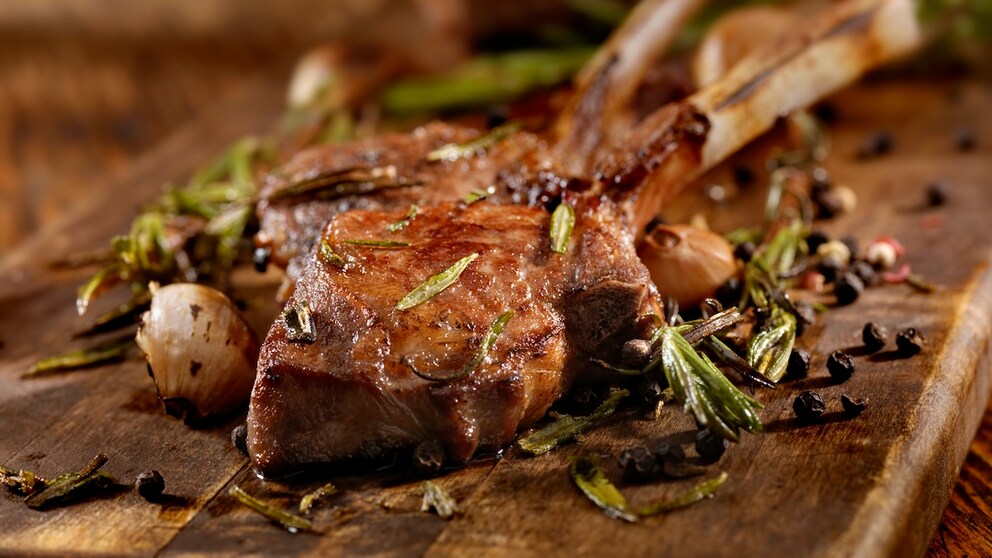
For years, many nutrition experts have advised against consuming red meat, or at least strongly limiting its intake. A new study provides another good reason, as a certain substance in red meat may promote diabetes.
The consumption of meat remains a controversial topic. While some appreciate meat as a high-quality source of protein that provides iron, selenium, zinc, and B vitamins, others associate it with an increased risk of certain diseases. The German Nutrition Society (DGE) points out that a high intake of red meat—such as beef, pork, lamb, and goat—and especially processed meats can increase the risk of cardiovascular diseases and colon cancer.1 Therefore, the DGE recommends consuming no more than 300 grams of meat and sausage per week. This recommendation is now also supported by a large French long-term study, which found an increased risk of type 2 diabetes, especially when people consumed a lot of red meat.
How did the study determine the link between meat and type 2 diabetes?
First, it should be noted that these are preliminary results from an observational study presented at the annual meeting of the European Association for the Study of Diabetes (EASD) in Milan (September 28 – October 2, 2026). Nevertheless, this does not diminish the findings of the French researchers from Sorbonne University in Paris.
In their study, the researchers examined the link between the substance Neu5Gc found in red meat and dairy products and new cases of type 2 diabetes among 89,953 adults from the NutriNet-Santé study. This is a long-term French prospective observational cohort study that investigates the relationships between diet, lifestyle, and health. The average age of the participants was 42 years, and 79 percent of them were female. Importantly, none of the participants had cancer or type 2 diabetes at the start of the study.
All study participants had to complete three 24-hour dietary records. From these, the researchers could estimate their daily Neu5Gc intake using a database that indicates the Neu5Gc content of various foods. The detailed analysis included red meat from beef, lamb, pork, rabbit, goat, and game. Processed meat products such as bacon, sausage, and cured meats were recorded as a separate food group. Dairy products were also analyzed separately.
During the follow-up period of about seven years, 966 new cases of type 2 diabetes occurred.
What role does Neu5Gc play?
The researchers explain in their study that most mammals naturally produce a sugar called Neu5Gc. Humans have lost this ability due to a genetic mutation in the CMAH gene. This carbohydrate is found in red meat, particularly beef and lamb, and to a lesser extent in dairy products.
When we consume these foods, the animal Neu5Gc is absorbed and metabolically incorporated into human tissue, where it acts as a foreign molecule, known as a xeno-autoantigen.
As it is a foreign body, the immune system forms antibodies against it. The researchers point out that the resulting chronic immune activation (xenosialitis) has already been linked to cardiovascular diseases and cancer in other studies. However, there has not yet been a large-scale prospective study to investigate whether Neu5Gc can trigger chronic inflammation and promote type 2 diabetes.
This is what the data analysis showed
For the data analysis, participants were divided into five equally sized groups (quintiles) based on their estimated Neu5Gc intake. The groups were also separated by gender. The risk of type 2 diabetes in each group was then compared to that of the group with the lowest Neu5Gc intake.
The researchers came to the following conclusions:
- Individuals in the group with the highest Neu5Gc intake from meat had a 63 percent higher risk of type 2 diabetes compared to those with the lowest intake.
- This result remained even after the researchers adjusted for factors such as age, gender, physical activity, dietary quality, smoking status, and existing preconditions.
- Additionally, the link between Neu5Gc intake and type 2 diabetes was present in both men and women.
Men with the highest risk for type 2 diabetes consumed an average of 97 grams of red meat per day or 136 grams including processed meat. For women, the corresponding values for high risk were 73 grams of red meat or 96 grams including processed meat.
Individuals with the lowest risk consumed an average of five grams of red meat (men) or 0 grams (women).
Also interesting: Pancreatic cancer – consumption of this meat increases risk
How Meat Increases Cancer Risk–and What Surprises About Poultry

The Diet That Can Provenly Reduce Cancer Risk
Influence of overweight is minor–the source is crucial
The researchers estimate that overweight accounts for only about 13 percent of the link between Neu5Gc from red meat and type 2 diabetes. This suggests that mainly biological mechanisms are at work here, independent of weight gain. The researchers explain that these are likely inflammatory effects on insulin-producing cells and insulin-sensitive tissue.
It is also important to note: The analysis showed no link between Neu5Gc from dairy products and type 2 diabetes. This result is consistent with the fact that cow’s milk contains less Neu5Gc compared to red meat like beef and lamb, and dairy products are usually consumed in smaller portion sizes.
“Taken together, these results suggest that the link between Neu5Gc and type 2 diabetes may depend on the specific food source: Neu5Gc from meat showed a stronger association with the risk of type 2 diabetes than the total amount of Neu5Gc consumed through diet,” said study leader Dr. Leopold in a press release.2 “There may be differences between the sources, or other components of red meat may also contribute to this link,” the scientist explains.
Limitations of the study
The researchers emphasize that further investigations are needed to understand the exact mechanisms behind the influence of red meat on the risk of type 2 diabetes. In further studies, they aim to clarify how Neu5Gc and other components of red meat, such as heme iron, are related to type 2 diabetes.
The authors also note that the results are preliminary. The exact estimates may change after the analysis is completed and scientifically reviewed. As it is an observational study, it cannot be determined what specifically caused the increased risk of type 2 diabetes, although there are clear indications of the amount of Neu5Gc consumed. Additionally, the estimation of Neu5Gc intake based on dietary records and the lack of consideration for changes in food intake during the follow-up period may have led to some measurement errors.