


February 5, 2021, 10:51 am | Read time: 4 minutes
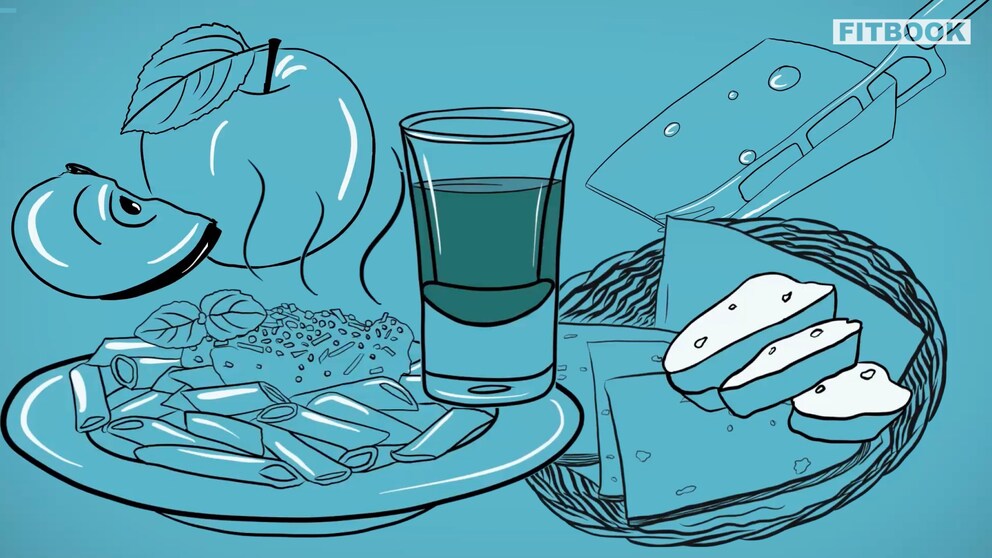
Frozen food doesn’t spoil, dark bread is always healthier than light bread, and most vitamins are in the peel of fruits and vegetables… There are many myths about food. But that doesn’t mean they’re true. Which ones are unfounded–and which are not? FITBOOK has investigated eleven classic myths.
There are many myths about food–but that doesn’t mean they’re true. “The reason for nutrition myths is often uncertainty, such as whether you can eat cheese rind,” says Harald Seitz from the Federal Center for Nutrition. However, some legends do have a kernel of truth.
Contents
Nutrition Myth 1: You can’t eat cheese rind
Let’s start with cheese rind: Can you eat it or not? It depends on how the rind was formed. “Naturally matured and untreated cheese rinds are edible and provide a special flavor, as with blue cheese,” explains Seitz. Artificial cheese rinds made from wax or plastic, however, are not suitable for consumption. “In this case, there must be a note on the packaging.” So: It’s best to always read the ingredient list on the packaging.
Also interesting: Which types of cheese have edible rinds?
Nutrition Myth 2: Dark bread is always healthier than light bread
This saying is perhaps even more persistent in popular belief: Dark bread is generally healthier than light bread. Can you say that across the board? “Whole grain foods keep you full longer and contain more nutrients than white flour products,” says Silke Restemeyer from the German Nutrition Society (DGE). And now comes the big BUT: Not every dark or grainy bread or roll is a whole grain product! “Rolls can also be made dark with malt extract and grainy with sunflower seeds.” And what about other grain products like bread, pasta, rice? The best choice for health is the whole grain variety. And of course, tolerance: If, for example, dark bread with lots of fiber causes stomach cramps and bloating, it’s not beneficial…
Also interesting: Constantly hungry? Then you should eat these 7 foods
Nutrition Myth 3: Salad in the evening disrupts sleep
What do you think of this saying: Salad in the evening causes digestive issues and disrupts sleep. Diploma Nutritionist Uwe Knop: “It depends. For those with a sensitive digestive tract who have difficulty processing raw food and indigestible fiber, an evening salad can make the night very uncomfortable: stomach pain, cramps, bloating.” However, if you have no issues after a bowl of salad in the evening and sleep well, you can eat salad “whenever you want.”
Also interesting: Surprise guaranteed – recipe for a delicious salad cake

How Diet Can Affect Menstruation–Positively or Negatively
Copper: Functions, Requirements, and Sources of the Trace Element
Nutrition Myth 4: Pasta after 6 p.m. makes you fat
Let’s talk about evening pasta: Do the abundant carbohydrates go straight to your hips? “Whether someone gains weight is primarily in the genes and not the time of day they consume carbohydrates,” says Knop. Additionally, numerous lifestyle factors play a role–such as lack of sleep, eating disorders, metabolic disorders, medication intake… And most importantly: “The overall energy balance over months to years.”
More nutrition myths in the video
The supposedly helpful digestive schnapps, vitamins that are said to be particularly abundant in the peel of fruits and vegetables–there are still several nutrition myths, and in the video above, we had these and others evaluated by our experts. Speaking of myths: There are also some wild theories circulating in the field of training that persistently hold their ground. FITBOOK has also shed light on these.