


June 18, 2025, 2:07 pm | Read time: 6 minutes
Can a single fruit improve heart health? A new study examined whether eating one avocado a day positively affects the cardiovascular system. Measured using the official “Life’s Essential 8” score from the American Heart Association. The result is surprising: While the overall score remained unchanged, individual health aspects benefited. FITBOOK nutrition expert Sophie Brünke explains what this means for our daily lives and diet.
A research team from Pennsylvania State University conducted an extensive clinical study on the effect of daily avocado consumption on cardiovascular health. The results were published in the Journal of the American Heart Association. The study is a side project of the so-called HAT Study (“Habitual Diet and Avocado Trial”) and focuses on the “Life’s Essential 8” score (LE8), a comprehensive measure developed by the American Heart Association to assess heart health. The study investigated whether a single dietary measure—namely, one avocado daily—can measurably improve this score. Is it worth reaching for guacamole more often?
Overview
Heart Disease is the Leading Cause of Death
Cardiovascular diseases remain the number one cause of death worldwide.1 Germany is no exception. According to the Federal Statistical Office, cardiovascular diseases were the leading cause of death in 2023, accounting for 33.9 percent.2
Score for Heart Health
The American Heart Association developed the LE8 score as a comprehensive tool to evaluate heart health based on eight categories:
- Diet
- Physical Activity
- Tobacco Use
- Sleep Quality
- Body Mass Index
- Blood Lipids
- Blood Sugar
- Blood Pressure
How Good is Avocado for the Heart?
The current study aimed to determine whether a single, easily implementable measure—eating an avocado daily—could improve the LE8 score. This score can range from 0 to 100, with values above 80 considered optimal. Researchers wanted to find out if such a targeted intervention could produce measurable changes and thereby promote heart health. Previous studies suggested positive effects of avocados on blood lipid levels and diet quality, but without considering the overall LE8 score.3 The study particularly targeted individuals with obesity, who are at increased risk for cardiovascular diseases.
Nearly 1,000 Participants Recruited
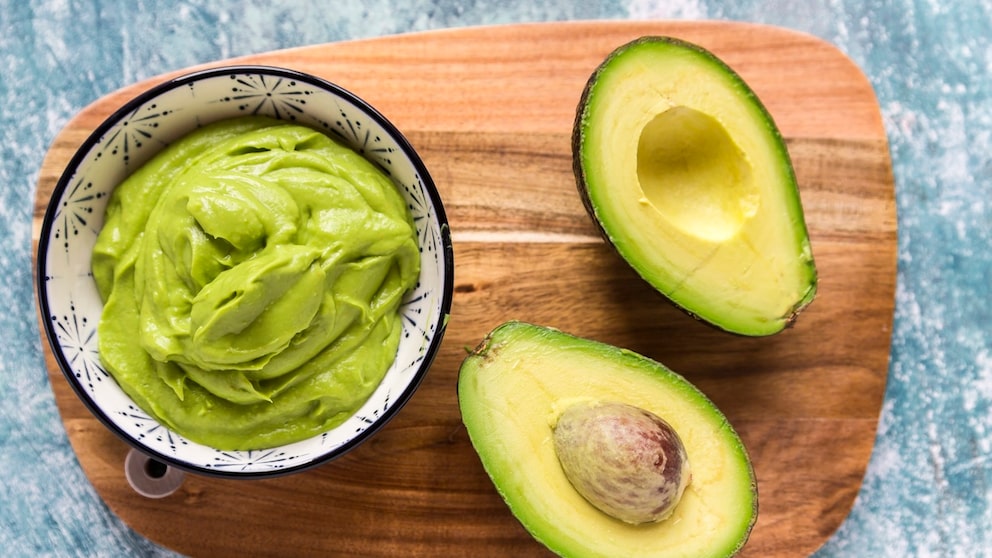
The HAT Study was a multicenter, 26-week, randomized controlled trial with parallel groups. A total of 969 adults with abdominal obesity (average age: 51 years, average BMI: 33) from four U.S. research centers were divided into two groups. The intervention group received a large Hass avocado (about 168 grams) daily, while the control group maintained their usual low-avocado diet.
The LE8 score was assessed at the start and after 26 weeks using standardized measurements and questionnaires. The evaluation of the eight components was conducted on a scale from 0 to 100 points. Additionally, data on visceral fat, blood lipids, inflammatory markers, blood sugar, and waist circumference were collected. Importantly, data on physical activity were only limitedly usable due to simplified recording, which was considered in a sensitivity analysis.

The Effect of Eating One Avocado Per Day on Cholesterol

The Ideal Breakfast to Protect Your Heart
Does Avocado Help Protect the Heart?
Daily consumption of an avocado over 26 weeks did not lead to a significant increase in the overall LE8 score compared to the control group. However, when the imprecisely recorded component “physical activity” was excluded from the score, there was a significant difference of 1.34 points in favor of the avocado group.
Three individual components improved significantly: diet (+3.53 points), sleep quality (+3.20 points), and blood lipids (+3.46 points). The remaining components, including BMI, blood sugar, and blood pressure, remained unchanged. In a subgroup analysis, an unexpected decline in the LE8 score was observed among Hispanic participants, driven by a decrease in reported physical activity. Otherwise, the change in the LE8 score was consistent across age, gender, and BMI groups.
Study Author Highlights Improved Sleep Quality
Dr. Kristina Petersen, study author and associate professor of nutritional sciences at Pennsylvania State University, comments on the results in the study’s press release. “Sleep is becoming an important lifestyle factor for heart health,” says the researcher. “This study encourages us to think about how diet—and foods like avocados—can contribute to its improvement. Cardiovascular health is influenced by many factors, and while no single food is a cure-all, some—like avocados—offer a range of nutrients that support heart health in many ways. This is an encouraging step in expanding the science around avocados and the potential benefits of their consumption.”
Conclusion
While daily consumption of an avocado over six months does not improve the overall cardiovascular health score (LE8), it shows positive effects on diet, sleep quality, and blood lipid levels. Individual measures can thus be part of a broader health-promoting strategy—but are not sufficient alone to achieve comprehensive changes. For significant improvement in heart health, multiple interconnected lifestyle changes are necessary.