


July 23, 2018, 2:54 pm | Read time: 5 minutes
It’s quite possible that after an extreme obstacle course race, you’ll need to soak in wound and healing ointment. To prevent ending up like our author, we’ve gathered tips from a pro for you.
They’re called Tough Mudder, Strongmanrun, Braveheart Battle, Xletix… Ever heard of them? These names hide extreme obstacle course races (also known as OCRs). The goal is to complete a set course, either solo or as a team, filled with numerous obstacles. You might have to plunge into ice-cold water, crawl through narrow tubes, and repeatedly welcome mud in all consistencies on your body. Some obstacles can only be overcome with mutual help. Otherwise, it’s not about the time. Everyone helps everyone. The concept is catching on, and OCRs are becoming increasingly popular as a sport: 4.2 million people worldwide participated in such events in 2017.
Don’t miss any FITBOOK topics – subscribe to our newsletter here!
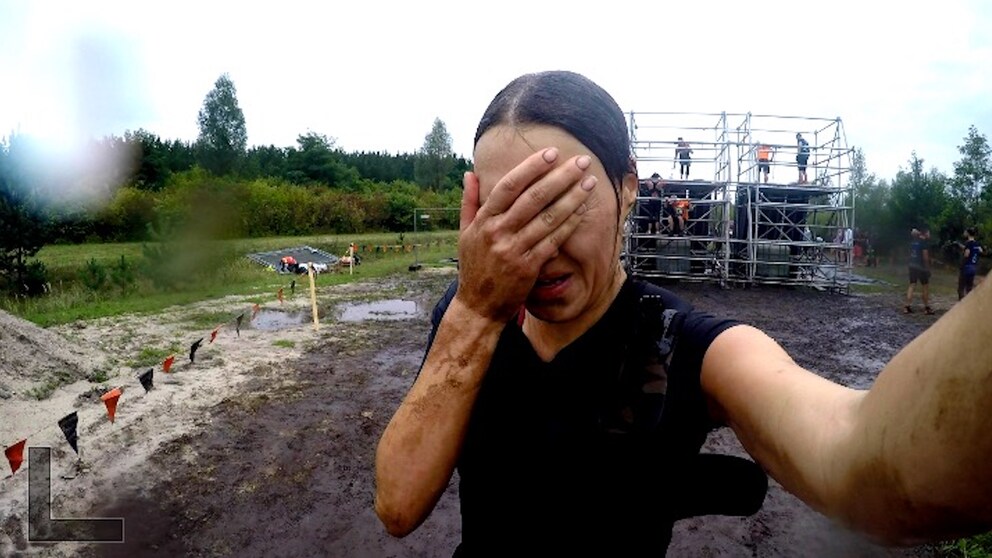
I was one of them. Spontaneously and completely unprepared, I started the full-distance Tough Mudder at the Lausitzring. Eighteen kilometers through the mud, pushing to the physical limit—that’s what I was up for. Somehow, my basic endurance (I jog regularly) would get me through. Plus, I had just completed a phase of intensive strength training with a personal trainer. What could possibly go wrong?
Well. I made it to the finish line. But it did go wrong. And very painfully, as you can see in the video above. Fortunately, I was wearing a helmet, so I got away with a mild concussion and a black eye. To ensure you and I are optimally prepared for our next obstacle race, I’ve brought in a pro. Trust me: His tips are truly invaluable!
Also interesting: How Bouldering Strengthens Mind and Body!
Advice from the Vice-Champion at World’s Toughest Mudder
Lucas Kempe (27) is a passionate and successful extreme obstacle course racer. The Berliner was vice-champion at the World’s Toughest Mudder in Las Vegas in 2015 and 2017 (where participants must complete as many rounds of eight kilometers and 24 obstacles as possible in 24 hours) and won the StrongmanRun three times—the last time in early July 2018. He is fascinated by the varied demands on the whole body and the associated versatile training at such events. “A marathon is monotonous—obstacle races, on the other hand, consist of many small sections, every part of the body is challenged, and I can always look forward to the next obstacle.”
Can Anyone Complete an Obstacle Race?
The good news: Basically, almost anyone can do it! BUT: To make it enjoyable, the body should be accustomed to being in motion for a longer period. As a rough guideline, the pro suggests “being able to run for an hour.” The best progress in running is achieved with three running sessions per week. Kempe advises a tempo training (such as ten times 200 meters uphill), a 30 to 45-minute easy run, and a longer one of 60 to 90 minutes. “Then you can increase the pace a bit each week and add five minutes to the long run,” explains the expert.
If you want to start untrained against this advice, you can adjust the pace a bit. Then it might be 90 minutes at a walking pace. And maybe not try EVERY obstacle… You can generally skip them. Yes, I know, that’s against the spirit, but in the end, everyone must seriously assess whether they are up to it.
For me, it was a mix of overconfidence “it’ll work somehow,” lack of concentration, and incorrect technique that led to the fall at the steep ramp. Maybe I let myself be pressured a bit by the other participants behind me. So: If in doubt, wait and watch how others tackle the obstacle. Then calmly decide if you want to take it on. There’s a difference between “just” falling into a water basin or taking a hard fall. That’s also why no participant is allowed on the grounds without signing a liability waiver.
Also interesting: 5 Tips for Running Beginners

Hyrox: What You Need to Know About the Fitness Trend

FITBOOK Reporter Steps Into the Cage With MMA World Champion
What Strength Exercises Can Help?
In addition to running, it’s advisable to strengthen the core muscles with strength and stabilization exercises. Kempe recommends a morning 5-minute routine right after getting up. “It takes a lot of effort at first, but it brings enormous progress and lets you start the day fit.”
His suggestion for such a mini-routine: Combine different planking variations (classic, side plank, up-and-down plank) with push-ups, dips, and sit-ups. Small things can also help a lot: Take the stairs instead of the elevator! Ride your bike to work. “I despair when I see people taking the elevator one floor up to the gym, only to stand on the stepper for 15 minutes. The best training is everyday life.”
To successfully tackle all obstacles, it’s also important to train grip strength—a factor I completely underestimated before my own race, but one that cannot be emphasized enough. Whether it’s the strenuous, firm grip of a thick rope while climbing or bars you hang from over a water basin, grip strength is key for many obstacles. “The best way to train it is with a pull-up bar, where you simply hang on a few times every day until you can’t anymore.” Additionally, you can take small grip strength trainers with you on the go.
Also interesting: Strengthen Core Muscles with Shrimp and Beetle