

August 6, 2025, 1:52 am | Read time: 4 minutes
Hybrid fitness models, Piloxing, Rucking–when it comes to fitness trends, there are constant innovations. And undoubtedly, many of the modern and sophisticated disciplines are effective. A study has now taken a look back at a “workout” practiced for around 3,000 years, focusing less on sweat and muscle gain and more on inner balance. Yet, it showed a remarkable effect on the body composition of obese young adults. FITBOOK author Laura Pomer presents the results in detail.
Study Tests Traditional Workout Against Obesity
Obesity (medical term: adiposity) poses an increasing threat to the health of the global population. The World Health Organization (WHO) already refers to it as an epidemic.1 For several years, China has been among the countries most affected. A 2018 survey at 50 Chinese universities found that 9.5 percent of students there are overweight or already obese.2 The increasing prevalence of this condition even among young populations is considered a worrying trend, closely linked to physical inactivity. This is noted in a recent study on the topic.3 Therefore, it is crucial to increase the level of physical activity among students. The study’s question was whether an ancient exercise concept could serve as an effective intervention against obesity among them: Tai Chi.
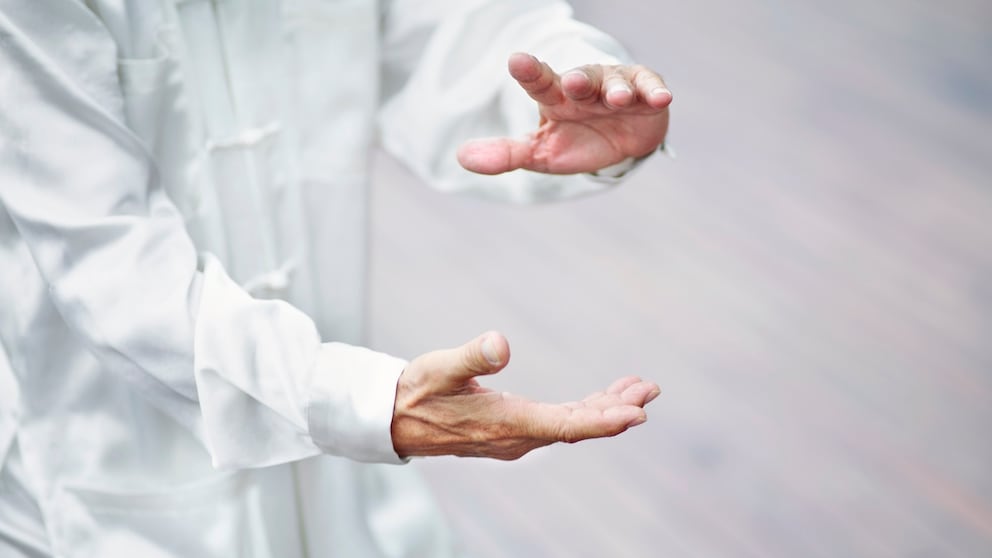
You probably don’t associate Tai Chi directly with a demanding workout to increase muscle mass. The martial art is more about a balance between body and soul. It involves slow movements that create a choreography and individual so-called images. You don’t necessarily break a sweat doing it. But perhaps this moderate approach could be the key to reaching young people with obesity. And above all, to improve the unhealthy body composition typical of obesity, which is health-threatening in the long run.
Course of the Study
Forty-six obese students participated in the study. They were on average 18 years old and had a body mass index (BMI) of 31.5 on average. More information on BMI classification can be found here. A significant majority of the participants, 84 percent, were male. The researchers divided all participants into two groups. Both groups trained three times a week over a period of 12 weeks. In the first group, Tai Chi was to be practiced regularly, while participants in the second group performed simple stretching exercises.
Before the start and after the end of the program, the researchers determined three specific physical parameters in the participants:
- the proportion of lean body mass
- waist circumference, and
- the VO2max value.
The latter provides information about the maximum oxygen uptake and is considered an important indicator of endurance performance. The researchers used a body analysis device and a tape measure for the measurements. They estimated the VO2max using a formula.
Also interesting: Stretching–when stretching is really useful and when it’s not

Turmeric Promotes Weight Loss in These Individuals

Training Methods That Are Especially Good for Bones
Tai Chi Increases Muscle Mass and Reduces Waist Circumference
In the evaluation, the researchers found noticeable effects on body composition in the Tai Chi group. The waist circumference of these participants had decreased by an average of 3.38 centimeters. Additionally, the proportion of lean body mass, or muscle mass, had significantly increased by 0.87 kilograms. As for the VO2max value, there was an effect, but it was not significant, as the authors write. The effect could therefore have occurred by chance.
In the stretching group, similarly remarkable changes were observed. In fact, the exercises had reduced the waist circumference even more significantly: by an average of 4.68 centimeters. However, unlike the Tai Chi group, there was no increase in muscle mass and no improvement in VO2max.
Significance of the Results and Limitations
At first glance, the differences may not seem very pronounced. Nevertheless, the researchers conclude that Tai Chi is overall more effective than stretching. It improves the physical health of obese students more effectively, they write, as Tai Chi increases muscle mass while simultaneously reducing waist circumference. Further studies with more precise instruments and intermediate measurements are now needed to improve the accuracy of the analyses.
At this point, it is important to note the study’s limitations, which go beyond the small sample size and unequal gender distribution. Since there were only two measurement points–before the start and after the end of the study–there is no information on the temporal progression or the onset of effects. The VO2max used was based on estimates, which can naturally lead to inaccuracies. Finally, there is no evidence of whether the study participants actually performed their exercises (Tai Chi or stretching) with the prescribed consistency. And: Neither diet nor other physical activity outside the intervention, which could also have influenced the parameters considered, were taken into account.