


September 10, 2026, 4:02 pm | Read time: 6 minutes
Back pain and tension are a daily reality for many people–often due to prolonged sitting and lack of movement. Targeted Pilates exercises can help mobilize the back, strengthen muscles, and prevent discomfort. FITBOOK author and Pilates trainer Nina Ponath shares five exercises she recommends to her students for back issues.
Why Movement Is So Important for Back Pain
“Nina, can you show me something for the lower back?” I can’t count how many times participants in my Pilates classes have asked me that–it feels like every other session. No wonder, since the back is a real problem area and responsible for a large portion of health complaints in Germany. Contrary to past beliefs, rest isn’t necessarily the best remedy for back pain. On the contrary, staying active and continuing with normal daily activities is beneficial for many nonspecific back pains. In addition to being overweight, stress, and emotional burdens, lack of movement, prolonged sitting, and weak core muscles can also contribute to back issues.
More Strength and Flexibility
What helps against this? Sports and movement in general, Pilates in particular. Pilates combines muscle strengthening with flexibility, coordination, and conscious body awareness, supported by targeted breathing. Since the abdomen is continuously engaged during training, Pilates intensely targets the deep core muscles. At the same time, the spine is moved and mobilized in a controlled manner. The positive effect of Pilates on nonspecific back pain–especially in the lower back–is even supported by studies.1
5 Recommended Pilates Exercises for the Back
It doesn’t have to be complicated. I usually show my students just a handful of exercises for complaints that require no prior knowledge and can be done almost anywhere–some even at the desk. These five exercises are enough to mobilize the back, strengthen the core, and bring more movement into everyday life.
1. Cat-Cow Stretch
A classic that should be in every Pilates or mobility program. The exercise brings movement to the entire spine and is particularly good as a warm-up. At the same time, you get a better sense of how flexible your spine actually is.
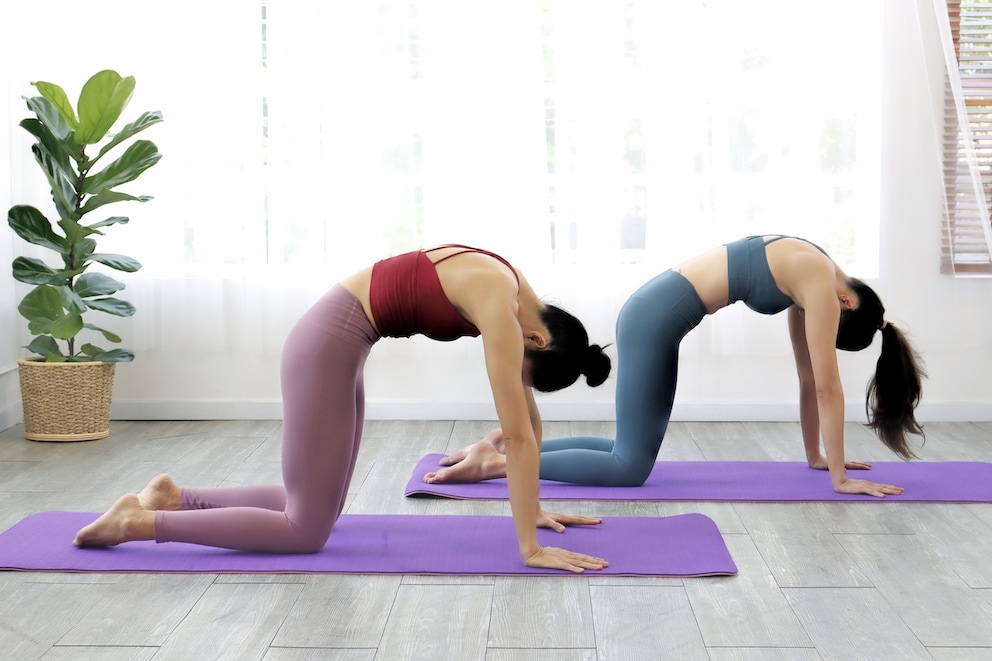
How to do it: Get into a tabletop position. Hands under shoulders, knees under hips. Inhale and gently let the back come into the counter-movement: the sternum pulls forward, the tailbone back. Don’t overdo the arch. As you exhale, actively push the floor away and round the spine vertebra by vertebra upward. Gently pull the navel inward and let the head follow at the end of the movement. Then return to length.
2. Elephant
The “Elephant” is actually part of the classic Reformer repertoire. The exercise combines an intense stretch of the posterior chain with core work–similar to the “Downward Dog” in yoga. It’s particularly good when the back and legs feel stiff after long sitting.
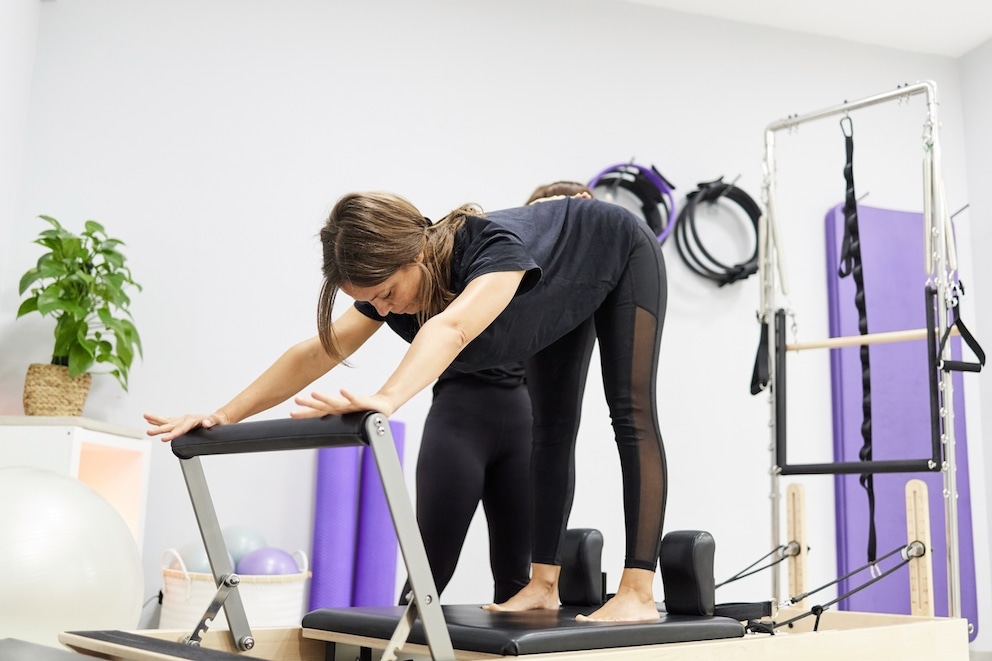
How to do it: Bend forward while standing and place your hands shoulder-width in front of you. If you need to round the lower back significantly, slightly bend the knees or rest your hands on a chair or other elevation. Keep the legs as long as possible, heels on the shoulder rests. Push the carriage back with the legs and then pull it back in from the core. The back remains in a controlled curve, shoulders wide, and head relaxed.
3. Standing Side Bend
A healthy back needs not only flexion and extension but movement in all directions. The Side Bend engages the lateral core muscles and also challenges balance.

How to do it: Stand upright with feet about hip-width apart. Gently engage the core and let the right arm glide down the side of the leg as you lean the upper body to the right. The left side of the body lengthens nicely. Then return to the center and switch sides.
4. Atlas
The Atlas–also known as the diagonal tabletop–is a true all-rounder for the back and core. It also trains the shoulders and glutes and challenges coordination. It’s not just about strength but also about keeping the body stable while arms and legs are in motion.
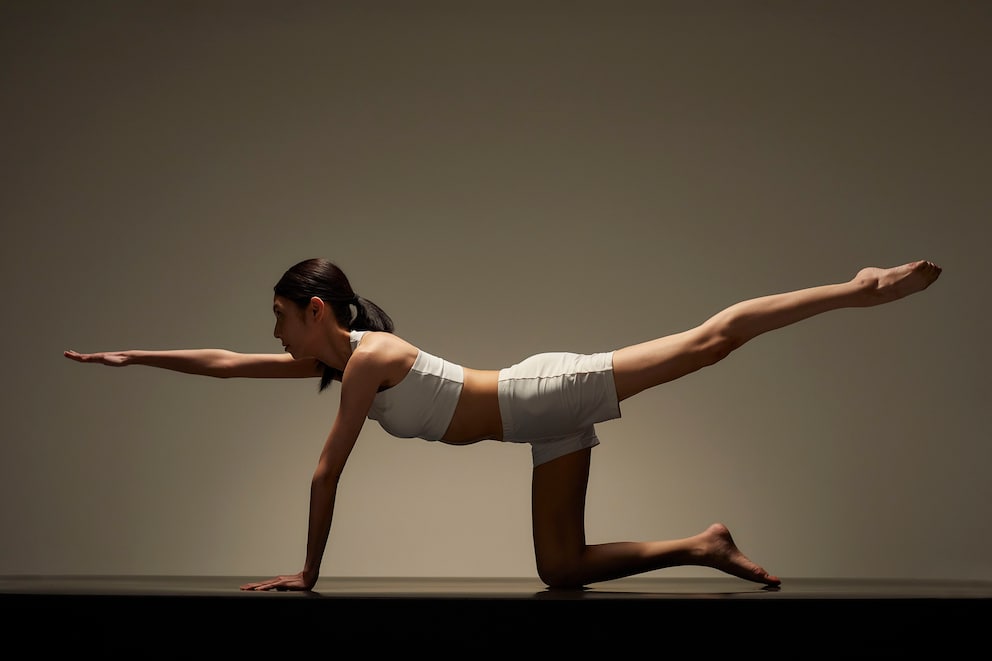
How to do it: Start in a tabletop position. Hands under shoulders, knees under hips, back in a neutral position. Extend the right arm forward and the left leg back simultaneously. Hold briefly, then return arm and leg in a controlled manner. Switch sides.
5. Spine Stretch – Forward Bend
To finish, the spine gets a good stretch. This exercise is particularly good for consciously coming out of a compact sitting posture after a long day at the desk and stretching the back.
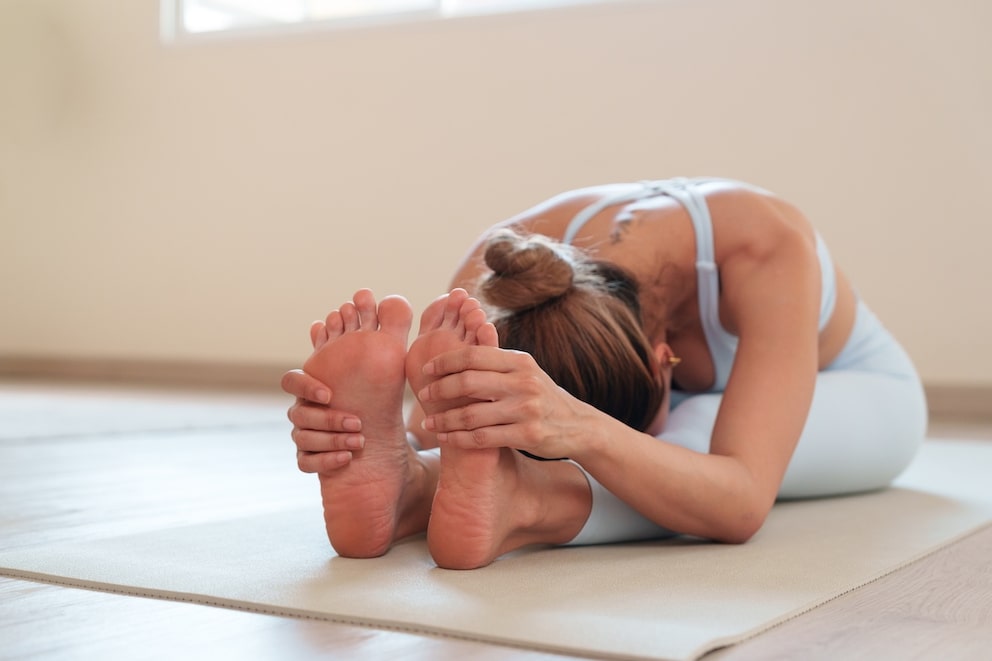
How to do it: Sit on the mat with legs extended. First, straighten the spine and relax the shoulders. Stretch the arms forward. Inhale and consciously grow in length. As you exhale, slowly lean the upper body forward. It’s not about reaching the feet with your hands. Instead, let the spine come into a controlled forward bend. Then slowly straighten up again.
10-Minute Workout: Mobility Flow with Fernanda Brandão

Escape the Pain: Effective Remedies for Sciatica Symptoms
Just 15 Minutes Make a Difference
You don’t have to turn the five exercises into a 60-minute Pilates workout. Just 10 to 15 minutes can be a refreshing movement break. Start with the Cat-Cow Stretch and counter-movement, then do the Elephant and Side Bend, and move on to the Atlas. The spine stretch provides a calm finish. With just a few exercises, you can bring more movement into your body–and do something good for your back.
Also interesting: 7 effective Pilates exercises for the whole body
When Caution Is Advised
Pilates can be a beneficial form of movement for nonspecific back pain–but it doesn’t replace medical consultation. If severe or unusual pain occurs, or if there are numbness or paralysis symptoms, or additional problems with the bladder or bowel, you should seek medical advice.
Even with acute complaints, an exercise should never be forced. Listen to your body and stop the movement if the discomfort worsens.