


June 25, 2026, 6:04 pm | Read time: 5 minutes
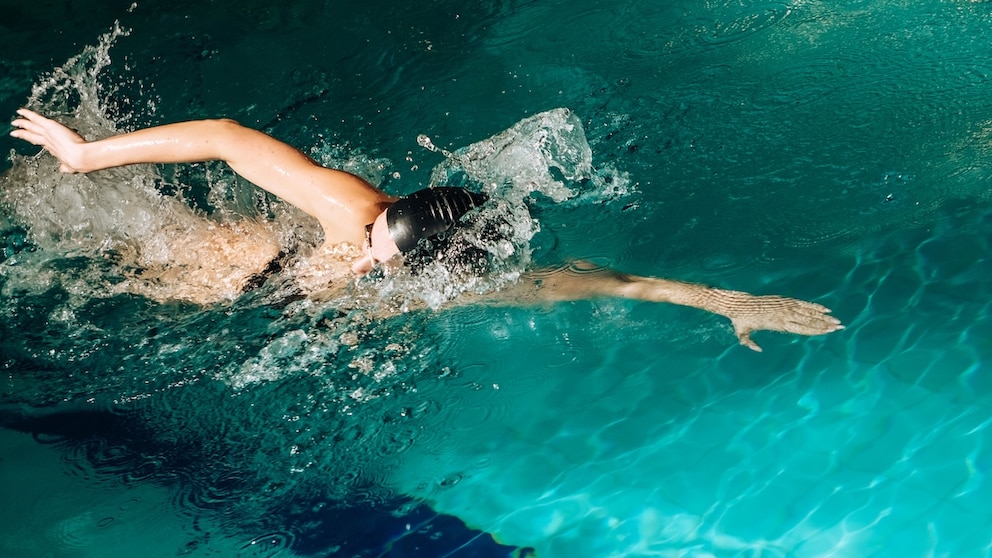
To improve performance in the swimming pool, one must not focus solely on swim training itself. This is especially true for freestyle. Scientific data shows that targeted strength training significantly enhances freestyle swimming performance. Trainer and FITBOOK expert Alina Bock explains the methods and exercises required for this.
More muscle strength directly translates to more speed in swimming—provided the training methodology is correct. To sustainably strengthen the pull and push phases in the water, structured strength training is essential.
How Strength Training Influences Swimming Performance
Scientific data proves: Strength training significantly increases the maximum muscle strength of the upper limbs and performance in 25-, 50-, 100-, and 200-meter freestyle swimming. This is primarily because targeted strength training increases the swimmer’s stroke frequency. The proven recipe for this performance boost is a combination of strength training and explosive power training.1
Exercises That Improve Swimming Performance
To increase maximum strength, it is not necessary to mimic the exact movement patterns of the swimmer in the water. Complex compound exercises that activate and strengthen the muscles used in swimming are helpful.
Pull-Ups
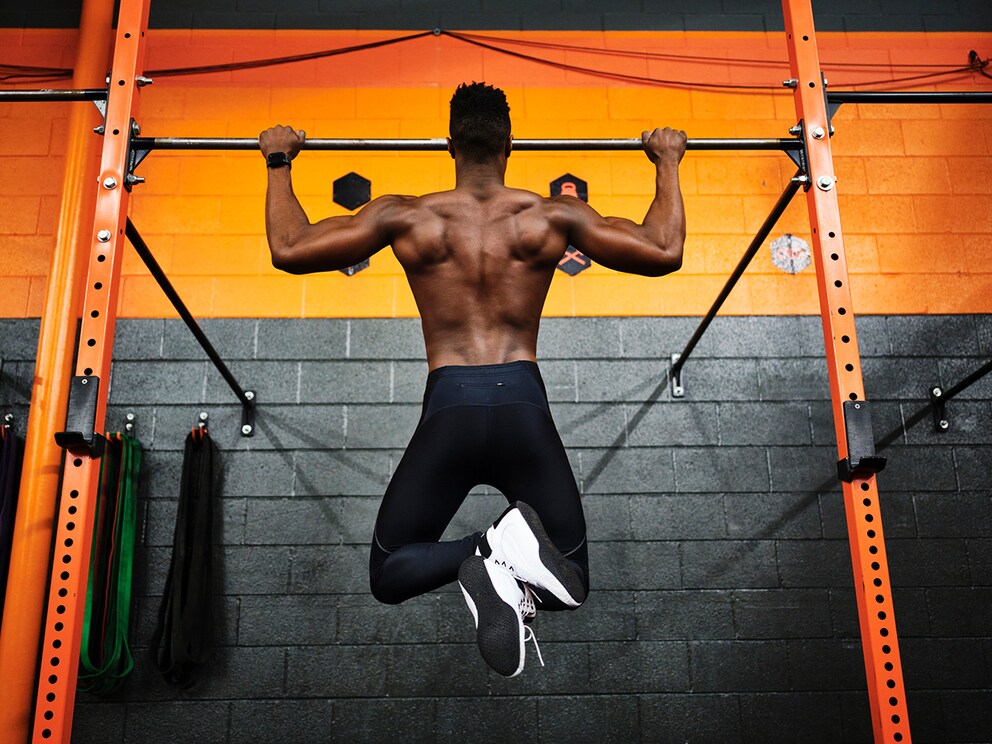
Pull-ups train the large back muscle (M. latissimus dorsi), which is one of the main drivers for propulsion in the water during swimming. It also aids in body rotation in the water and protects the shoulder joint from overload and injury.
To perform a pull-up, hang from a suitable bar or pull-up device with a wide overhand grip. Activate the large back muscle, lean slightly backward, and pull yourself up until your chin is above the bar. After this movement, slowly and controlled, lower yourself back down.
Lat Pulldown
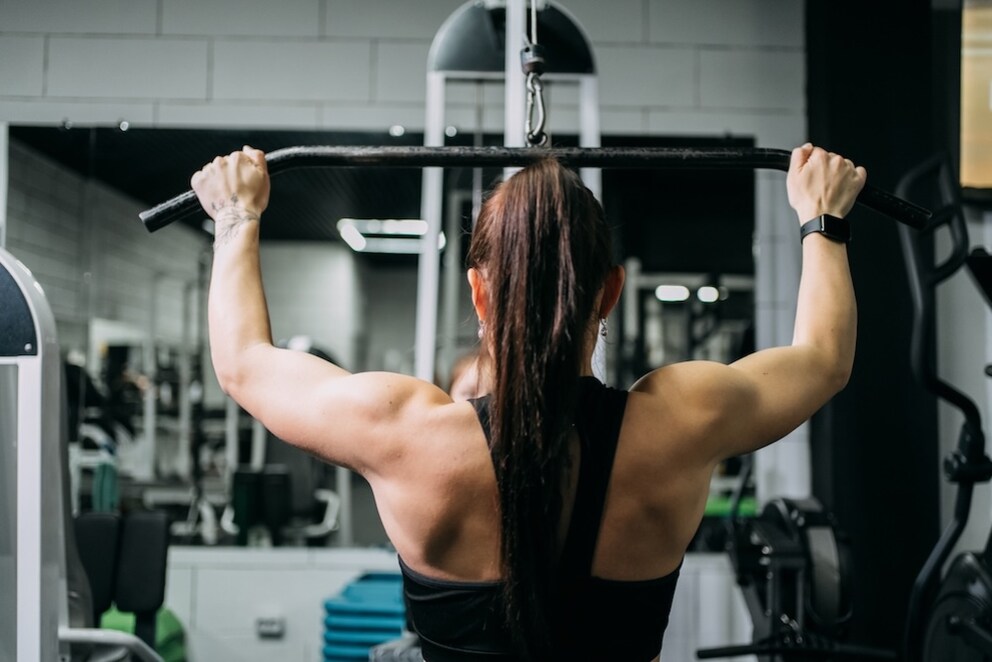
Another exercise that trains the large back muscle is the lat pulldown. The movement pattern is similar to the pull-up, with the difference that you pull the bar toward your chest instead of pulling yourself up. Here, too, you grip the handle with a wide overhand grip. As the bar is pulled toward the body, lean the upper body slightly backward. The elbows are in front of the body. Then slowly return to the starting position.
Bench Press
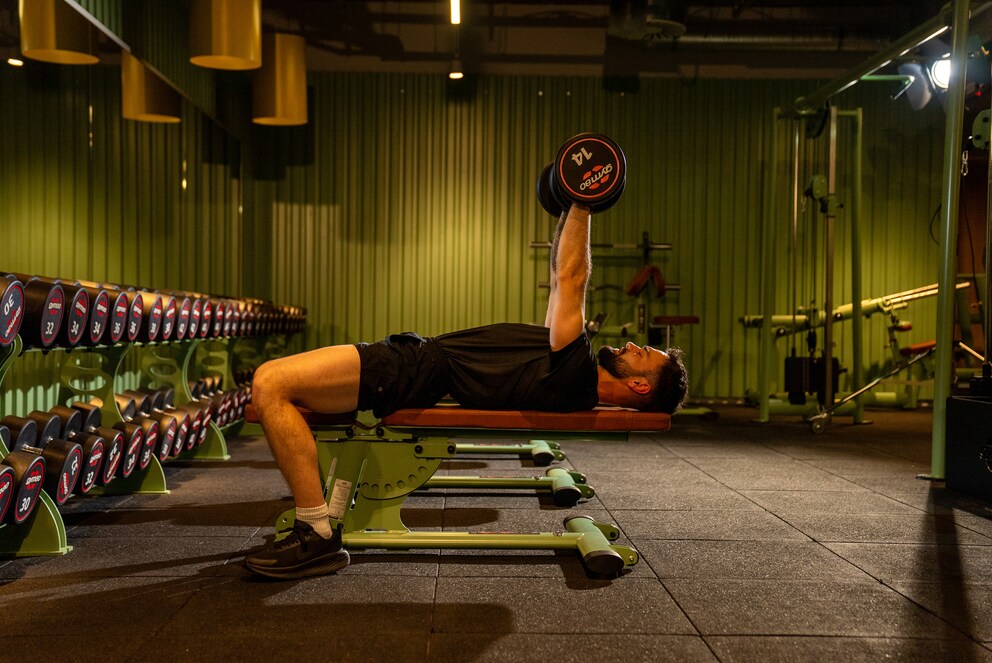
During the second phase of the freestyle stroke, the swimmer pushes the water backward. The chest, shoulder, and triceps muscles are actively engaged. Bench pressing is a highly suitable strength exercise to train these muscles and increase stroke frequency and power.
Start by lying on a bench press apparatus. Grip the barbell shoulder-width apart and lift it from the rack. Slowly lower the barbell toward the middle part of the chest. Before reaching it, explosively press the barbell back up. To protect the shoulder and elbow joints, keep the arms slightly bent even in the starting position. For beginners, the chest press or bench press on the Smith machine is recommended, as the guided movement ensures safe execution.
Squats
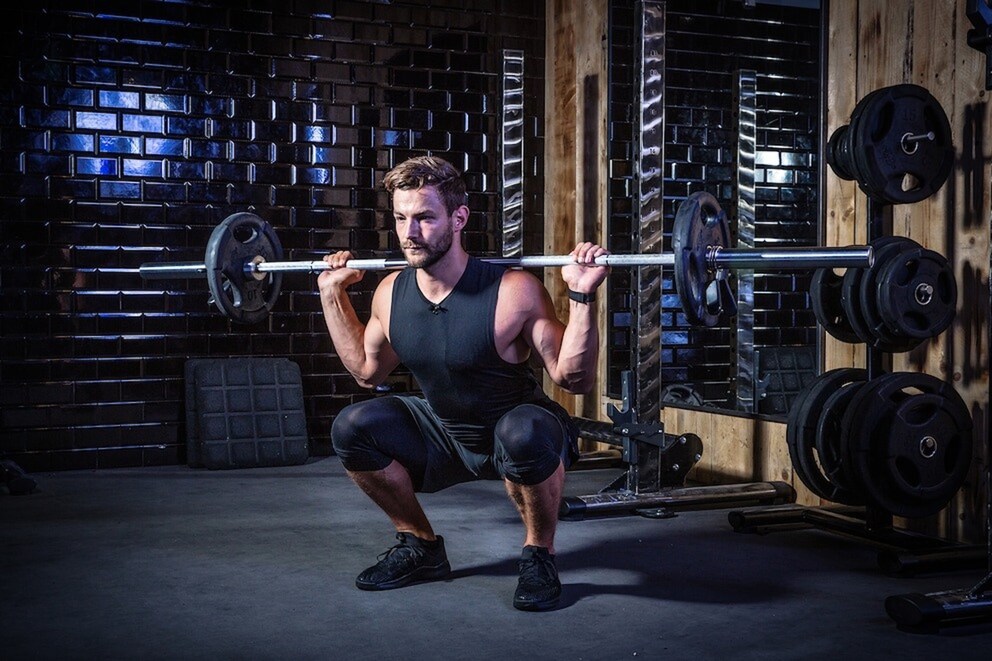
Even though the upper body muscles primarily work during freestyle, the role of the leg muscles should not be underestimated. Especially during the push-off from the starting block and the explosive push-off from the pool edge, strong leg and glute muscles are required. Squats are a suitable exercise for this, strengthening the entire lower body muscles and the core, which is necessary for stability and coordination during swimming.
Begin in a hip-width stance. The knees are slightly bent, the toes point slightly outward, and the core is engaged. Now bend the knees without lifting the heels off the ground. After reaching the end position, slowly straighten the legs again. Alternatively, the movement can first be learned on the leg press or Smith machine.
Plank
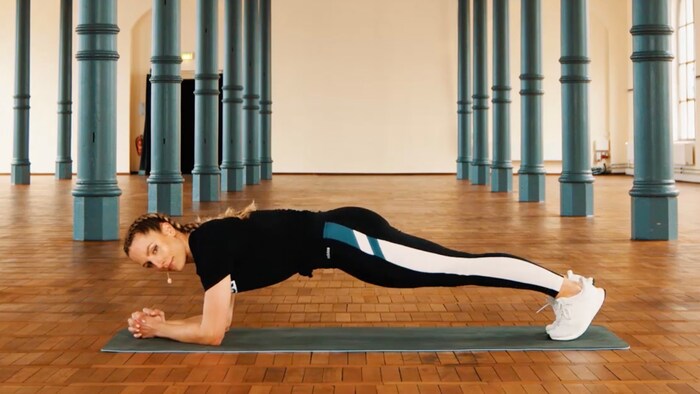
In addition to the back, chest, and leg muscles, the core muscles play a significant role. They serve as a link between the leg and upper body muscles and are responsible for power transmission. A strong core also ensures optimal and stable body positioning in the pool.
For an effective plank execution, strong abdominal tension is essential. This is created by pulling in the navel and simultaneously tilting the pelvis toward the ground. To further increase intensity, create a deliberate contraction between the upper and lower body: pull your elbows and toes toward each other without physically moving them. Imagine trying to fold the mat under your body by simultaneously pulling your arms and legs together in the middle. This intense isometric tension immediately activates the deep core muscles. Hold this tension for as long as possible.
Russian Twist
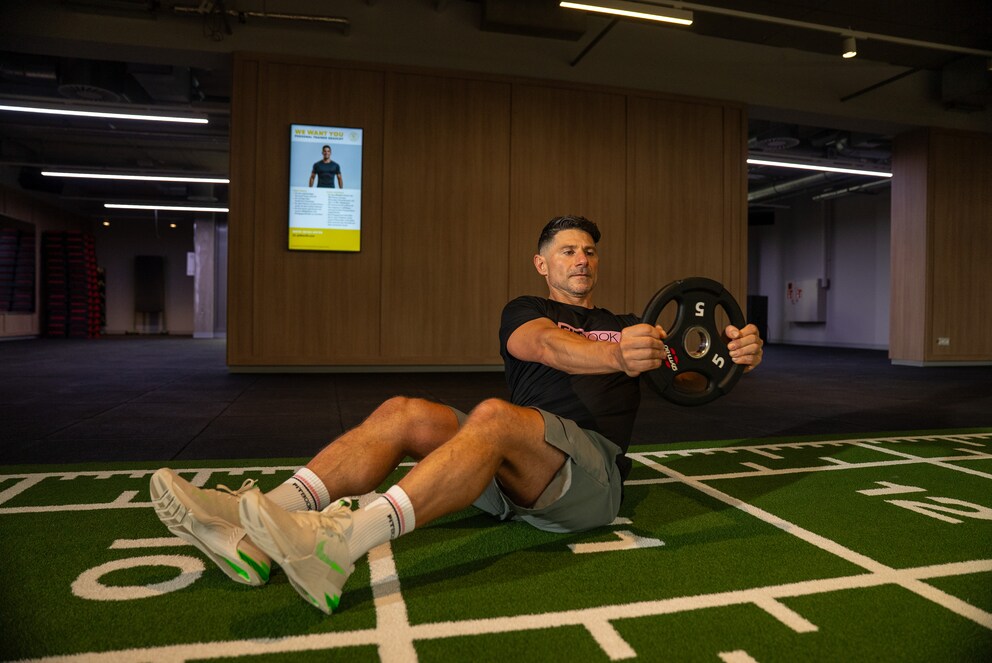
The oblique abdominal muscles (M. obliquus externus abdominis) are responsible for hip and torso rotation during swimming. The Russian Twist is an effective exercise to strengthen the muscles in this area, making body rotation during swimming more powerful and dynamic.
Start in a seated position. Lift your feet off the ground so that your body is in a hover position. Hold a weight, such as a dumbbell or medicine ball, in front of your torso. Then slowly move the weight from the right to the left side and back. Rotate your entire torso and actively follow with your gaze and shoulders.
Five Exercises That Perfectly Prepare You for Squats, Deadlifts, and Push-Ups

Learn the Flip Turn in Freestyle in 4 Steps
Methodology
The greatest performance leap in the pool is achieved through a targeted combination of strength training and explosive power training. Training should be done with at least 80 percent of the one-repetition maximum (1 RM). Exercises should be performed in three to four sets of four to six repetitions each. During repetitions, the upward movement should be explosive. This can increase stroke power during swimming.
Conclusion
Contrary to earlier beliefs that heavy strength training makes one heavy and inflexible, thus harming swimming performance, today’s scientific data paints a very different picture. A combination of explosive power and heavy strength training is the key to enhancing swimmers’ performance.
In practice, this means focusing on heavy compound exercises on land, such as wide-grip pull-ups, bench presses, and squats. Three to four sets of four to six repetitions at a minimum of 80 percent of maximum strength provide the necessary foundation to significantly increase stroke frequency.