

December 15, 2023, 2:31 pm | Read time: 5 minutes
Alba Berlin player Wiebke Schwartau criticizes the gender pay gap in basketball in the documentary FITBOOK Everyday Athletes. FITBOOK has researched and provides figures on the top leagues in the U.S. and Germany.
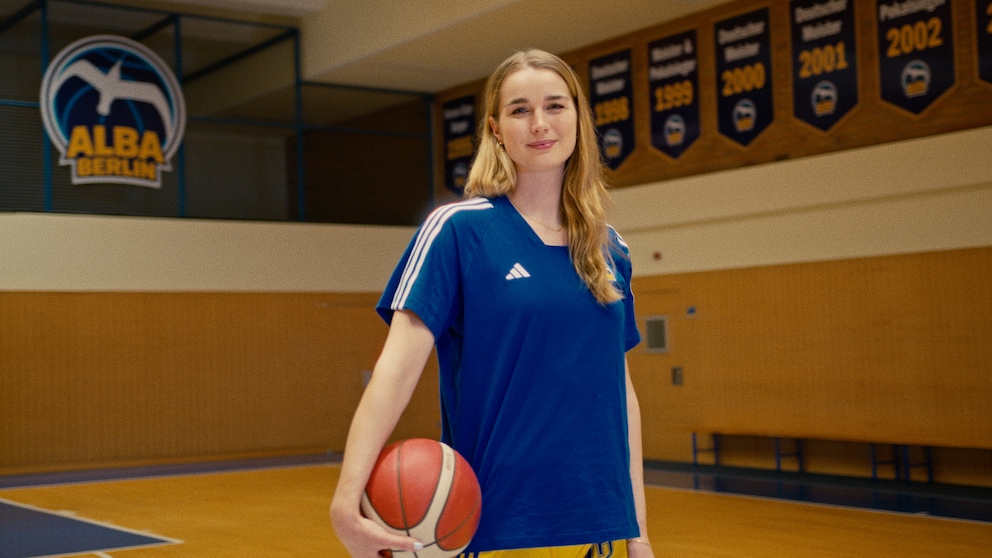
Wiebke Schwartau is a passionate basketball player. But even though she plays for Alba Berlin in the Bundesliga and receives housing and meals in addition to her salary, it’s not enough to live on. As the 24-year-old reveals in the documentary FITBOOK Everyday Athletes, she relies on financial support from her parents and works as a model, among other things. She is also studying to become a teacher to have a future perspective. What do women earn in professional basketball? FITBOOK has researched.
Watch the documentary FITBOOK Everyday Athletes with Wiebke Schwartau, Part 1
Overview
Bundesliga Basketball Player Relies on Financial Support from Parents
This multiple burden pushes Wiebke Schwartau to her limits: “I am constantly overwhelmed. Constantly at an adrenaline level that is actually not good,” Schwartau admits in the documentary FITBOOK Everyday Athletes. Only about 40 percent of her monthly income comes from basketball, another 40 percent comes from her parents. She earns the rest through modeling, film jobs, and her own fashion collection. “The fact that about 40 percent of my monthly income still comes from support from my family is something I find burdensome,” says Schwartau.
At the same time, she emphasizes that the players at Alba Berlin are still in a good position compared to other Bundesliga clubs. The fact that they are provided with apartments in central Berlin and a weekly supply of healthy food is a great relief.
Nevertheless, Wiebke Schwartau insists in the documentary that further steps need to be taken in women’s basketball so that professional athletes can live off their jobs. “Anyone would eventually be frustrated if they reached the highest league in Germany, but such enormous differences in salaries between men and women exist,” says Schwartau. Financial injustices in sports are also a frequent topic in conversations with her mother. Kristin Schwartau: “I’m annoyed. Equal pay is long overdue. It’s the same performance that women deliver. And it has nothing to do with wishes. I think it’s a fundamental right. It’s equality.”
Also interesting: 1.95-meter basketball player Wiebke Schwartau: “I was told my body was wrong and unattractive”
What Do Women and Men Earn in Professional Basketball? FITBOOK Has Researched
How big are these differences in salaries exactly? FITBOOK has compared the professional leagues in the U.S. (NBA vs. WNBA) and Germany (BBL vs. DBBL). One of the findings: When looking at average salaries of men in the NBA and women in the WNBA, women earn only about 1 percent of what men do! How high these are exactly, what top salaries are paid, and what earning opportunities look like for players in Germany, you can find out in Part 2 of the documentary FITBOOK Everyday Athletes.
Watch the documentary FITBOOK Everyday Athletes with Wiebke Schwartau, Part 2

New Documentary! Wiebke Schwartau–Between the Basketball Bundesliga and GNTM

Exclusive Insights into the Life of Basketball Player Wiebke Schwartau–Watch Part 2 of the Documentary Now!
Schwartau: “It’s a Matter of Appreciation”
Wiebke Schwartau also speaks openly in the documentary about how much these injustices affect her: “All professional female athletes I personally know have a second or even third burden to have financial security. It’s an incredibly frustrating feeling that sets us back as a community, as women–in our talent and in our potential.”
The perfect example of this inequality felt by the basketball players is something Schwartau read: According to media reports, there is an NBA team, the Denver Nuggets, whose mascot earns around $725,000 annually. Meanwhile, the highest-paid woman in the WNBA at that time reportedly earned only about $225,000. Schwartau: “This reality is almost painful to hear. Because it means that a mascot is valued more than the greatest female basketball player of all time we’ve had in our history–and not just a little, but three times as much. It’s a matter of appreciation and something the system should be embarrassed about.”
What a U.S. Coach Says About the Gender Pay Gap in Basketball
Cori Close is the head coach of the college team at the University of California (UCLA). In the documentary FITBOOK Everyday Athletes, she says: “In both countries, we need to invest more in women’s sports–and specifically in women’s basketball. It’s currently the fastest-growing sport in the world. We need more sponsors to get involved and invest in women and clubs. We need to raise salaries in women’s leagues so that players don’t need another job.” At the same time, she emphasizes that more coverage of the sport and more spectators at games are needed so potential investors recognize “that this is not charity, but a worthwhile business investment!”
Discover more interesting details in the documentary. Stream now!