


August 17, 2025, 3:02 pm | Read time: 5 minutes
FITBOOK author Nina Ponath dances at every wedding until her feet burn–free and unburdened. She rediscovered this feeling in her first Non-Impact Aerobics class (NIA for short): dancing without rules, kicks instead of drills, lightness instead of exhaustion. A workout that left her not drained, but energetically charged.
Follow the FITBOOK channel on WhatsApp now!
I love to dance. At every wedding, I’m right at the front. As soon as the dance floor opens, I dive into the crowd, forgetting space and time and how I look while doing it. Dancing is pure joy for me. A way to release energy and express my mood. That’s why I steer clear of regular dance classes–too many rules that prevent me from letting my emotions run free. This is exactly the concept behind Non-Impact Aerobics, or NIA.
What Does NIA Mean?
Non-Impact Aerobics–also known as Low-Impact Aerobics–was developed in the 1980s as a response to the then-prevailing, rather harsh fitness ideal in the U.S. Instead of drill and discipline, NIA focuses on flowing movements inspired by dance, martial arts, and relaxation techniques. While the moves are demonstrated and guided by instructors like in other classes, the emphasis is less on choreography and more on strengthening the connection to one’s own body through NIA. In the U.S., NIA is now used in physical therapy, for stress-related illnesses, and in pain clinics.
NIA is not a fitness fad. The sport is found in only a few studios, such as the Hamburg fitness studio “Kaifu Lodge.” The class I attend is led by Ann Christiansen. The native Swede describes NIA as her passion, which has helped her achieve more balance, creativity, and joy in life. She is one of the few worldwide authorized to teach all NIA training levels–from White Belt to Black Belt.
Immersing in Movement: My First NIA Class
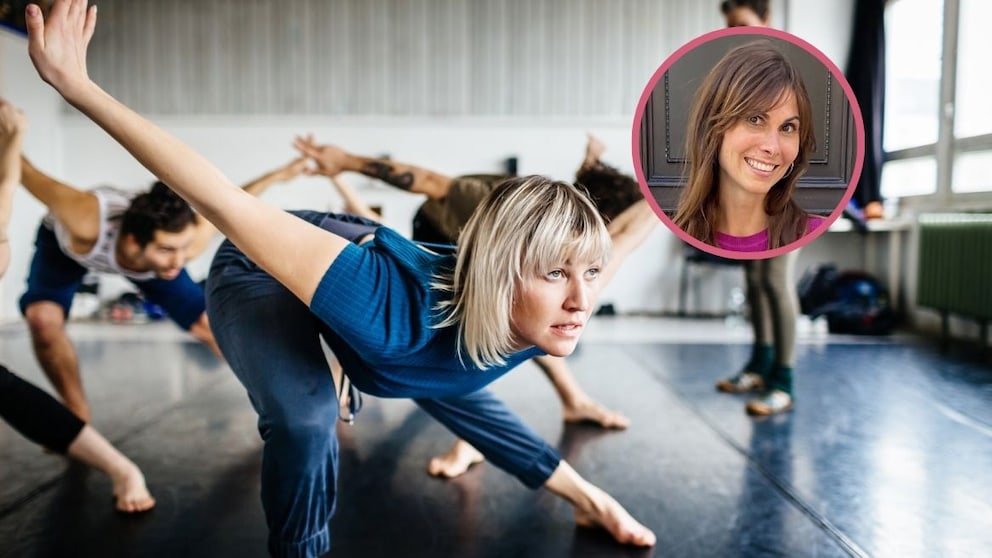
When I enter the bright room a little late, everyone is already in high spirits. The roughly 30 participants–you won’t find any men here–move rhythmically to the music. They follow the very sexy movements of instructor Ann, who accompanies her moves with loud “Oh” and “Shake it” at spicy moments. Just like shoes, because NIA, like martial arts and yoga, is practiced barefoot. Elements from both very different practices can be found in NIA.
Instructor Ann encourages us to follow her movements more or less strictly. Certain step sequences–like right, left, cha-cha, leg up–are to be combined with a free interpretation. Ann provides inspiration, for example, by having us turn sideways and swing our arms vigorously or slowly. Each of us executes the actual implementation according to her own taste: sometimes gently, sometimes powerfully, sometimes with quick kicks–always in a way that feels good at the moment.
“As if My Body Decides What It Needs”
At first, I feel a bit unsure and keep glancing at my reflection, but gradually I start to let go as if at a party. My arms swing freely, my feet step lightly, my upper body turns, and I make small jumps. Sometimes I even close my eyes and just let the music carry me.
The movements feel organic, almost as if my body decides what it needs. Elements from martial arts, like gentle kicks and punches, alternate with flowing dance movements and mindful stretches. NIA is a constant shift between strength and fluidity, between energy and letting go. It feels a bit like a mix of dance therapy, improvised yoga–and a really good party.
Also interesting: “The Love for Dancing Is Stronger Than All Pain”
“I lifted weights for 20 years—if only I had done Muay Thai.”
How a Star Ballerina Got Back in Shape After Pregnancy with an Unconventional Training Method
NIA Combines Dance, Martial Arts, and Relaxation in One Hour
The class is divided into several phases: First comes the “Warm-up,” then we flow into more powerful elements like punches, kicks, and spirals–movement patterns reminiscent of martial arts but performed softly and springily. A NIA class includes nine basic movement patterns, the so-called “Body Joys”: three martial arts elements (Taekwondo, Tai Chi, Aikido), three dance styles (Jazz Dance, Modern Dance, Duncan Dance), and three relaxation techniques (Yoga, Feldenkrais, Alexander Technique). This covers a wide range of movements and challenges the body in diverse ways. Afterward comes the so-called Floorplay: we move on the floor, roll, and stretch. At the end, there’s a short, quiet part: eyes closed, the body can come to rest.
“Afterward, My Body Feels Stretched, Strong, and Free”
After the class, I feel surprisingly light and simultaneously energized. I leave the fitness studio refreshed and almost a bit electrified. I’m not exhausted like after a strenuous workout, but invigorated, completely in tune with myself, as if I’ve rediscovered myself through dancing. And my body? It feels stretched, strong, and above all, free.
Anyone who enjoys free dancing and prefers to leave rules on the dance floor will love NIA. Those without a studio offering NIA classes nearby can turn to YouTube. There are some good videos available, including some by Ann.