


August 30, 2025, 3:26 pm | Read time: 5 minutes
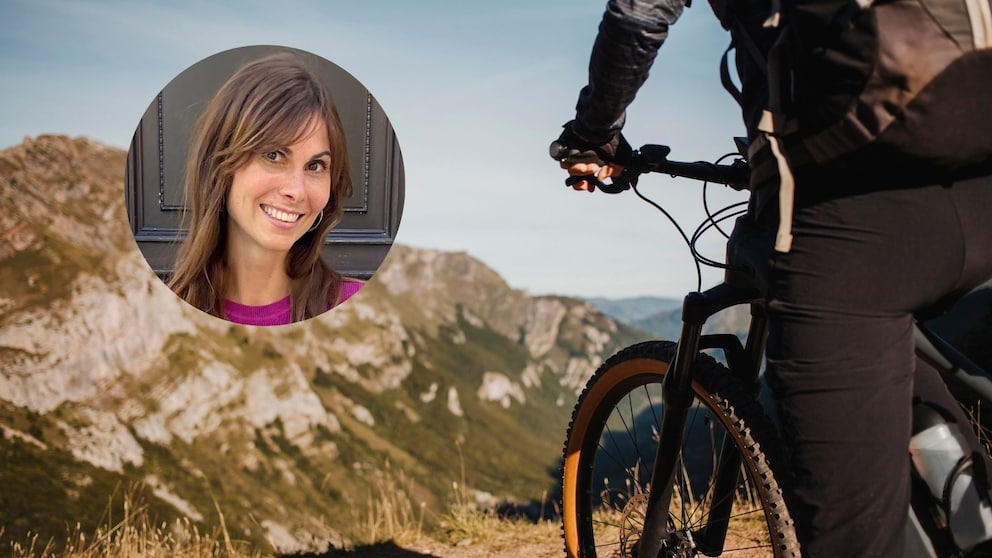
Between turbo mode, 2,300 meters of elevation, and the question of whether cycling with a motor is still a sport: FITBOOK author Nina Ponath, who isn’t really into cycling, took an e-bike ride in the Salzburg region—and discovered why the assistance opens the door to unforgettable mountain moments. Did it feel like a workout to her?
Why Not Try e-biking in the Mountains?
I’ve never been an enthusiastic cyclist. I mostly use a bike in the summer to visit friends in the evening when I know I’ll be drinking alcohol. Otherwise, I prefer walking. Some time ago, as our vacation in the Salzburg region approached, my partner suggested: Why not try e-biking in the mountains? For me, the question was: Does cycling with an electric motor still count as a sport—or is it cheating?
2,300 Meters of Elevation for Us e-Biking Beginners
We originally wanted to go high with the e-bike. Our mountain goal was a true 3,000-meter peak, the Großvenediger. When our guide canceled at the last minute, we had to change plans. We ended up choosing a smaller but no less impressive destination: the Steinkogel. A solid 2,300 meters of elevation, which was a real challenge for us as absolute beginners from the flat Hamburg area. I can say upfront: Without motor assistance, I would have been pushing my bike after just a few kilometers on this tour.
Which Assistance Mode? Spoiled for Choice
Our rented “Cube” e-bikes offered various assistance modes. Regardless of the manufacturer, there’s usually a range from “Eco” to “Tour,” “Sport,” and “Turbo.” The Eco mode provides minimal assistance and conserves battery life—perfect for flat routes. The Tour mode offers noticeable help, while the Sport mode significantly boosts your pedaling power. Then there’s the Turbo mode: Here, the motor pushes powerfully, making even steep climbs a breeze. You almost have to be careful not to be pulled forward too much. The motor assistance works in all gears but only up to a speed of 25 kilometers per hour. Beyond that, the motor assistance automatically shuts off, meaning you can only reach higher speeds through your own muscle power.
An Amazing Feeling, but It Doesn’t Feel Like a Workout
With the e-bikes, we pedal up the mountain at speeds well over 15 km/h. At times, we even approach the 25 km/h mark. This would never have been possible for me under my own power. Without motor assistance, cycling would have felt more like a strenuous crawl than a bike tour.
With the e-bike, however, the ascent is an amazing feeling: We watch the landscape pass by, feel the gentle breeze, and are much faster than we would be on foot, all without effort. We don’t feel athletic—more adventurous and fully in vacation mode. I barely break a sweat. Instead, I have to concentrate on maintaining balance on the gravel path and not going too fast downhill.
Only the Last Meters on Foot to the Summit Are Felt in the Legs
The real workout begins for me when we park the bikes just before the summit. We have to cover the last meters on foot. This is the most strenuous part of the tour. With each step, I feel how much the last meters take a toll on my legs. It’s only here that I realize the physical effort the e-bike spared me was indeed significant.
To be honest, the effort on the e-bike wasn’t much greater than walking to the gondola and taking the first ride up. But that’s the concept of “Bike & Hike.” The e-bike is primarily meant as support. It allows athletes to experience the mountain environment more intensely and enjoy the tour. The actual sport, hiking, remains untouched.
Completely Exhilarated on the Way Back to the Valley
The return to the valley is a thrill. I have to keep a firm grip on the brakes to avoid going too fast on the gravel path and losing control. Downhill, we quickly reach speeds of 30 kilometers per hour. As we pass by green meadows and alpine huts, I feel like a child riding a go-kart for the first time. Completely exhilarated.

“What Being in the Mountains Does to Me”

What I Learned About Mental Strength and Fear of Death During My Alpine Crossing
Leisurely Cycling on the e-Bike Instead of Peak Performance
A few days later, we took a completely different tour. The Tauern Cycle Path. Here, too, the e-bikes were a great alternative to a car—allowing us to enjoy the landscape with all our senses. The effort to reach the Krimml Waterfalls was very manageable, but we didn’t mind. Because that’s the point.
Conclusion: Cheating or Clever?
In the end, my opinion is that the e-bike motor isn’t cheating but a fantastic support that makes cycling more enjoyable for novices like me. For me, the real sport is still hiking—but to better experience the mountains and get a taste of cycling without being completely exhausted, e-bikes are a perfect combination. They’re a kind of moving sightseeing that has prepared us for the next active vacation. Maybe we’ll take a mountain bike tour in Mallorca, without a motor.