

January 21, 2022, 4:24 pm | Read time: 3 minutes
Many will remember the scale pose from school sports. Leg back, arms forward… and then the wobbling began. If you didn’t like this challenging balance exercise back then and want to do something for your posture, you should give it another try.
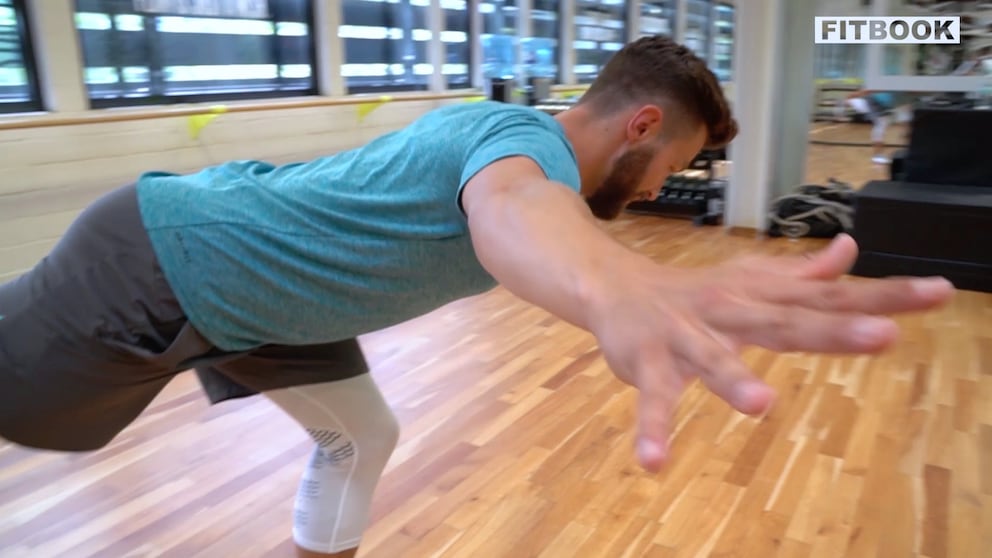
More muscles are always a good thing. But muscles in the core are especially beneficial. Training the muscles located there not only improves posture and helps build abdominal muscles but also prevents unpleasant back pain. An effective exercise for the core and back is the scale pose. Personal trainer Erik Jäger demonstrates how to perform the exercise correctly.
Overview
Train Core and Back with the Scale Pose
The scale pose strengthens the core and makes a significant contribution to good posture, which is known to require good core tension. It particularly activates the deep muscles of the core and lower back. But not only those: To hold one leg and the arms horizontally, the gluteal muscles are also engaged.
Also interesting: Perform lunges correctly – technique and variations

Proper Execution of Deadlifts With a Barbell

2 Exercises for a Strong Core
How to Perform the Scale Pose Correctly – and Maintain Balance
Both arms go outward, shift the weight onto one leg. Then slowly tilt the upper body forward. Stretch the free leg straight back in a line. The standing leg should remain slightly bent. So don’t fully extend it! The correct position of the hips is parallel to the floor. Tip: By tightening the abdomen, the scale pose becomes more stable overall–because maintaining balance is the big challenge. The personal trainer also demonstrates the technique in the video above.
Also interesting: These strategies motivate even the biggest exercise avoiders to train

Who Is This Exercise Especially Suitable For?
If you work bent over at a desk and haven’t been doing core training, you should definitely change that and strengthen your core to prevent posture damage and strain. The scale pose is excellent for this–just like the classic forearm plank, although maintaining balance is more or less eliminated. People with poor posture (leaning forward, hollow back…) or general tension in the back area would also benefit from incorporating scale poses into their daily routine.
About the person: Erik Jäger is a functional fitness instructor and has been successfully working as a personal and athletic trainer for many years. On his Instagram channel, the “Capital Trainer” motivates daily to exercise. His clients include numerous celebrities.