


December 12, 2025, 12:10 pm | Read time: 6 minutes
An influencer led the way: Walking with added weight in the form of a vest to increase heart rate. FITBOOK author Nina Ponath tried it herself and tested exercising with a weighted vest in the North German plains. Her results show the limits of this trend.
“Hey folks, today I’m doing a walk with a weighted vest, which increases calorie burn and really gets the heart rate going.” I saw this story some time ago from an influencer I follow and, I admit, I was influenced.
I’m a big fan of walking. I notice it every vacation when I climb the mountains in Spain and am glad my knees get a break from the stopping and starting of my usual jogging rounds. Walking is easier on the joints, makes me less anxious, grounds me immensely, and feels gentler on my body. And that’s despite the muscles still getting a good workout. At least on vacation: When I walk through the Spanish mountains, my heart rate often reaches 100, and after an hour of walking, I’ve burned about 400 calories. It’s different at home. In Hamburg, where I live, it’s so flat that my heart rate, even when walking at a pace of 7 minutes, only reaches a maximum of 80. From a sports perspective, I can almost skip it.
I found the idea of the weighted vest pretty good. How much does such a vest affect heart rate and calorie burn? Is the effect really significant enough to justify the purchase?
The Experiment: Weighted Vest with 7 Kilograms for More Elevation Feel
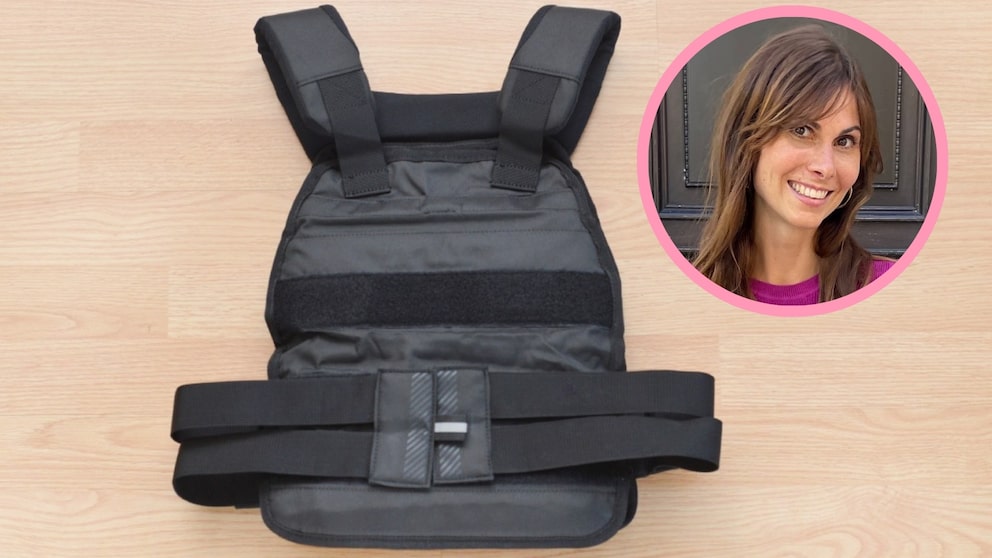
How nice would it be, I thought, if I could easily walk at home–without mountains, just outside the front door–and still have a light workout. For my experiment, I borrowed the vest from my partner’s friend. It’s sturdy, weighs seven kilograms, and is usually used by him for push-ups and pull-ups. For me, it had a less ambitious career ahead as a booster for walking.
Day 1: The Defensive Armor in the Morning
I deliberately get up early so no one sees me with the somewhat embarrassing vest and start just after six o’clock.
After a few minutes of brisk walking, I check my smartwatch: My heart rate, which is always very calm as an endurance athlete, is around 85 with the vest. It’s certainly not high-performance sports, but still pleasantly strenuous. The feeling can be compared to very slow recreational swimming.
After half an hour, I felt a pleasant warmth in my muscles. I feel energized, not exhausted or sweaty, and I wouldn’t have even needed a shower since I hadn’t sweated.
The Vest in Everyday Life: A New Routine
In the following days, a small morning ritual develops. I get up around five o’clock (yes, really, five o’clock!), not because I have a morning person gene, but because I simply want the rounds done while the world is still asleep. By six o’clock, I’m outside, the 7-kilogram vest strapped on, and I feel a bit like an undercover agent. Hopefully, no one sees me.
After a few days, something happens: With each day, my affection for the vest grows. Initially, it was more of a “should-try-it-sometime” thing. But now it’s a little morning ritual. I notice how my body gets used to the additional weight. My posture improves: I stand taller, and my core muscles are more active to balance the weight.
After About a Week, Vest Walking Shows Various Effects That Surprise Me:
- Alertness and Clarity: After the walk, I feel as if I’ve had a coffee. My mind is clear, ideas flow, and I’m ready for the day.
- Better Endurance: My heart rate gradually stabilizes. In the first week, 95 was a bit above my normal walking heart rate, but by the end of the second week, I maintain about the same heart rate while my walking speed slightly increases. It no longer feels like a strain.
- Everyday Effects: I notice that I feel more energetic overall. Small flights of stairs during the day? No problem. My posture improves, as if the vest sends a gentle reminder: “Back straight, shoulders back.”
- Psychological Boost: It’s a bit crazy to wear a weighted vest for walking. It seems excessive, an unnecessary “armor mode,” and that’s precisely what brings a certain fun factor. I laugh at the thought of someone seeing me at 6 a.m.–a silent warrior with a weighted vest. But that’s the best part: It’s unusual enough to feel special.
Also interesting: “My Conclusion After 2 Weeks of 100 Squats Daily: Never Again!”
The Critical Assessment: Is It Necessary?
After two weeks of intensive use, I must admit: I like this new routine, the early rising, the rhythm I’ve created. The experiment was a complete success–not because I’m now a champion at burning calories, but because I’ve developed a routine that challenges me physically but doesn’t exhaust me, and gives my mind a gentle kick in the morning.
The effect achieved by the 7-kilogram vest can also be achieved differently. What the vest does is centrally distribute the weight close to the body. It increases intensity without putting too much strain on the joints, as the weight acts vertically. If you don’t place a high value on that (and in my opinion, you don’t have to with seven kilograms), a backpack will do. Or you can find a solid incline on your walking route and walk briskly up it.
Alternatives to the Weighted Vest
- The Regular Backpack: Wearing a filled hiking backpack achieves a similar effect. Fill it with water bottles or books to reach five to eight kilograms.
- Hiking in Terrain: Deliberately seek out hills or slopes in the woods or parks. Walking uphill is the most natural form of walking with resistance and burns significantly more calories than wearing a vest on flat ground.
- Walking Poles (Nordic Walking): Using poles activates the arm and upper body muscles, increasing energy expenditure as well.
FITBOOK Author: “This Is What Happened When I did Exercise Every Day for 2 Weeks”

What I Learned About Mental Strength and Fear of Death During My Alpine Crossing
When a Vest Is Still Worth It
The vest is a good and convenient alternative for people like me who live in flat areas. Here, there are hardly any natural inclines. The vest can help increase heart rate.
Conclusion: A Good Addition, but Not Mandatory
Walking with a weighted vest has become a real insider tip for me personally. It makes walking on flat ground more efficient and is easy on the joints. Plus, it’s absolutely doable and doesn’t require high-end equipment. But if you don’t have a vest and don’t want to invest in one, you can achieve a similar effect with alternative strategies.