

September 30, 2020, 10:09 am | Read time: 3 minutes
Many athletes prefer to lift weights, such as deadlifts, barefoot. What are the supposed benefits–and what do experts say? FITBOOK investigates.
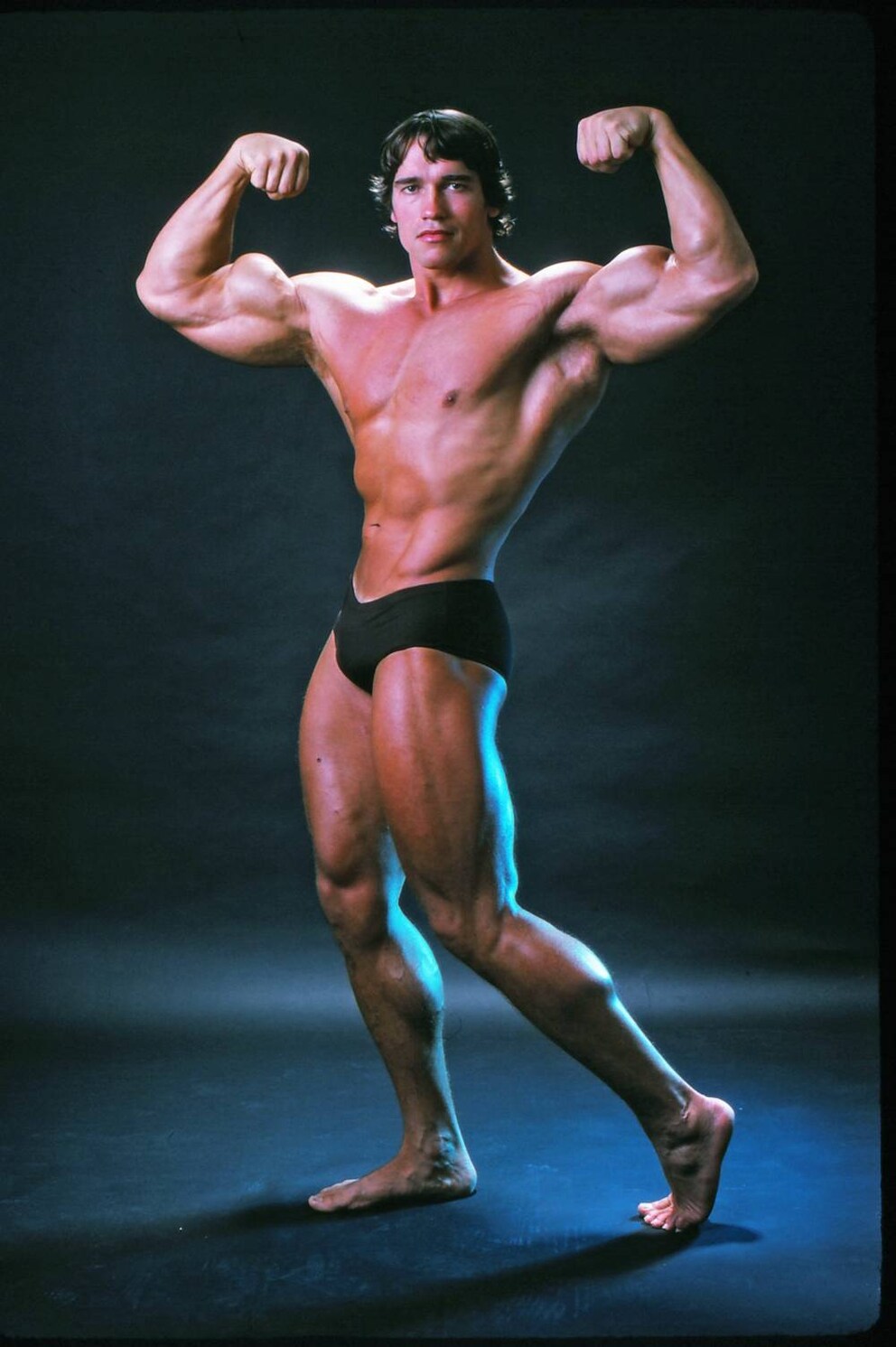
Squats, deadlifts, and similar exercises are said to be more effective without shoes. Even bodybuilding legend Arnold Schwarzenegger, 73, reportedly believed during his active years that going barefoot provided the best possible stability through direct contact with the ground.
Never miss a FITBOOK topic again–subscribe to our newsletter here!
Training Barefoot? – Here’s What the Expert Says
Artur Kantarev is a research associate at the Institute for Training Science and Sports Informatics at the German Sport University Cologne. As he explains in a conversation with FITBOOK, the topic can be viewed from different perspectives.
“Many Use the Wrong Shoes”
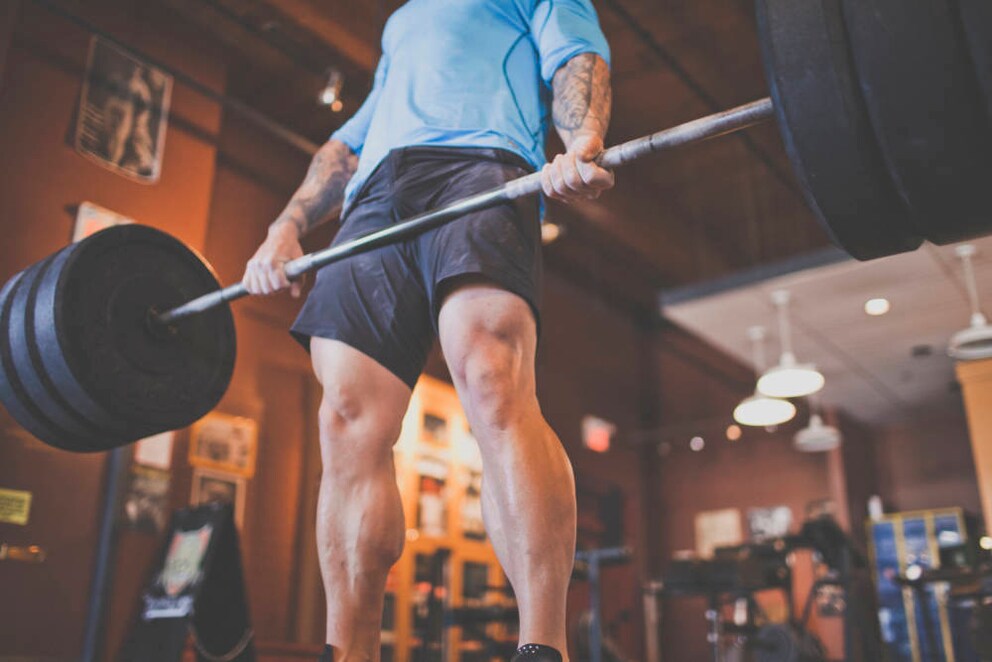
According to Kantarev’s experience, the same pair of sports shoes is usually used for both strength and cardio training in the gym. These are often shoes with soft soles and thick padding, which are indeed suitable for endurance exercises. For example, they can protect the foot (such as on a treadmill) from damage due to sudden impact. However, for weight training, such shoes are absolutely unsuitable.
“In deadlifts and squats, all the force is transferred through the feet to the ground,” Kantarev, who also works as a personal trainer in strength, athletics, and mobility, tells us, “so you want the most stable and direct contact with it.” This can be achieved either with shoes with a firm sole–or indeed barefoot.
Risks from the Wrong Footbed
Wearing the wrong shoes (with soft soles) during strength training with heavy loads risks unfavorable movements–such as inward or outward rotations of the foot. These would make the ankle more prone to injury. Similarly, one could end up in a knock-knee position, allowing the knee to collapse inward, which could cause damage.
Also interesting: Are squats actually harmful to the joints?
Do Foot Misalignments Always Need Treatment?
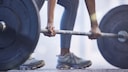
How to Improve Foot Stability During Strength Training
Shoes Can Make a Difference in Deadlifts
As criticized on various platforms, some sports shoes have a heel lift that can force the upper body into an unfavorable forward position during deadlifts and squats. Here, Kantarev admits that a flat stance–in deadlifts!–is indeed better. In squats, however, a lift in the rear foot area can even be beneficial. It makes it easier to maintain an upright posture with the upper body and can compensate for any mobility issues in the ankle, allowing for a deeper squat. For those who want to take advantage of this effect, he recommends special weightlifting shoes with a very firm sole.
Conclusion
The expert gives the green light for barefoot training (–“we are born without shoes, and until a few hundred years ago, we only walked barefoot!”). However, starting immediately is not automatically a good idea: Those who are used to always confining their feet by wearing shoes may have already weakened important stabilizing muscles. It is therefore important to ease into it and first rebuild foot muscles.