


May 13, 2026, 5:33 pm | Read time: 7 minutes
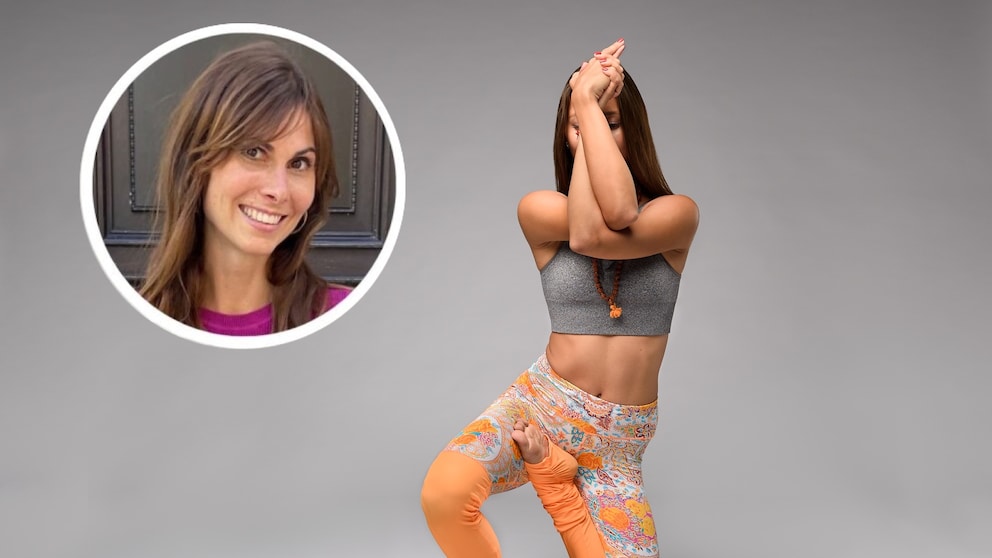
A hip opener that also strengthens the knees: Vatayanasana, the flying horse pose, looks very acrobatic at first glance. But don’t let that intimidate you. It’s worth trying the exercise. For those who want to give it a go, here’s the guide from FITBOOK author and yoga instructor Nina Ponath.
What Expectations You Shouldn’t Have When Going to Yoga
Yoga is just relaxation and “lying around”? Anyone who goes into yoga class with this expectation and is confronted with the asana Vatayanasana, the “flying horse,” will be surprised. With its half-lotus bent leg, on which the entire body stands and must maintain balance, and the intricately knotted eagle arms, the pose almost resembles an acrobatic exercise. The challenging pose is not “relaxing” for most at first and instead requires a high degree of hip flexibility, leg, and core strength. Once you’ve mastered Vatayanasana, there’s hardly a more beautiful way to open the hips and reach a state of deep concentration.
That’s how it was for me when I first encountered the asana. I was in Greece, in the middle of my 200-hour teacher training, and we were practicing on the terrace on one of those scorching hot afternoons. During the training, each of us had to teach the other trainees a yoga session of our own—including Rachel, a yogini from the UK who had been teaching Ashtanga Yoga there for years, as evidenced by her impressively strong physique.
Why Vatayanasana Is Not for Beginners
Seamlessly, she led us from one powerful asana to the next—all so fluidly that we didn’t have time to be afraid. One moment we were in a half lotus, the next we were going down—slightly bending the standing leg—and it happened for the first time: I had arrived in the “flying horse.” I was one of the few in our practice group, as ambitious yogis around me were toppling over in their attempts to lower their standing leg and get the other leg into a half knot. It was clear: This pose is by no means a basic exercise. It’s the “final boss” for many, a challenge for both ego and balance.
I don’t say this to brag; the asana requires a lot of hip flexibility and, above all, pain-free knees, which, anatomically, isn’t the case for everyone.
What the “Flying Horse” Feels Like
For me, something strange happened. Blessed with fairly flexible hips—an area that poses the greatest hurdle for many—the pose felt remarkably right from the start. A mix of balance and strength, stretching and concentration all at once. The name “flying horse” captures this feeling well, being deeply grounded yet ready to take flight. Today, the asana is one of my absolute favorites, which I teach my students with great joy. The asana shows us, like few others, that strength often arises where we allow ourselves to be unstable: as we lower into the standing leg.
One might wonder why bother: Why learn an exercise where the risk of falling is higher than the relaxation factor? The answer lies in its holistic effect. Vatayanasana is one of the most effective poses for targeting the deep hip rotators. In a society where we sit too much, our hips are often “frozen.” This asana breaks that ice. It not only stretches the groin and thighs but also strengthens the ankles and knee joints in a very specific, stabilizing way.
What Is Vatayanasana and Why Does It Fascinate Us?
The name Vatayanasana is derived from the Sanskrit word Vatayana, meaning “horse” or “window.” In yoga tradition, especially in Ashtanga Vinyasa Yoga, the powerful pose is often called “flying horse.” Emotionally, the hips are often the storage place for our suppressed feelings, stress, and old burdens. Mastering a pose like the flying horse often means releasing an emotional blockage. It takes courage to delve into this depth, and the reward is a feeling of incredible freedom and openness.
The Prerequisites: An Honest Check-in with the Body
Before we delve into building the pose, a word of caution is necessary. Vatayanasana is an advanced exercise that requires a high level of physical preparation. Those with acute meniscus issues, knee ligament problems, or unstable ankles should avoid this asana for now.
The most important prerequisite is hip flexibility. Without a secure half lotus (Ardha Padmasana) while standing, Vatayanasana will hardly be possible. We also need strong core muscles and a well-developed sense of balance. Even if you don’t have that yet, you can still practice: The “flying horse” is the perfect school for it.
Step by Step into the Pose: How to Take Off
If you feel ready, let’s go through it together. Take a deep breath and find your focus point (Drishti) on the floor or wall. Let your eyes rest there from now on.
The stance: Begin in Tadasana, the mountain pose. Feel the grounding in your feet. Shift the weight onto your left leg.
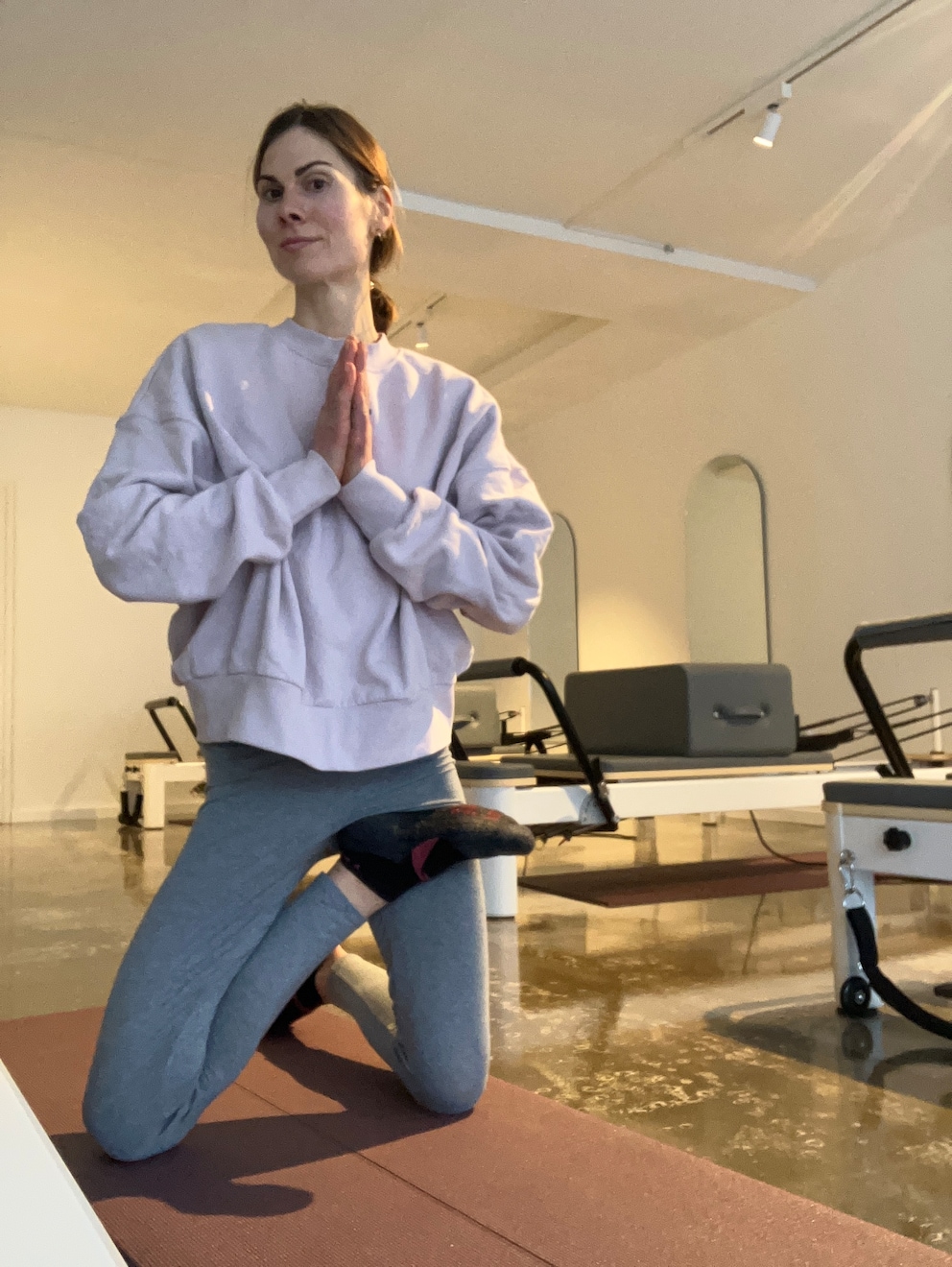
The half lotus: Bend the right knee and place the top of the right foot as high as possible in the left groin. Make sure to keep the foot active (flexed) to protect the knee joint.
The controlled depth: Now it gets exciting. Slowly bend your left standing leg. Gently guide your right knee toward the floor. The goal is to softly place the right knee on the mat. The left shin should remain perpendicular to the ground.
The alignment: Your left leg now forms a right angle while the right knee rests on the ground (or hovers just above it). Proudly lift your upper body.
The eagle arms (Garudasana): To complete the pose, bring your arms into the eagle position. Wrap the right arm under the left and bring the palms together. Raise the elbows to shoulder height and move the hands away from the face.
The hold: Stay here for three to five deep breaths. Feel the heat in your legs and the calm in your mind. To release the pose, push powerfully from the left foot back up to standing.
Breathing for Support
In challenging balance poses, we tend to hold our breath. This is a natural stress reflex, but it is counterproductive in yoga. Once the breath stops, the body becomes tense, and balance fades. Use Ujjayi breathing. This gentle throat sound calms the nervous system and signals your body: “It’s okay, we’re safe.” The breath is the bridge between the effort in your muscles and the stillness in your mind.
“These 4 Yoga Exercises Helped Me With Back Pain”
Effective Yoga Exercises for a Toned Bottom
Variations and the Path to the Goal: It Doesn’t Have to Be Perfect
No one expects you to remain in Vatayanasana like an Indian statue on the first try. There are wonderful ways to ease into it:
The wall variation: Practice the half lotus standing against a wall. Use the wall to support yourself as you lower the knee. This takes the pressure off your sense of balance and allows you to focus on opening the hips.
Preparatory exercises: Spend time in Baddha Konasana (Butterfly) or Eka Pada Rajakapotasana (Pigeon) to open the hips. The eagle (Garudasana) is also an excellent preparatory exercise to train the coordination of arms and legs.
Using blocks: If the knee doesn’t reach the floor, place a yoga block under the kneeling leg. This provides stability and security.
Conclusion: The Journey Is the Goal
The “flying horse” is another of those impressive asanas that make yoga seem a bit like a circus act. Even though the fun is worth it, yoga is not a perfection show and shouldn’t pressure you: It’s not about who stands the longest, but how we handle it when we wobble. The flying horse gives us strength, focus, and a deep connection with our body. It reminds us that even in the most challenging situations, we can maintain an upright posture.
Try it out, be patient with yourself, and laugh when you topple over. Because that’s the moment when yoga truly begins.