


August 18, 2025, 2:01 pm | Read time: 4 minutes
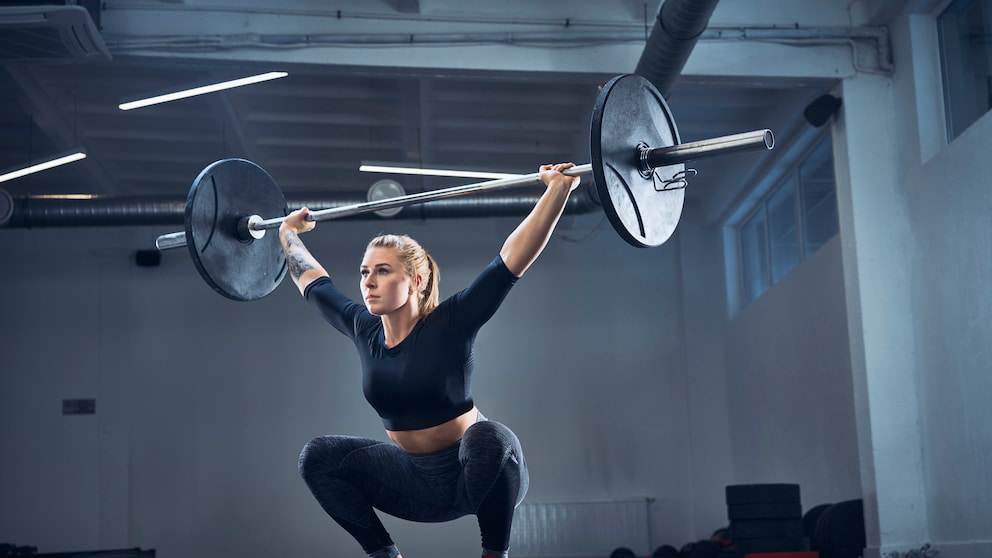
This full-body exercise is known for building a rock-solid upper body, a toned core and torso, and a well-trained lower body: the overhead squat. In German, it’s also called “Überkopfkniebeuge,” which already includes the individual elements of the exercise in its name.
Follow the FITBOOK channel on WhatsApp now!
What Is an Overhead Squat?
Overhead squats are a strength training exercise where you hold a barbell or another weight bar overhead while performing squats. As you squat down, you keep the bar overhead, engaging muscles throughout the body, including the shoulders, arms, core, and legs. This exercise requires good balance, stability, and flexibility, as you must hold the weight overhead while squatting. Overhead squats are effective for strengthening the glutes, thigh muscles, and core muscles, as well as improving mobility and overall body strength. They are commonly used in CrossFit and other strength sports.
Also interesting: Losing weight through sex – is it really possible?
Requirements for the Overhead Squat
Want to learn overhead squats? We can only congratulate you on this fitness goal. However, before you start, you should meet a few basic requirements:
Basic Squat Technique
The most important requirement: You are not a squat beginner. To learn the overhead squat, you should not be new to squats and should already have mastered the basic technique. Overhead squats are just an advanced version of this exercise, meaning the more secure you are with the basics, the easier the overhead variant will be. Need a little reminder for the perfect squat? Push your hips back, keep your knees over your toes, and stay stable in your core throughout the squat movement.
Upper Body Stability
Without a strong core, an overhead squat can lead to injuries. Good stability in the upper back, shoulders, and arms is therefore another requirement and crucial for safely holding the barbell overhead.
Flexibility
To perform the exercise through its full range of motion, you need to be flexible in the shoulders, wrists, hips, and ankles. Only then can you safely hold the barbell overhead and utilize the full range of motion for your training.
Before practicing overhead squats, it’s wise to ask a trainer to check your squat technique. Don’t be shy, as expert advice can prevent injuries.
Why Overhead Squats Are Worth It
Overhead squats are a challenging exercise–meaning they train a variety of skills and muscles. The exercise benefits balance, improves coordination while holding the weight securely overhead, and gets your heart rate up due to the large muscle groups involved.
Overhead squats are an impressive and efficient exercise for weightlifters, strengthening nearly the entire body. The core, especially–from the abdominal muscles to the lower back muscles–is strengthened by the exercise. A strong core is crucial for balance and stability during training with Olympic lifts and protects the spine from injuries. Other muscles that benefit from the overhead squat include:
- Triceps
- Serratus anterior
- Latissimus dorsi
- Trapezius
- Erector spinae
- Teres major
- Deltoids
- Calves

Strengthen Your Core: 6 Pro Exercises for Core Power

5 Basic Exercises That Help You Build Muscle Quickly
Overhead Squat: The Right Technique
Want to learn overhead squats? Then let’s get started. Here’s how to do it right:
Basic Squat Technique
Place a barbell with the desired weight on a rack at shoulder height and grip the bar with a wide snatch grip.
- Now place the barbell behind your neck at shoulder level.
- Take a deep breath and press the bar overhead with your arms extended. Keep your core engaged. Push the bar up with extended arms or place it in the snatch grip on your neck.
- Squat down as low as possible, keeping your feet flat. Make sure to keep the barbell stable overhead and maintain full range of motion.
- Once you’ve reached the lowest point of the squat, stand back up to the starting position.
Overhead squats are a challenging exercise in weightlifting. A high degree of flexibility is particularly important. Coordination between muscle groups and body segments also requires practice. It’s best to approach the movement gradually.
Once you’re ready to perform the exercise correctly, your body will benefit in many ways.
Train Overhead Squats on Leg Days
Want to incorporate overhead squats into your leg day? Once a week, perform three to four sets of eight to 12 repetitions. This exercise is considered one of the most challenging for weightlifting. High flexibility is especially important. Coordination between muscle groups and body segments also requires practice. On other days when you train your legs, simpler squat variations are recommended.