

February 22, 2021, 1:08 pm | Read time: 3 minutes
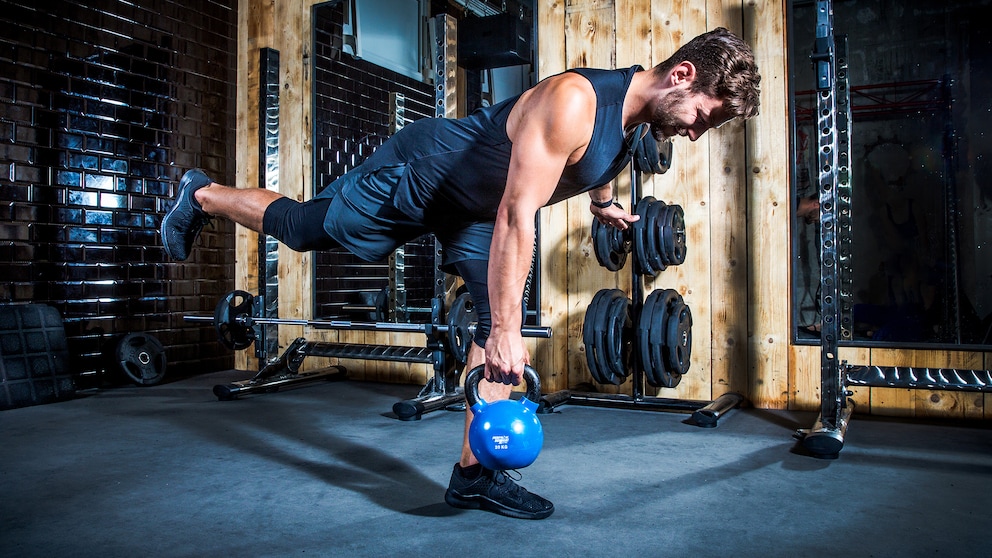
While in the classic deadlift both sides of the body work simultaneously, the single-leg variant with a dumbbell or kettlebell alternates between the right and left sides. This makes the execution significantly more challenging and also shifts the training effect: It particularly strengthens the muscles of the back of the body, which are often neglected, such as the lower back extensors, glutes, and hamstrings. The lateral abdominal muscles are also specifically targeted, and the demanding balancing improves coordination and balance. If this exercise is not yet part of your routine, it’s time to give it a try!
Overview
Variants for Beginners and Advanced
Single-leg deadlifting (English: Single Leg Deadlift) with weight is definitely an exercise for advanced practitioners, as the movement pattern requires considerable body stability. Beginners who want to try it should perform the exercise without weight. Essentially, you do a balance scale and then determine when to incorporate weight. Due to the natural stabilization of the spine, the exercise (in both variants) is very suitable for people with mild back pain.
High-Intensity Mini-Workout for On-the-Go
For a Strong Core: Standing Workout with Dumbbells
How Much Weight Should You Use?
In the single-leg variant of the deadlift, you should use significantly less weight than in the classic deadlift. If you’re unfamiliar with the exercise, please focus first on proper execution and work with light weights. For initial guidance, FITBOOK recommends five to ten kilograms for beginners. Advanced practitioners can use a 10- or 15-kilogram dumbbell (the kettlebell is equally suitable). Only professionals should use even more weight.
Training Recommendation: 3 sets of 10 to 12 repetitions per side.
Common Mistakes in the Single Leg Deadlift
Bent Arms
Many trainees have the (natural) instinct to bend their arm as soon as they hold a dumbbell. However, this should be avoided in this exercise. The arm should remain straight throughout the entire movement.
Also interesting: How to Breathe Correctly During Strength Training
Wrong Leg
The glute muscle that is strengthened is on the side you are standing on. The weight is on the opposite side. Right leg goes up into the balance scale = weight in the right hand. And then switch to the left.
Hip Rotation
Very important: When the upper body bends forward and the leg is lifted simultaneously, the hips must remain parallel at all times. Both sides of the glutes should be at the same height. It’s best to check this in the mirror.
About the Author: Erik Jäger is a functional fitness instructor and has been a successful personal and athletic trainer for many years. On his Instagram channel, the “Capital Trainer” motivates daily for sports. His clients include numerous celebrities.