


June 30, 2026, 11:26 am | Read time: 6 minutes
Carbon running shoes influence world records. But do they benefit us regular runners—especially if they’re from a discount store? Three amateur runners took the Crivit “Carbonlite 1.0” from Lidl for a spin for FITBOOK and were surprised by its propulsion. However, there was a sweat issue on longer runs.
Who Tested It?
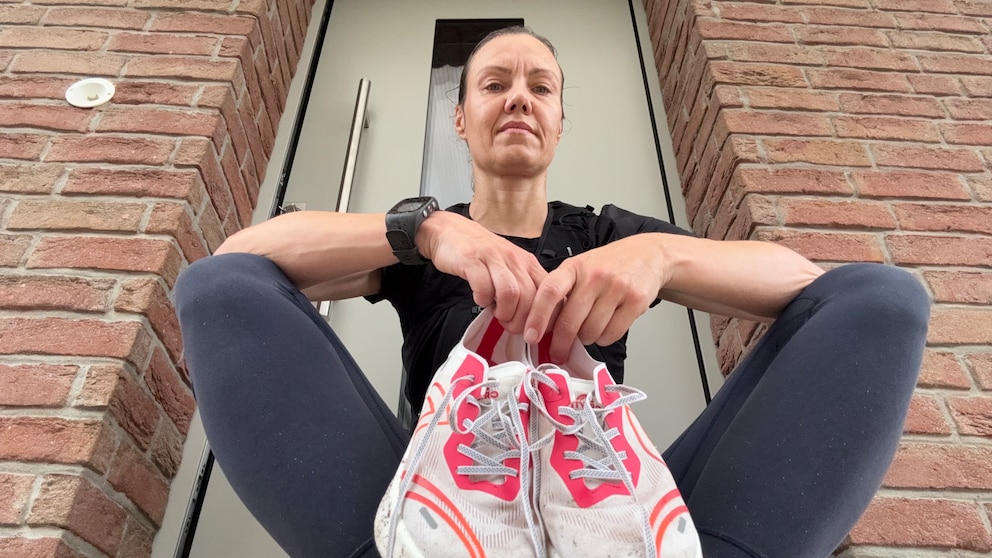
Three amateur runners tested the shoe for FITBOOK. Two are classic recreational runners, active for over ten years, covering at least 25 kilometers per week. The third is an occasional runner, taking it easier with an average of five to ten kilometers. Each tester wore the shoe multiple times as part of their daily routine.
Two of us have already conducted targeted tests with carbon shoes but haven’t used them in everyday life. We examined the Crivit “Carbonlite 1.0” from Lidl as most buyers would: as curious hobby athletes wanting to know if the “boost” is noticeable without a 300-euro investment.
A Carbon Running Shoe for Under 50 Euros? We Were Skeptical
Carbon running shoes today influence world records. But their effect is no longer reserved for the elite. Recreational runners can also run faster with them. The technology behind it: The carbon plate makes the shoe stiffer. The big toe joint doesn’t bend like in a normal shoe; instead, you have to roll over the toe. This creates a kind of spring that stores energy on impact and returns it more efficiently on push-off. Result: You run faster.
Considering that high-end models with carbon technology usually cost 250 to 300 euros, an offer for 49.99 euros sounds almost too good to be true. So we testers started the experiment skeptically. We were all the more surprised when we first held and wore the Crivit “Carbonlite 1.0.”
Crivit “Carbonlite 1.0” – The First Impression
Fit – Good Support, Lacing Difficult
Running Feel – The “Boost” Is There
The running feel is noticeably different from a classic, comfortable training shoe—as expected with a carbon running shoe. We found the shoe to be light, fast, and noticeably firm in its tuning. One tester, who usually runs in the softer-cushioned Nike Vomero, immediately noticed a very pleasant wearing experience.
The decisive factor, however, is the “boost,” which all three of us can confirm. The integrated carbon plate makes the shoe stiffer and more responsive, significantly changing the rolling behavior. The result is a noticeable sense of forward momentum without the shoe feeling too aggressive. The Carbonlite practically motivated us to run more actively and lengthen our stride. It encourages picking up the pace rather than just jogging leisurely.
We all easily reached higher speeds with the “Carbonlite 1.0” than with our other running shoes. But, and this is important to mention: The shoe’s potential only unfolded when actively running. At a very slow, comfortable pace, the rolling behavior felt less natural. But a carbon running shoe isn’t meant for easy recovery runs.
Where the Crivit “Carbonlite 1.0” Shined–and Where It Didn’t
The Crivit shoe from Lidl is not an all-rounder for every occasion but a specialist for certain scenarios. We see the shoe’s greatest strength in fast intervals and brisk long runs. Here, the carbon plate plays its trump cards and provides optimal support when aiming for new personal bests on short distances. For races up to a maximum of ten kilometers, the Carbonlite is top-notch.
The shoe belongs on the road. On dry asphalt, it offers good grip and the necessary stability for fast turns. In the forest and in wet conditions, the shoe felt a bit wobbly or became slippery. It kept moisture away from the foot for 30 minutes in heavy rain.
On distances over ten kilometers, the strong sweat development in the shoe became unpleasantly noticeable. This suggests that the breathability of the upper material reaches its limits during longer sessions.
In our view, the “Carbonlite 1.0” is ideal as a “second shoe” for recreational runners curious about carbon. If you’re looking for an affordable specialist for weekly interval training or the next 5K company run, this is the right choice.

Typical Pain Pattern! I Advise These Runners Against Carbon Shoes

Pop Star Harry Styles (31) Runs the Tokyo Marathon in an Amazing Time
Would We Buy the “Carbonlite 1.0”?
All three FITBOOK testers were (so far) not willing to spend 300 euros on a premium model. The “Carbonlite 1.0” brings carbon technology into a price range where you wouldn’t normally find it. The price-performance ratio is right for us, and given the price, we would buy it ourselves.
Conclusion – “I Expected a Nice Gimmick”
As the only running shoe for all occasions, the “Carbonlite 1.0” from Lidl is not suitable, but as a motivating shoe for fast intervals or five- to ten-kilometer races, it is a strong addition to the shoe rack.
What Convinced Us
The shoe offers noticeable propulsion and a dynamic running feel that directly motivated the testers to pick up the pace. Compared to our usual running shoes, we could reach higher speeds. That a shoe for under 50 euros comes across as visually and tactilely high-quality and in workmanship more reminiscent of brands like Adidas than a “cheap model” surprised everyone.
Here Are the Limits
One shouldn’t expect a perfect high-end racer. The Carbonlite has weaknesses in breathability, which can lead to unpleasant sweat development during longer sessions. Additionally, the fit in the forefoot is very tight, and the sole is slippery on wet surfaces, posing a certain risk of injury. It also lacks the lightness of the 300-euro models.
The overall conclusion from one test runner: “What surprised me most was how serious the shoe feels overall. I expected more of a nice gimmick.”