


February 28, 2018, 9:17 am | Read time: 5 minutes
Until a few years ago, fascia was dismissed as unnecessary muscle packaging, but it has now become a key player. We now know that this white, jelly-like connective tissue network plays a crucial role in the body and is even considered a major cause of back pain. FITBOOK spoke with fascia researcher Dr. Robert Schleip to learn how the network under the skin works and how we can keep it fit.
When did you first come across the term “fascia”? It’s quite possible it was at the gym. In recent years, there has been a boom around the fascia roller as a training tool. Black or orange rollers of varying hardness are used to roll over the body, massaging the legs, buttocks, and upper back.
The foundation for the popularity of the fascia roller was laid in 2001 by American movement therapist Tom Myers with his book “Anatomy Trains,” in which he introduced the theory of myofascial meridians. This theory suggests that even muscles far apart are connected through various fascia chains.
Another leading figure in fascia research is Dr. Robert Schleip. The head of the Fascia Research Project at the University of Ulm and research director of the European Rolfing Association has been studying the structures and functions of fascia for many years.
What Are Fascia and Why Do We Need Them?
“Fascia form a connective tissue-like tension network, about 0.3 to 3 millimeters thick, that envelops and penetrates the muscles, providing stability to the body,” explains Robert Schleip to FITBOOK. Fascia are primarily found in the areas of muscles and organs. They are characterized by special properties, such as high elasticity, high water content, and a large number of nerve receptors. In short, fascia hold everything together.
The example of a sliced grapefruit illustrates this principle: Its pulp is enclosed by white membranes inside, while a firmer skin on the outside provides additional stability. If you removed the pulp, you could recognize the structure of the grapefruit just by the white skin. The same applies to the human body and fascia. Just by the fascia, which surround muscles and organs throughout the body, one could guess what a person looks like–even without bones and flesh.
Fascia Tissue as Its Own Sensory Organ
Incidentally, the special properties of fascia tissue have led doctors to consider it as an independent organ, even a sensory organ. Recent scientific estimates by Martin Grunwald from the University of Leipzig revealed the incredible number of over 100 million receptors in this connective tissue network–making fascia the richest sensory organ, even surpassing the eyes. “Considering that fascia were regarded as mere packaging material just ten years ago and were often removed carelessly during surgeries, this development is akin to a medical revolution,” says Schleip.
How Stuck Fascia Can Cause Pain
Just like muscles, fascia have the ability to contract: “They can contract and relax,” explains Robert Schleip. Muscles that are not frequently used lose strength and size. Similarly, fascia tissue behaves when not used. “It loses the ability to glide and eventually sticks to the surrounding tissue.” Typical for stuck fascia are reduced gliding ability and decreased water content. “This results in a disrupted interaction between muscle and fascia, which can cause pain.”
Nonspecific Back Pain
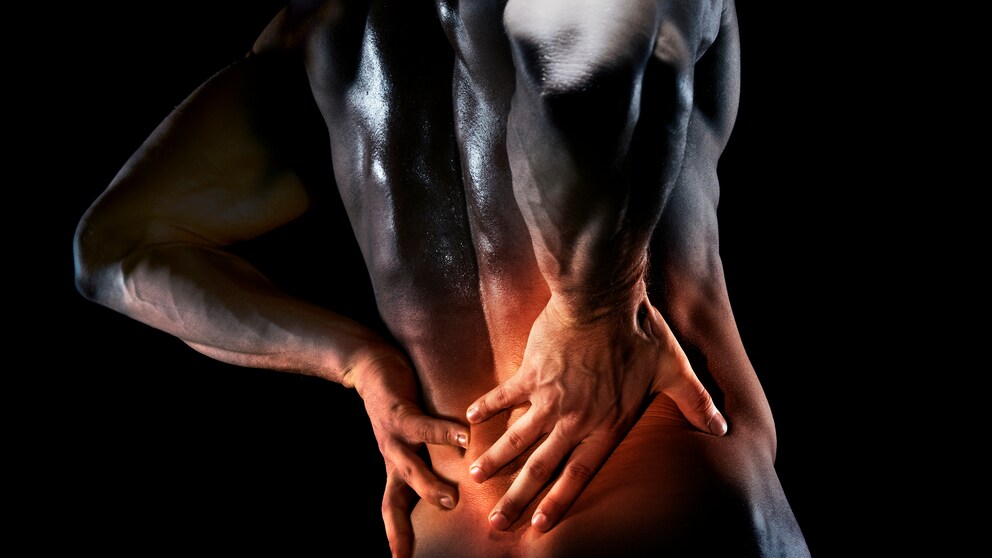
The largest fascia in the human body is the thoracolumbar fascia. If a disturbance occurs here due to lack of movement or incorrect strain, back pain often occurs, according to our expert. It was previously believed that these pains were caused by tense muscles or the intervertebral discs. Nowadays, the stuck back fascia is often held responsible for the development of nonspecific back pain.
“Back pain, or soft tissue pain, is 90 percent a protective reaction of the brain. Fascia roller training is mainly about turning the patient from a victim to a perpetrator–in line with the principle: ‘I take care of it myself!'” Robert Schleip is convinced: “In most cases, back pain can be reversed through fascia training.”

The Right Nutrition for Healthy Fascia

Does Reformer Pilates Work at Home Without Expensive Equipment? I Tried It
What Does Fascia Training Mean?
Fascia training includes all measures aimed at promoting the health of fascia tissue. The contents of fascia training include bouncing movements (jumps), stretching exercises, and self-massage with a fascia roller. With the surge that fascia science has experienced in the last five to ten years, a real boom has begun. The roller as a training tool has been around for a long time: Its origins lie in physical therapy, and in Pilates, it is known as a Pilates roller.
Also interesting: Does fascia training have to hurt to be effective?
Which Fascia Training Is Suitable for Me?
If the fascia tissue is “thickened,” the goal is to make it more supple. This is achieved with the roller. As an application example, Dr. Schleip mentions the so-called runner’s knee, where joggers complain of pain on the outside of the knee. “In this case, the outside of the thigh fascia is painfully thickened,” says the expert. Targeted roller application can help gradually reduce fascia firmness.
It’s different with increased fascia firmness in a body area–for example, cellulite. There, it is more advisable to stimulate your own collagen production with gradually increasing jump rope training every two to three days.