


August 12, 2025, 11:21 am | Read time: 6 minutes
It sounds unbelievable: Three people have died in Italy after eating seemingly harmless snacks. The cause is not a rare virus or an exotic disease—but a globally widespread (soil) bacterium that, under certain conditions, releases one of the deadliest known toxins. The result: a dramatic outbreak of botulism.
Italy: Three Dead and Numerous Ill After Botulism Poisoning
Severe cases of botulism have recently been reported in several popular holiday regions in Italy—with tragic consequences. In Diamante, in the Calabria region, two people died after eating a sandwich with broccoli and sausage from a street vendor. Another case was reported in Sardinia: A 38-year-old woman became infected after consuming guacamole at a festival. Despite intensive medical care, she did not survive and died after several weeks.
In total, more than a dozen people suffered life-threatening poisoning. All affected were diagnosed with botulism poisoning caused by contaminated food. Two of the patients remain in critical condition. The ongoing investigation now focuses on the operator of the affected food truck, several suppliers, and a clinic where the correct diagnosis was apparently delayed. Authorities are currently investigating possible lapses in storage, processing, and medical care.1
Clostridium Botulinum—an Invisible but Deadly Environmental Germ
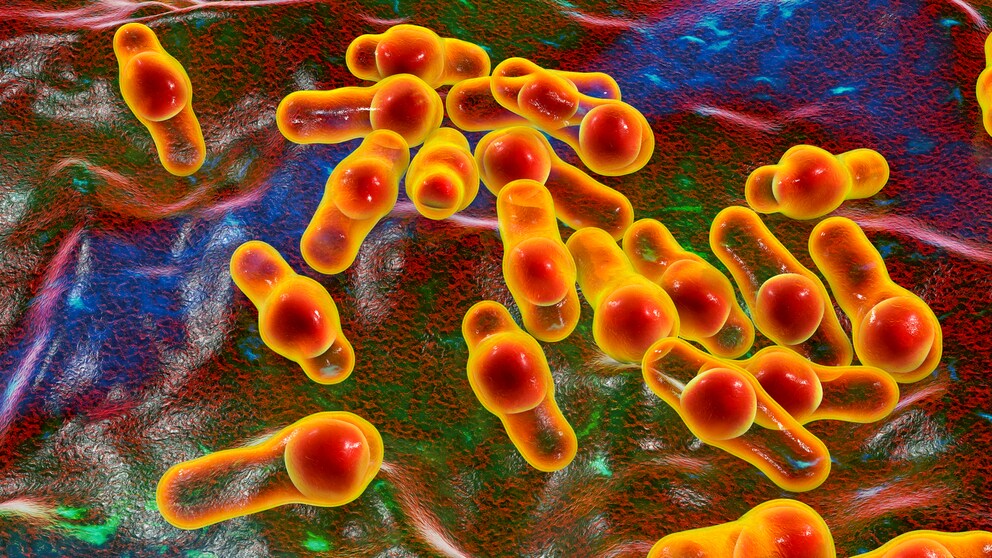
The bacterium Clostridium botulinum is widespread in the environment—found in soil, dust, and sediments. In its spore form, it is extremely resistant to heat, dryness, and cold. Only when it enters an oxygen-poor, moist, and nutrient-rich environment does it begin to multiply and produce the extremely toxic botulinum toxin. Botulism poisoning is one of the most dangerous foodborne illnesses because it can be fatal without timely treatment.
It becomes particularly dangerous when preserved, vacuum-packed, or pickled foods are not sufficiently heated or stored hygienically. In the current case in Italy, broccoli preparations were reportedly left unrefrigerated in the sun for hours—a typical scenario that promotes the formation of the dangerous toxin.
How Botulism Poisoning from Food Occurs
The bacterium Clostridium botulinum is a natural part of the environment and can be found almost everywhere, such as in soil, dust, or on plants. To survive unfavorable conditions, it forms tiny, extremely resistant spores. These can unknowingly land on food through dust or dirt—without visible or noticeable signs.
Typical risk products are homemade vegetable or meat preserves, where sufficiently high temperatures were not reached during canning. In such cases, the spores can survive and reactivate in the sealed jar. There, they develop into bacteria that form the dangerous toxin. Industrially produced preserves are considered much safer if production conditions are met. Clostridium spores are extremely heat-stable.
Raw milk or fresh meat are not considered typical triggers for botulism poisoning in humans according to current knowledge.2
Effect on the Body: How the Toxin Paralyzes the Nervous System
The botulinum toxin produced by Clostridium botulinum is indeed the strongest known poison or toxin. It blocks the transmission of signals from nerves to muscles, leading to progressive paralysis. Initially, symptoms usually appear in the head and facial area. As it progresses, vital body functions can be affected.
Typical symptoms include:
- Dry mouth
- Light sensitivity, eye flickering, double vision
- Drooping eyelids, facial muscle paralysis
- Slurred speech, hoarseness, and swallowing disorders
- Impaired cough reflex
- Nausea, vomiting, constipation, bowel obstruction
- Muscle weakness, circulatory problems, shortness of breath up to complete respiratory paralysis
In severe cases, intensive medical treatment with artificial respiration and antitoxin administration is required. The early start of therapy is particularly critical, as the toxin binds irreversibly to nerve cells.3
Botulism Poisoning: What Happens Medically in an Emergency
Botulism is always a medical emergency. Affected individuals must be taken to the hospital immediately and are usually treated in an intensive care unit. Artificial respiration is often necessary because the toxin can paralyze the respiratory muscles. Even the smallest amounts of botulinum toxin can be life-threatening.
If botulism poisoning is suspected, a specific antidote is administered—usually before lab results are available. The earlier the treatment begins, the greater the chances of survival.
If the spoiled food was consumed only a few hours ago, gastric lavage may also be useful to remove remnants of the toxin from the body. If the intestines are already paralyzed or there is constipation, medications that stimulate bowel activity can help.4

Sick from Leftovers! The Dangers of Fried Rice Syndrome

Causes and Symptoms of Food Poisoning
Forms of Botulism–and How They Occur
Botulism occurs in various forms, depending on the route of infection. Each form carries specific risks:
1. Inhalation Botulism
An extremely rare but highly dangerous form. It occurs through inhalation of botulinum toxin—for example, when opening heavily contaminated preserves or in the event of a bioterrorist attack.
2. Latrogenic Botulism
This variant can occur due to an overdose of botulinum toxin, such as in cosmetic wrinkle treatments or neurological therapy. However, such cases are extremely rare.
3. Animal Botulism
Primarily affects cattle and poultry when they consume contaminated feed. This form mainly plays a role in agriculture but can have economic and epidemiological consequences.
4. Wound Botulism
Occurs when the bacterium enters open, oxygen-poor wounds. People who use intravenous drugs are particularly at risk. The toxin is produced directly in the infected tissue.
5. Infant Botulism
This form occurs exclusively in infants under twelve months. Since their gut flora is not yet fully developed, introduced spores can settle in the intestines and produce the toxin there. A typical trigger is honey, which is why parents should never give it to infants.
6. Foodborne Botulism
By far the most common form in humans, and also the cause in the current case in Italy. It occurs through the consumption of contaminated, insufficiently heated food. Typical examples are homemade preserves, pickled vegetables, sausage, or fish products. The toxin can only be reliably neutralized by heating above 85 degrees Celsius.5
How Common Is Botulism–and How Can You Protect Yourself?
Botulism is overall rare in Europe. In Germany, fewer than ten cases are reported annually—almost all of them foodborne. Due to modern food controls, the risk for industrially manufactured products is very low. It is a different story with homemade preserves or improperly stored foods—especially in summer temperatures.6
Protection measures at a glance:
- Do not use cans with bulging lids
- Dispose of jars with damaged seals or unusual odors
- Heat homemade preserves to at least 85 degrees Celsius before consumption
- Do not give honey to infants under one year
- Ensure clean, refrigerated storage at street food vendors
- Do not leave food leftovers unrefrigerated for hours