

March 19, 2020, 6:01 pm | Read time: 3 minutes
Most restaurants in Germany are required to close to guests by 6 p.m. due to COVID-19, while in North Rhine-Westphalia, the mandatory closure is now at 3 p.m. Those who don’t want to cook or can’t and want more than a sandwich can still order food through delivery services. However, there might be a risk that some kitchen staff are infected with COVID-19. Is there a danger of infection through the food? We asked experts.
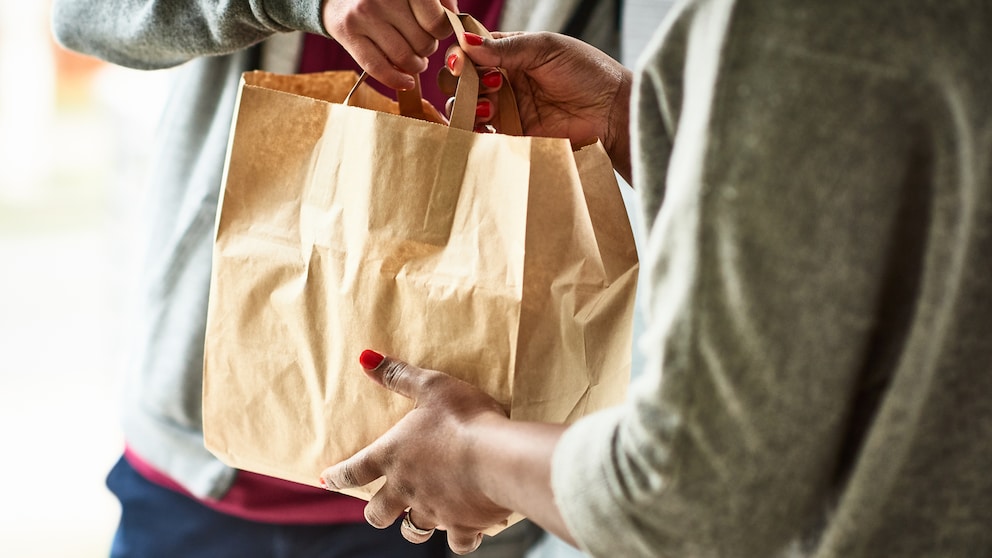
Customers of Lieferando were informed via email at the beginning of the week that they can continue to order food for delivery or pickup through the website or app. “Last Friday, we introduced contactless delivery as a precautionary measure,” the delivery service explained amid the spread of COVID-19. This means the courier rings the customer’s doorbell and leaves the packaged food at the door. Payment is made online.
Dining Out Is Prohibited
Many might want to use this service more frequently now. Contrary to political recommendations, a large part of Germany continued to visit restaurants, not staying home to break a potential chain of infection with the coronavirus. Now, restaurants, cafes, and bars are officially required to close by 6 p.m. at the latest.
Also interesting: How Are Coronaviruses Most Likely Transmitted?
Restaurant Closures Are Not Without Reason
The reason for this decision remains: the attempt to contain or at least slow the spread of COVID-19. The number of infected people in Germany has surpassed 10,000. It’s quite possible that in establishments working with delivery services, there are employees with COVID-19—even if they are unaware of their infection. Could the food be contaminated? And can you get infected from it?
Can You Get Infected with COVID-19 from Delivery Service Food?
No, assures Prof. Constanze Wendt, a specialist in infection epidemiology, hygiene, and environmental medicine. “Transmission through food is not known. It is extremely unlikely that the mechanisms you described could deliver sufficient virus quantities to the mucous membranes of a person’s respiratory tract,” she assesses.
Then why are all dining establishments closing? Would it be more dangerous to eat from contaminated dishes or cutlery in a restaurant? In summary:

Sick Leave Regulations in Germany Further Relaxed

According to Virologists: Germany Could Avoid Second Wave of Infections
Should You Avoid Restaurant Visits Even Before 6 or 3 p.m.?
“Restaurants are closed to avoid gatherings where transmission through droplets could occur,” Prof. Wendt explains. “Additionally, people sit together who cannot be traced back.” Potential chains of infection would thus be harder to track.
So, it has nothing to do with potentially contaminated plates and forks. This is also confirmed by Dr. Enrico Zessin, a molecular biologist. Any viruses would be inactivated by the time they come out of the dishwasher. Coronaviruses are heat unstable, and in the food industry, washing is done at at least 140 degrees Fahrenheit, he reminds us.
Zessin is convinced: “Infection through dishes or cutlery in the food industry has not been described so far and is considered unlikely due to the low environmental stability on dry surfaces.”
Also interesting: COVID-19 Relaxations! Proper Behavior in Restaurants and Cafes
Conclusion
You can continue to order food from delivery services or directly from establishments that offer this service through their own couriers. For those who want to be extra cautious, Zessin has an additional tip: order cooked food, not cold items like sushi. Then there should be no reason for concern.