


April 28, 2026, 11:51 am | Read time: 7 minutes
Did you know that “forever chemicals,” known as PFAS, can be detected in babies’ blood at birth? A new study from California examined the link between PFAS and the risk of acute lymphoblastic leukemia, the most common childhood cancer. While the data cannot conclusively prove a connection, the evidence is strong. Additionally, a new generation of forever chemicals could further increase health risks. Learn where these substances lurk in everyday life and how you can reduce your child’s exposure even during pregnancy.
Link Between PFAS at Birth and Leukemia in Children
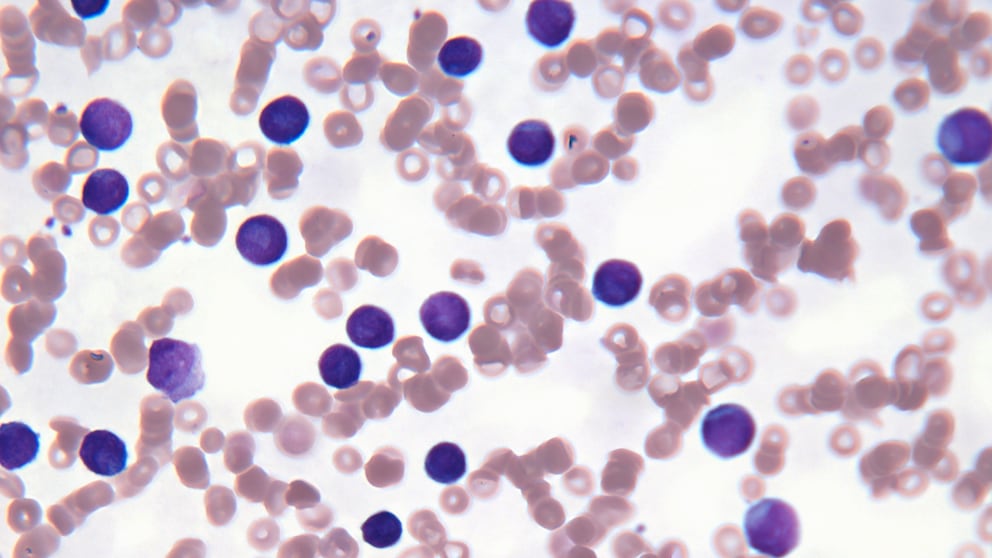
PFAS (per- and polyfluoroalkyl substances), also known as “forever chemicals,” are considered potentially carcinogenic but have been scarcely researched in connection with childhood cancers. A multidisciplinary team from several U.S. universities analyzed dried blood samples from newborns, routinely collected shortly after birth. The researchers found that children with the highest concentrations of some “forever chemicals” in their blood at birth had a higher risk of developing acute lymphoblastic leukemia (ALL) later. The journal “Journal of Exposure Science & Environmental Epidemiology” reported.1
ALL is the most common cancer in children. It most frequently affects children between the ages of one and five, with around 600 children under 18 diagnosed in Germany.2
Forever Chemicals Detectable in Many People’s Blood
The researchers, led by Veronica M. Vieira, chair of environmental and occupational medicine at the University of California, Irvine, examined a wide range of PFAS. They focused particularly on the PFA chemicals PFOA (perfluorooctanoic acid) and PFOS (perfluorooctanesulfonic acid) because of their extreme persistence in the environment. In the human body, these substances accumulate over time because they are absorbed faster than they can be broken down or excreted (bioaccumulation).
According to the researchers, these PFAS are detectable in the blood of 98 percent of the U.S. population, even though they have largely been replaced in production. In Germany, PFAS are also widespread and frequently detectable in the blood, especially in children and adolescents.3
PFAS (per- and polyfluoroalkyl substances) are also known as “forever chemicals” because they are particularly stable and degrade very slowly in the environment. The chemical industry uses them in a variety of products.
Researchers Examine PFA Chemicals in Newborn Blood
To investigate PFAS exposure at birth and its link to the risk of acute leukemia in childhood, the researchers used dried blood spots from 344 children, routinely collected after birth. ALL was diagnosed in 125 children before the age of 18, while 219 were cancer-free. All children were born between 2000 and 2015 in Los Angeles County, California.
The blood samples were sent to Yale University, where they were extracted using specialized methods to search for 24 known PFAS compounds. The researchers identified 26 additional PFAS compounds by searching for specific chemical patterns.
To validate the results, the scientists considered potential confounding factors such as the mother’s age, type of health insurance, and ethnic characteristics.
Also of interest: PFAS likely accelerate aging in men over 50
Results – Risk Increases Significantly When PFAS Combine
- PFOA and PFOS, two known forever chemicals, were found in more than 50 percent of the samples.
- Children who later developed acute lymphoblastic leukemia had, on average, higher PFAS levels in their blood at birth than the control group.
- The risk appeared to increase with concentration.
- Children with the highest exposure to “forever chemicals” had about a 60 percent higher risk of acute lymphoblastic leukemia compared to the group with the lowest exposure.
- The risk was particularly evident with combined exposure to the chemicals PFOA and PFOS: The risk increased continuously with the combined levels of both substances.
Through their specialized analysis, the researchers also discovered risks associated with modern replacement chemicals, which often appeared even more dangerous than the old substances.
“New” Forever Chemicals Emerge
A doubling of the concentration of two “new” substances was associated with more than a fivefold increased risk of leukemia. These “new” forever chemicals are increasingly appearing in the environment and blood but are poorly researched. According to the researchers, these substances belong to the class of so-called PCFA ethers, used as replacements for PFOA in modern manufacturing. They may also be degradation products of known PFAS. What makes the new PFAS so dangerous is that there are no established limits for them yet.
Higher PFAS Levels in Children from “Wealthier” Neighborhoods
The study showed significant differences in exposure and risk depending on origin and status. The links between PFAS and cancer risk were consistently stronger in non-Hispanic participants than in Hispanic participants.
High levels of PCFA ethers were particularly common in children of Asian descent.
Higher levels of PFOS and PFOA were generally found in children of parents with higher education, private health insurance, and in neighborhoods with higher property values. This suggests that the use of specific consumer goods or certain lifestyle habits in these groups leads to higher exposure.
Significance of the Study
A key finding of the study is that dried blood spots from newborns are an excellent source for investigating environmental exposures from the earliest stages of life. The authors note that many results did not reach statistical significance due to the small sample size (344 children). Nevertheless, the data provide clear indications of a connection that needs to be further investigated in larger follow-up studies.
Limitations
The authors of the study themselves point out several limitations that affect the statistical power and interpretation of the results. Although the researchers used an efficient sampling method, the total number of participants was relatively small at 344 children. Many of the observed associations showed clear trends but did not reach statistical significance.
To increase the chances of finding a connection, the researchers focused more on children from PFAS-affected regions. The downside of this approach: The sample is no longer representative of the general population. Statistical weighting was used to compensate for this.
Another limitation of the results is that the analysis relies on a single PFAS measurement at birth. The authors note that this is potentially less reliable than repeated serum measurements over a longer period. The study focused exclusively on births in Los Angeles County between 2000 and 2015, which may limit direct applicability to other regions.
Nevertheless, the results and the scientific background of the study underscore the significant danger posed by PFAS.
How PFAS Reach the Newborn
The study identifies several ways children come into contact with PFAS early in life. Since the samples were taken from newborns within the first 36 hours after birth, exposure occurs primarily prenatally through the mother. Contaminated drinking water is one of the most significant sources of exposure.
The forever chemicals reach children through:
- drinking water (PFAS are highly water-soluble),
- contaminated food consumed by the mother (here is an overview of popular foods that may be contaminated with PFAS)
- single-use packaging with grease-resistant coatings (e.g., fast-food packaging or microwave popcorn bags)
- PFAS are found in many household products like stain-resistant treatments for carpets and furniture. These substances accumulate in house dust.
- PFAS are also present in personal care products, nonstick cookware, and water-repellent clothing.
- Another mentioned source is aqueous film-forming foams used in firefighting.
Researchers Identify Potential Additional Factor for MS

Signs That May Indicate Blood Cancer
How to Significantly Reduce PFAS Exposure
PFAS cannot be completely avoided. They are too widespread, and individual products are rarely the cause; it’s about the cumulative exposure from many small sources.
However, exposure can be significantly reduced–and it’s especially worthwhile during pregnancy.
Drinking water is one of the few areas where you can have a significant impact. How to filter PFAS from drinking water can be read from our colleagues at myHOMEBOOK.
Also, aim for unpackaged foods and use an uncoated pan for frying. Since PFAS also tend to accumulate in house dust: regularly wipe with a damp cloth and wash hands, especially before eating. And otherwise? “Before buying waterproof or stain-resistant textiles, read the label to ensure they have not been treated with PFAS. Better yet, look for products labeled as free of PFC, PFOS, and PFOA,” writes environmental chemist Dr. Johanna Roberts in an article in the British science magazine “The Conversation.”4
Research: Forever Chemicals Involved in Many Diseases
Research shows that PFAS are involved in many different diseases, with studies linking them to testicular and kidney cancer, impaired kidney function, thyroid problems, obesity, reproductive disorders, and developmental issues in fetuses.5,6,7 It is also suspected that forever chemicals may be a reason for the rapid decline in sperm quality in industrialized nations.8