


February 4, 2026, 8:39 pm | Read time: 5 minutes
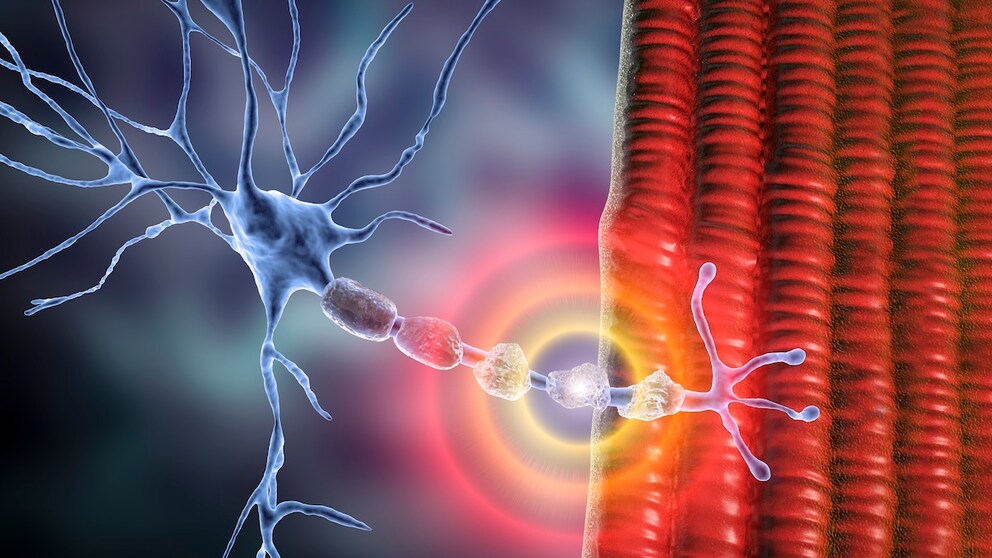
Multiple sclerosis (MS) is among the most feared diseases. This inflammatory condition of the central nervous system can lead to motor disorders and ultimately the failure of individual bodily functions. Swedish researchers have now discovered a new factor that may be linked to MS.
According to current figures, more than 280,000 people in Germany alone live with MS.1 Every year, many new diagnoses are added in Germany—often in young adulthood. Initial diagnoses in adolescence or after age 60 are rather rare. Women are more frequently affected than men. So far, there is no cure for this autoimmune disease. A major question remains: What causes the disease of the central nervous system? Swedish researchers have now identified a new factor that may significantly increase the likelihood of multiple sclerosis: so-called “forever chemicals.”
What Are Forever Chemicals?
To better understand the topic, we should first clarify what forever chemicals are. These primarily refer to fluorochemicals such as per- and polyfluoroalkyl substances (PFAS).2 This group of substances includes around 10,000 extremely stable chemical compounds. This makes them very durable, and they do not break down in nature. Hence, they are colloquially referred to as “forever chemicals.”
The problem is that they permanently pollute water and soil, accumulating in humans and animals through food and other consumer products. PFAS are found in numerous products, especially where they are used to protect against grease, dirt, water, and other deposits. Typical products include the following:
- On upholstery and other fabrics to protect against stains and dirt
- In pans and other kitchenware with non-stick coatings
- In grease-resistant food packaging
- As anti-fog agents on glasses
According to Germany’s consumer center, it is difficult to reliably determine whether a product contains PFAS. This is because there is no labeling requirement for most product areas. However, one can look for sustainability seals and labels such as “PFAS-free,” “PFC-free,” or “fluorine-free.”
What Did the Study Investigate?
The prevalence of multiple sclerosis has increased by about 26 percent worldwide over the past 30 years, according to a new study by Swedish researchers.3 In some countries, the number of diagnoses has more than doubled since 1990. What triggers the autoimmune disease of the central nervous system is still not precisely known. However, with their study, the researchers identified PFAS as a previously overlooked factor that could increase the likelihood of developing MS.
To demonstrate this, 24 PFAS compounds in the blood of 907 patients recently diagnosed with MS were examined using Swedish health data. A control group of 907 healthy individuals was also tested for the same chemicals. Additionally, other forever chemicals known as polychlorinated biphenyls (PCBs) were investigated.
Patients with MS Had Higher Concentrations of Forever Chemicals in Their Blood
The analysis of blood samples showed that individuals with higher concentrations of “forever chemicals” in their blood had a significantly higher likelihood of MS. Individual substances showed signals—most notably PFOS and two hydroxylated PCB metabolites. The connection became particularly clear when the researchers considered the mixture of several substances together. The researchers, therefore, suspect that the presence of many different chemicals in combination is a risk factor for multiple sclerosis.
“The results show that in trying to understand the effects of PFAS and other chemicals on humans, we must consider not only individual substances but also mixtures of chemicals, as people are typically exposed to multiple substances simultaneously,” comments study author Aina Vaivade from Uppsala University in Sweden on the data analysis.4
These Participants Had a Particularly High Likelihood of MS
A more detailed data analysis revealed that participants with high PFOS levels (PFOS is a chemical from the PFAS group) or with high levels of the two PCB byproducts 4-OH-CB187 and 3-OH-CB153 had a particularly high likelihood of developing MS. “We found that several individual substances, such as PFOS and two hydroxylated PCBs, are associated with an increased likelihood of MS,” explains lead author Kim Kultima, a clinical chemist from Uppsala. Individuals with the highest PFOS and PCB concentrations had about twice the likelihood of developing MS compared to those with the lowest concentrations.

Multiple Sclerosis: An Expert Explains Causes, Symptoms, and Treatment

Certain chemicals may promote leukemia in children
Why Are These Chemicals a Risk Factor for Multiple Sclerosis?
But why are these chemicals specifically linked to MS? The Swedish scientists also have a possible explanation for this. They believe that both PFOS and OH-PCBs can cross the blood-brain barrier and enter the immune cells of the central nervous system. If these chemicals trigger oxidative stress, they could impair the brain’s antioxidant defenses, potentially contributing to muscle weakness, numbness, or vision problems often associated with MS.
Genetic Predisposition Also Plays a Role
However, a genetic variant could also play an important role in MS risk. The researchers found that the likelihood of developing MS was much higher in participants with a specific genetic variant, which is actually associated with a lower risk for the disease, when they were exposed to high PFOS concentrations. Among these study participants, the risk of developing MS was more than four times higher with increasing PFOS exposure.
“This suggests that there is a complex interaction between heredity and environmental exposure in the context of MS risk,” says Kim Kultima. However, this was a statistical correlation. This means it is not certain that people with the corresponding genetic variant actually have an increased MS risk.
In general, the study does not show causal relationships. Further investigations are therefore needed to confirm the identified connections. Further studies must clarify the relationships between environmental toxins, such as the so-called forever chemicals, genetic predisposition, and MS.