


August 21, 2025, 9:23 am | Read time: 4 minutes
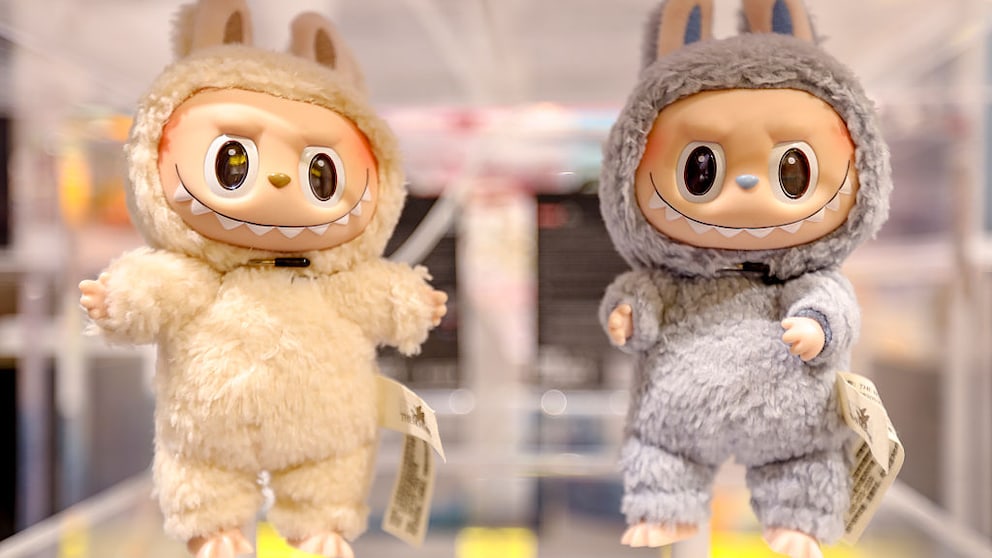
Labubus have quickly found their way into children’s rooms and the handbags of stars like singer Lizzo and Dua Lipa. The small monsters, created by Hong Kong artist Kasing Lung as characters in his picture book series “The Monsters,” conquered the market in record time. And shortly thereafter, so did counterfeits–known among enthusiasts as “Lafufus.” Authorities from the U.S. and the United Kingdom are warning about these: The fake dolls can become life-threatening.
Follow the FITBOOK channel on WhatsApp now!
The toy manufacturer Pop Mart is extremely successful in distributing the coveted monster collectible figure: The company expects revenue of over four billion U.S. dollars in 2025.1 After all, the popular “Blind Boxes,” where buyers only find out which version they have obtained upon opening, can cost a hefty 60 euros. Quite steep–and the perfect breeding ground for all sorts of cheaper counterfeits to emerge. Those who lack the necessary cash or simply don’t have the know-how to recognize fakes often resort to them. But these are not without danger.
Lafufus Can Become Life-Threatening
Both the American Consumer Product Safety Commission (CPSC) and the British Chartered Trading Standards Institute (CTSI) have issued urgent warnings about fake Labubus.2,3 The reason: The dolls are sometimes so small that a child could put them in their mouth and block their airways. The CPSC also has reports of fake Labubu dolls that easily break apart–small parts become a choking hazard.
Christine Heemskerk, CTSI’s head of product safety, further explains the health risks of hazardous materials: “Counterfeit dolls are poorly manufactured in unsafe production facilities. Counterfeiters do not adhere to safety standards and likely do not have good factory controls. A fake Labubu doll can contain dangerous chemicals in the plastic that can cause lifelong damage to a child’s organs.” These include toxic substances like lead, harmful dyes, or banned plasticizers.
Peter A. Feldman, chairman of the CPSC, warns emphatically: “These counterfeit Labubu dolls are dangerous, illegal, and have no place in (American) households. No parent should have to worry about whether a toy is obstructing their child’s breathing. Protect your children and only buy from reputable sellers.”
Also interesting: How to Make Your Home Child-Safe
Authorities Hunt for Fake Labubus
CPSC investigators identified several shipments of counterfeits that were to be imported from China into the U.S. and called for the seizure of thousands of units after finding violations of federal regulations for toys with small parts. Seizures are also increasing in the United Kingdom: Trading standards discovered over 2,000 dolls in the North Tyneside region alone in one month, with more cities following. The fake Labubus also violate the British toy safety regulations, as they lack the CE or UKCA safety marking, importer information, and required safety warnings.
How to Childproof Your Home

Choking Hazard: 6 of 15 Children’s Mattresses Fail ‘Ökotest’
What Is the Situation in Germany?
These dangers could also exist here. Simon Götze from the Berlin Consumer Center explains that the manufacturers of such counterfeit products are largely anonymous and can thus evade manufacturer liability. “Moreover, counterfeiters may not care if Pop Mart’s brand is damaged as a result. Therefore, it’s not implausible that quality is compromised here.” However, sellers cannot escape responsibility. “They are liable under warranty law for the goods they sell to consumers here. This is especially true if they know they are dealing with counterfeits.”
How to Spot the Fakes
The two consumer protection agencies offer tips in their communications on how to recognize the fakes:
- Don’t buy bargains: Deep discounts can indicate counterfeit products.
- Packaging clues: Genuine Pop Mart Labubu dolls have a holographic Pop Mart sticker, a scannable QR code that links to the official Pop Mart site, and (in newer editions) a subtle UV stamp on one foot.
- Number of teeth: Fakes often have overly bright colors or the wrong number of teeth (genuine dolls have nine).
- Reputation: Buy from reputable retailers and avoid unknown online sellers or third-party vendors on online marketplaces.
- Check safety markings: Look for choking hazard warnings and independent safety test marks on toys with small parts.