

July 25, 2025, 9:00 am | Read time: 6 minutes
Did you know that over 80 percent of accidents involving young children happen at home? Falls, burns, or poisonings can often be prevented with simple measures. Regularly inspect your home with the “eyes of a child” and remove potential hazards. FITBOOK editor Michel Winges explains how you can childproof your home with simple tips.
Follow the FITBOOK channel on WhatsApp now!
Children’s Room
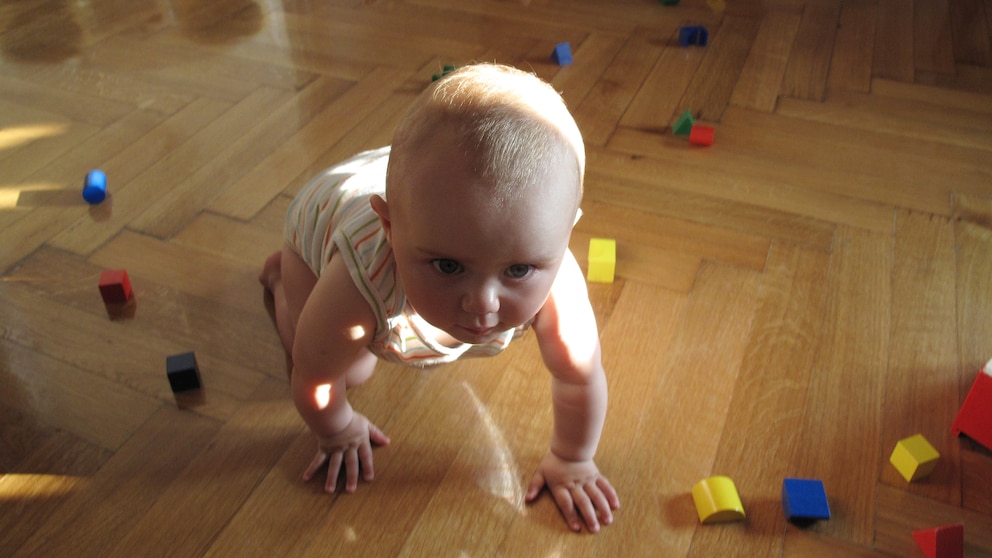
The children’s room is a place for babies and toddlers to explore, crawl, and play. Especially in the first months of life, babies explore their surroundings primarily with their mouths and reach for anything within reach. Therefore, you should pay special attention to the following safety aspects:
- Changing table: Never leave your baby unattended on the changing table and always keep one hand on the child.
- Windows: Secure windows with lockable handles or special window locks so your baby cannot open them.
- Toys: Use only age-appropriate toys without small parts that could be swallowed–choking hazard!
- Crib: Choose a crib with high, sturdy bars to prevent your baby from falling out.
- Environment: Remove sharp edges and corners and ensure furniture is stable.
- Furniture: Always secure furniture and shelves to the wall to prevent tipping.
- Outlets: Protect all outlets (including power strips) with suitable childproof covers. This applies to all areas of the home where the baby plays.
- Floor: Keep the floor free of tripping hazards and use rugs with non-slip backing.1
- Cords and strings: Avoid long cords or strings on curtains, blinds, and toys–strangulation hazard!
- Plants and objects: Remove toxic plants and sharp or pointed objects from the children’s room.
Bathroom
Accident hazards can quickly arise in the bathroom–whether from water, slippery surfaces, or electrical devices. Special attention is required when caring for and bathing your child, as even small oversights can have significant consequences. The following tips will help you ensure more baby safety in the bathroom:
- Supervision: Never leave babies unattended in the bathroom, even for a short time.
- Water: Always check the water temperature (ideal: 96.8 to 100.4°F) and use non-slip mats in the tub and shower.
- Electrical devices: Always unplug hairdryers, razors, and other electrical devices after use and store them out of reach.
- Medications and cleaning agents: Always store medications, cosmetics, and cleaning agents locked away and out of children’s reach.
- Toilet lid: Keep the toilet lid closed to prevent reaching in or falling in.
- Slipping hazard: Keep the floor dry to avoid slipping.
Also interesting: What to do when the baby cries?
Kitchen
The kitchen offers much to discover for babies and toddlers, but also many dangers. Open stovetops, sharp objects, or cleaning agents can quickly become hazards. Especially during meals, babies and toddlers are particularly curious and quickly reach for anything that falls to the floor, whether food scraps, small objects, or even crumbs. This poses not only a choking hazard from swallowable parts but also an increased risk of poisoning. Simple protective measures ensure your child stays safe in the kitchen. Here are the most important tips:
- Electrical appliances: Always place electrical appliances out of your baby’s reach and do not let cords dangle.
- Stove: Preferably use the back burners when cooking and turn pan handles inward. Install a stove guard and an oven window guard.
- Cleaning agents: Always store washing, cleaning, and detergent products locked away and out of reach.
- Knives and sharp objects: Never leave sharp knives and pointed utensils lying around.
- Washing and dishwasher: Keep the doors of the washing machine and dishwasher closed.
- Hot and open flames: Never let your baby near hot liquids, open flames, or hot appliances.
- Small objects: Remove all small objects and foods (e.g., bottle caps or nuts) that your baby could swallow.
- Slipping hazard: Ensure the floor is dry and free of tripping hazards.

Why Children Silently Struggle–and Parents Don’t Notice

Recognizing a Concussion in Toddlers with the KEKS Test
Living and Dining Room
Children spend a lot of time in the living and dining room–playing, romping, and eating together. Simple precautions can help prevent these rooms from becoming accident traps. Here are the most important tips at a glance:
- High chair: Never leave your child unattended in the high chair–tipping hazard!
- Tablecloths: Remove tablecloths, as children might pull on them and bring down objects or hot liquids.
- Candles: Never leave your child alone in a room with burning candles.
- Climbing aids: Remove all items that invite climbing, especially near windows or balconies.
- Window locks: Equip window and door handles with locks, as in the children’s room, so children cannot open them independently.
- Clear pathways: Keep pathways free of toys or other tripping hazards.
- Edge protection: Secure sharp furniture and table edges with protective devices.
- Heavy objects: Place heavy decorations or electrical devices out of children’s reach and secure them against tipping.
- Stair gates: Install a sturdy gate at the top and bottom of stairs to prevent falls.
Garden, Yard, and Garage
Outside, there is much for babies and young children to discover–but also many hazards. Whether playing in the garden, walking in the yard, or in the garage, simple measures ensure your child can safely enjoy the fresh air. Here are the most important tips at a glance:
- Secure water areas: Always fence or cover garden ponds, pools, and rain barrels, as even a few inches of water can be life-threatening for small children.
- Remove toxic plants: Remove toxic plants from the garden and inform yourself about which types might be dangerous.
- Play equipment: Choose only age-appropriate play equipment with a GS mark (Tested Safety) and assemble it according to instructions.2
- Grill: Always keep babies and toddlers away from the grill and ensure it is stable. Avoid using liquid fire starters.
- Garage and shed: Always store tools, garden and cleaning agents, paints, and other dangerous substances securely locked and out of children’s reach.
- Fences and gates: Regularly check that fences and gates are secure and locked so your child cannot leave the property unnoticed.
- Vehicles: Never let children play unsupervised near parked cars, motorcycles, or bicycles, as even stationary vehicles pose accident risks.