

August 12, 2025, 12:42 pm | Read time: 5 minutes
A small wiggle can turn into a big adventure: whether it’s the first attempts at rolling on the blanket, curious crawling through the living room, or the amazed observation of an ant in the garden. Little ones are naturally active. Author and educational scientist Prof. Dr. Renate Zimmer explains why shared movement experiences are irreplaceable, how you can playfully promote development, and which simple play ideas for indoors and outdoors will delight every baby.
Follow the FITBOOK channel on WhatsApp now!
Why Movement Is So Important for Babies
Even the youngest are naturally active. As early as infancy, it becomes clear how essential movement is for babies. They kick on the changing mat, wiggle their arms and legs, and express their joy in their own bodies. “Movement is a very fundamental need for babies,” explains Prof. Dr. Renate Zimmer from the University of Osnabrück. You can usually intuitively tell if your baby is getting enough movement by paying attention to the following natural impulses:
What are these impulses? According to Zimmer, they manifest in babies showing their joy in movement by kicking or wiggling their whole bodies and limbs. As soon as they get the chance, they move in various ways and explore their bodies and surroundings. The World Health Organization (WHO) recommends that infants should be physically active several times a day in different ways, especially through interactive floor play: the more, the better.1
But movement is not only physically important. Zimmer explains: “Even babies notice that they can achieve something with movement–for example, set a mobile in motion or draw attention to themselves by kicking or making sounds. This experience of being able to effect something, to trace the effect of an action back to themselves, to feel that they can change something–this already motivates babies to make an effort. It forms the foundation for developing confidence in their own abilities.”
Shared Joy Instead of Pressure to Perform
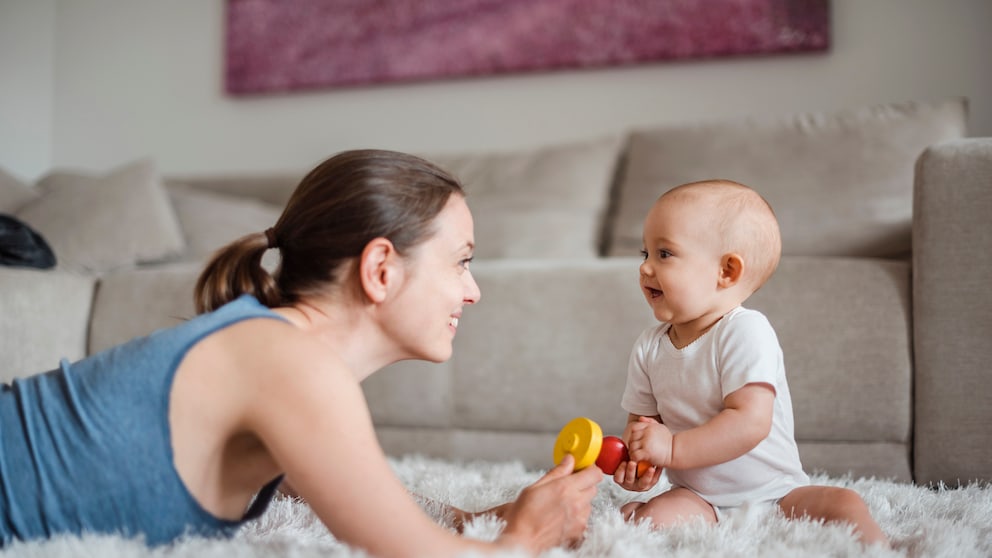
Surely you wonder how you can optimally support your baby. Prof. Zimmer explicitly advises putting fun and shared joy in play at the forefront: “Parents should be able to engage in their children’s play and enjoy it, just play along, get caught up in the enthusiasm with which children, for example, nudge a ball, let it roll, crawl after it, and rejoice when different balls make different sounds as they roll.”
She recommends: “Hide and seek, crawling on the floor, lap games, building a tower and enjoying it when the baby knocks it over again and again, swaying to music together–doing things together and physical contact are very important.”
According to Zimmer, all of this also impacts children’s cognitive development and brain networking, but only if they are involved of their own accord and with fun and joy. She warns: “If they are pushed too hard, children block, they just stop participating. You can’t force a child to move.”

Why Children Should Balance, Hop, and Climb–and How to Encourage It

Louisa Lippmann: “I Listen to My Body Much More Now”
Movement Games for Indoors and Outdoors–Suggestions and Tips
How can parents provide suitable movement incentives in everyday life? Prof. Zimmer recommends: “Babies and toddlers need a lot of space to move, on the floor, on cushions and pillows, where they can crawl and creep. The first movement space, the floor, should be lovingly designed. Especially children at crawling age, when they start to scoot and crawl, also need small obstacles that they want to overcome. They continue to develop, and their range of movement increasingly expands, moving from the floor to higher levels. Then stools, platforms, and cushion pads become interesting, where they can pull themselves up and stand.”
Also interesting: What to do when the baby cries?
Indoor Play Options
- Create a movement space on the floor, cushions, or pillows
- Provide small obstacles to overcome
- Encourage crawling, scooting, and creeping
- Offer stools, platforms, cushion pads for pulling up
- Engage in shared games like hide and seek, building and knocking down towers, lap games, swaying to music, and rolling balls
Outdoor Play Options
- Sort and stack stones
- Observe bugs, other animals, and birds
- Dig in the sand, e.g., dig a hole or mix water and sand to make mud
- Sit or lie on a swing
What You Should Avoid
Not all aids are useful. Zimmer emphasizes: “For example, putting a baby in a walker. Or sitting them up and propping them with pillows because they would otherwise topple over. A child must want to assume a position themselves–and then reach it under their own power. Anything else hinders the baby in their pursuit of increasing independence.”
She also advises: “It’s important not to offer help too quickly. Babies want to help themselves, want to achieve something independently.” In indoor or outdoor play, according to Prof. Zimmer, it is also important to “always pay attention to the joy and enthusiasm with which your child participates. Where can they become active themselves, what are they interested in?”