

January 6, 2026, 4:25 pm | Read time: 3 minutes
“Extract everything and place implants”—a request that dentist Dr. Martin Jaroch hears more frequently from patients. In a guest article for FITBOOK, he explains why this approach is rarely the best and how even severely damaged teeth can often be preserved.
Dental Implants Are Not a Routine Procedure—They Are a Lifelong Decision
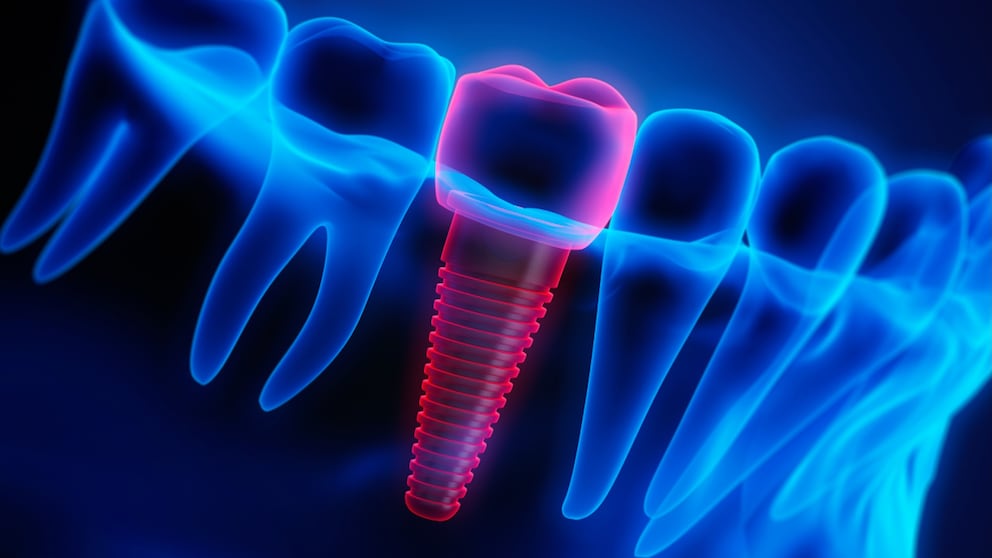
Based on numerous studies on implants over the past decades, it is becoming increasingly clear that a dental implant is not a harmless routine procedure but a decision with lifelong consequences. Choosing an implant means committing to a permanent bond—with all its opportunities and risks.

These Mistakes Make Your Teeth Age Faster Than Necessary

Most People Make This Mistake When Using Mouthwash
Why Implantology Needs to Be Reevaluated Today
From my professional experience, I see that implantology is currently undergoing a phase of critical reevaluation. Implants were long portrayed as a quick, effective, and nearly definitive solution. However, we are increasingly seeing the long-term effects of implants placed many years ago.
Natural Teeth Outperform Implants—Medically and Biologically
I am convinced that restorations on natural teeth are often more durable and cause fewer complications than implant-supported solutions. Therefore, I firmly believe: Natural teeth should always be preserved as long as possible, even if the process is more time-consuming.
What Patients Often Don’t Know
In my observation, many patients are unaware that even severely weakened or seemingly lost teeth can remain functional long-term with modern periodontal therapy, regular follow-up care, and consistent oral hygiene. Long-term studies over 20 to 30 years show that teeth with reduced anchorage can function stably if properly treated and maintained.
The Problem Lies in Economic Structures—Fast, Profitable, Risky
In my view, the central issue is less about medical advancement and more about economic structures. Implant therapy is very profitable for many practices, and this increasingly influences clinical decisions. Profitability often plays a larger role today than it should.
While the rehabilitation of a natural tooth requires time, regular check-ups, periodontal treatments, and restorative measures, placing an implant is often faster, easier, and more economically attractive. I see the risk that teeth worth preserving are removed too early and replaced with implants without adequately considering the long-term biological consequences.
The Trend Toward Radical Extraction—and Why It’s Dangerous
In my daily practice, I increasingly encounter patients who wish to “have everything pulled and get implants.” I view this development critically. Often, these are situations like advanced periodontitis, multiple cavities, or misaligned dental arches, where I believe function-preserving and tooth-conserving therapies are still possible.
Not Everything That Is Feasible Is Medically Sensible
I firmly believe: There are treatment paths that are faster and more economically attractive—but not necessarily the best for the patient. Therefore, we should reject therapies that do not align with the principle of maximum tooth preservation, biological sustainability, and long-term oral health.