


April 28, 2026, 11:01 am | Read time: 4 minutes
There are three types of fat in the human body, each serving different functions. An endocrinologist explains where white, brown, and beige fat cells are located in the body, how they influence disease risks–and how to activate the beneficial ones.
Follow the FITBOOK channel on WhatsApp now!
White Fat Cells–Storage, Cushion, and Hormone Factory
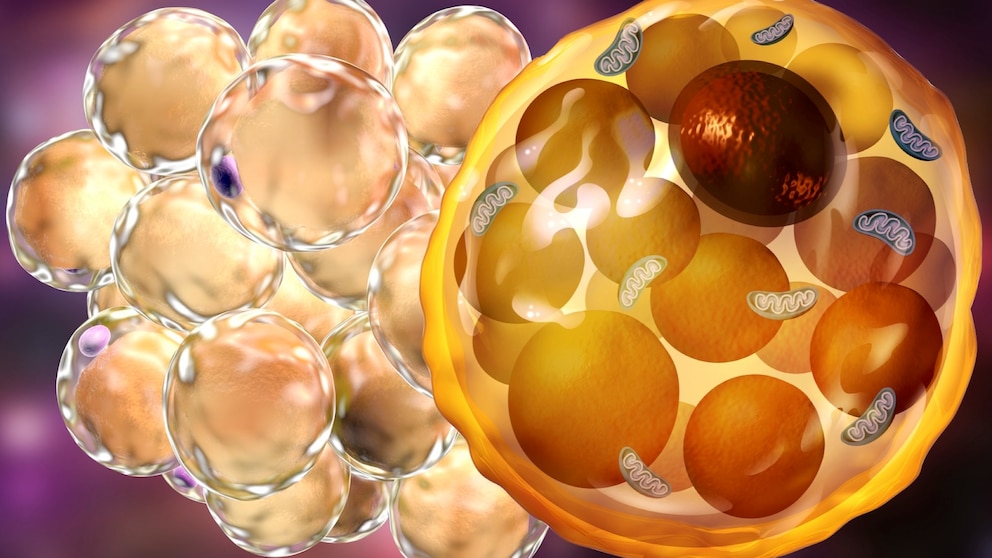
White fat makes up the largest portion of fat in the human body. “White fat cells store food calories, form a layer of thermal insulation, and provide mechanical protection, which is important for resisting infections and injuries. They also play a crucial role in hormone production,” explains endocrinologist and metabolism expert Prof. Dr. Norbert Stefan from the University of Tübingen, as reported by FITBOOK. Under a microscope, these cells appear whitish or transparent because they contain a fat droplet.
Brown Fat Cells–The Body’s Internal Heater
Brown fat is much rarer than white fat. According to Stefan, brown fat cells are highly specialized cells that release stored chemical energy in the form of heat. “This occurs through the action of uncoupling protein 1 (UCP-1), a protein specific to brown adipose tissue, located in the mitochondria, which are densely packed in these cells,” explains the metabolism expert. Classic brown adipocytes are grouped as “specific depots in the neck, under the collarbones, and along the spine.” The mitochondria give these cells their brown appearance.
Why Babies Have More Brown Fat
“Infants have much more brown adipose tissue than later in life,” Stefan continues. Brown fat prevents the infant from getting cold. Their muscle mass is too low to generate heat through muscle shivering. Additionally, they lose a lot of heat because they have a large body surface area compared to their body volume. However, brown fat gradually recedes during the first years of life. In adults, as mentioned, depots are still found in the neck, under the collarbones, and along the spine.
Beige Fat Cells–Adaptable Hybrid Form
Then there is the hybrid form of white and brown fat cells, known as beige fat cells. These are cells that, like brown fat, have a high number of mitochondria but are scattered within white fat tissue. They are not as effective as brown fat but apparently also contribute to heat production. “Beige fat cells are found as scattered cells in the white subcutaneous fat tissue, mainly in the neck, shoulder, and collarbone area,” Stefan notes.
Also interesting: Measuring body fat percentage correctly–Methods compared
Overview of the Functions of the Three Types of Fat
White Fat:
- stores energy
- insulates against cold
- provides mechanical protection for organs
- produces hormones
Brown Fat
- burns energy to generate heat–therefore, it is metabolically beneficial
- depots in the neck, under the collarbones, and along the spine
- is genetically determined
Beige Fat
- hybrid form of white and brown fat cells
- mainly located in the neck, shoulder, and collarbone area
Why Too Much White Fat Can Make You Sick
As mentioned, white fat (stores food calories) is essential for humans. However, if the body stores too much of it, significant health risks can arise.
Too much internal belly fat (visceral fat), for example, can cause significant harm to health. Hormones play a major role in this: Visceral fat produces many hormones–and thus alters hormone production. If this balance is disrupted, chronic inflammatory processes can occur in the body. Possible consequences range from arteriosclerosis to type 2 diabetes to breast and colon cancer. Research has shown links between these two types of cancer and visceral fat in the past.1,2

The 6 “Silent Killers” in the Body and How to Control Them for as Long as Possible

How Visceral Fat Affects Hormone Balance
Brown Fat as a Shield for Heart and Metabolism
Brown adipose tissue works quite differently: Researchers have seen it as a potentially effective shield for heart and metabolism for some time. A large U.S. study with over 50,000 patients in 2021 suggested that people with detectable brown fat may be less likely to develop metabolic and cardiovascular diseases–especially if they are overweight or obese.3
How to Activate Brown Fat Cell Activity
You might be wondering: Brown fat is genetically determined–but is there anything I can do to “settle” more of these healthy fat cells in my body? Endocrinologist Norbert Stefan, based on current research, does not believe that the number of brown or beige fat cells can be increased–only their activity. Cold exposure is the strongest stimulus “to activate brown adipose tissue.” So, for example, regularly taking cold showers. Other measures–such as exercise or medication therapies–are not significant in this regard, according to Norbert Stefan to FITBOOK.