


March 3, 2026, 5:00 pm | Read time: 8 minutes
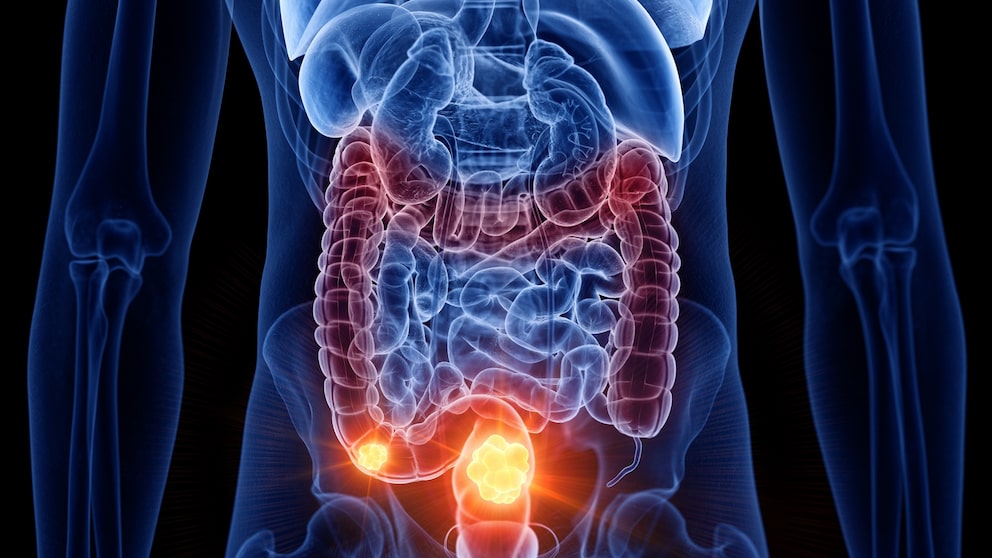
Many people have someone in their personal environment who is or has been affected by bowel cancer. Among the factors that can be influenced, nutrition is increasingly becoming the focus of research. A long-term study with over 470,000 participants shows that a high calcium intake reduces the risk of bowel cancer. The source is almost irrelevant. FITBOOK author Anna Echtermeyer gives examples of how you can ensure you get enough calcium in your diet.
Have you eaten natural yogurt or snacked on nuts today? For years, research has suggested that the mineral calcium contained in these foods could play a protective role against bowel cancer. Some observational studies show that a higher calcium intake is associated with a lower risk of bowel cancer. One of the mechanisms: the mineral can ensure that substances that could promote the development of cancer are excreted before they cause damage. Until now, however, it was unclear why this is the case. Is the source of calcium crucial? For example, whether it is supplied to the body from dairy products, plant-based foods, or supplements? The study from the UK, with an observation period of over 20 years and more than 10,600 identified cases of bowel cancer, provides new insights.
Overview
- The Protective Mechanisms of Calcium in the Intestine
- Calcium Source and Bowel Cancer Risk – Does It Make a Difference?
- Result of the Study: Higher Calcium Intake Reduced the Risk of Bowel Cancer by Up to 29 Percent – Source Almost Irrelevant
- What Do the Results Mean for Me?
- How to Ensure Sufficient Calcium Intake
- Reducing the Risk of Bowel Cancer – Why Calcium Is Not the Only Solution
- Sources
The Protective Mechanisms of Calcium in the Intestine
Recent studies show a link between higher calcium intake and lower risk of bowel cancer. Results of a recently published study show that a healthy diet with yogurt and other probiotic foods may be particularly useful for people with an intact intestinal barrier to reduce the risk of certain forms of colorectal cancer. The results show that the protection seems to apply particularly to tumors in the upper section of the colon (and less to rectal cancer).
The mineral basically has three levers of action in our intestines that have a protective effect on colon cancer: It can bind harmful substances such as bile acids and fatty acids, which could otherwise irritate the intestinal mucosa and—possibly—promote the development of cancer. Secondly, calcium promotes the normal growth of intestinal cells and, at the same time, inhibits uncontrolled cell division—another cause of cancer. Thirdly, the mineral can reduce inflammatory processes in the intestine, which also pose a risk for the development of the disease.
Calcium Source and Bowel Cancer Risk – Does It Make a Difference?
It was previously unclear whether this effect depends on the type of calcium source. Is the risk of bowel cancer lower if you eat dairy products, or is it more beneficial in this respect to use plant-based calcium sources or even dietary supplements? Does the source of the mineral make any difference at all to a person’s risk of bowel cancer? And does this apply equally to all population groups? This study provides answers.
The so-called “NIH-AARP Diet and Health Study” was developed by the National Cancer Institute in the United States. It aims to improve understanding of the relationship between diet and health and is one of the largest studies ever conducted on the subject1
In 1995/1996, 471,396 healthy adults aged between 50 and 71 were asked how much dairy, plants, and (which) food supplements they consumed. This resulted in a calcium intake of the test subjects, which the researchers divided into five groups, from the lowest to the highest calcium intake.
- The group with the lowest calcium intake averaged 401 milligrams per day
- The group with the highest calcium intake averaged 2056 milligrams per day
Colorectal cancer cases were recorded 20 years after the calcium intake survey. It was not only analyzed whether, but also where in the intestine the participants had developed colorectal cancer.
Result of the Study: Higher Calcium Intake Reduced the Risk of Bowel Cancer by Up to 29 Percent – Source Almost Irrelevant
The analysis confirmed the link between a higher calcium intake and a lower risk of bowel cancer. This was significant. The results at a glance:
- Compared to the participants who had a particularly low calcium intake, those with the highest intake had a 29 percent lower risk of bowel cancer.
- The protective effect against bowel cancer was almost independent of the calcium source. It therefore did not matter whether the test subjects consumed the mineral via yoghurt, eggs and cheese, green vegetables, nuts and seeds, or food supplements.
- For every additional 300 milligrams of calcium per day, the risk of bowel cancer fell by an average of eight percent. (It fell by ten percent for calcium from food and by five percent for calcium from supplements).
- The risk of colorectal cancer was reduced in both the colon and rectum—a new finding compared to other studies.
- In non-Hispanic black participants, no clear association was found between total calcium intake and colorectal cancer risk. No other factors for this difference were assessed in the study.
What Do the Results Mean for Me?
The findings from this study are particularly relevant for two population groups with low calcium intake: women and non-Hispanic black people.
For women, low calcium intake is partly due to hormonal factors: Estrogen levels drop after menopause, which reduces intestinal calcium absorption and accelerates bone loss. Incidentally, the data on calcium intake from the study also reflects this disparity between the sexes. In many non-Hispanic black people, the low calcium intake is due to an overall higher lactose intolerance rate. This means that they consume fewer dairy products and therefore less calcium. Dark skin also reduces the synthesis of vitamin D; vitamin D makes calcium absorption more efficient.
“With the Right Screening, Bowel Cancer Would Lose Its Terror”

Dairy Products Are Good for the Gut — Apparently with One Exception
How to Ensure Sufficient Calcium Intake
The study suggests that it is not so important for the prevention of bowel cancer where the calcium comes from. Plant-based sources of calcium or dietary supplements can be an adequate alternative to dairy products as a source of calcium.
It seems to be much more important that enough calcium reaches the body. Every adult should pay attention to this – especially if there are children or teenagers in the family. This is because they have an even higher calcium requirement.
The DGE recommends a daily calcium intake of
- Adults: 1000 milligrams
- Adolescents from 13 to 18: 1200 milligrams
- Children from 10 to 12 years: 11002
1000 milligrams per day is already an amount that many people do not reach. According to the National Consumption Study II of the Federal Ministry of Food and Max Rubner Institute, the average daily calcium intake for men is 807 milligrams. For women, it is 738 milligrams per day. The survey was conducted between 2005 and 2007.3
No recommendation without a but: overdosing is not good either. This can happen quite quickly by accident with supplements. The German Society for Endocrinology points out that a calcium intake of more than 500 milligrams per day via tablets can lead to kidney stones and vascular calcification. The professional society, therefore, advises that the mineral should (normally) be ingested primarily through food.4 Here are some tips for your daily diet:
Sources of calcium
- Dairy products (e.g., cheese, yoghurt, milk)
- Green vegetables (e.g., broccoli, kale, fennel, or leek)
- Nuts and seeds (e.g., almonds, sesame seeds)
- Mineral water with a high calcium content
- Tap water (if no limescale filters are installed in the pipes)
Reducing the Risk of Bowel Cancer – Why Calcium Is Not the Only Solution
The long follow-up period of over 20 years increases the significance of the results of this study. However, it must be critically noted that calcium intake was only surveyed at the beginning; a lot may have changed for individuals in 20 years. Of course, factors other than insufficient calcium intake could also have caused bowel cancer. However, such other factors were not recorded. The influence of other lifestyle factors was also not determined in the study. In general, it cannot prove any causal relationships.
Nevertheless, it is worth remembering that an adequate intake of calcium is recommended— not too much, not too little. Not only that, but possibly also to reduce the risk of bowel cancer. And, of course, calcium is not the only solution for preventing this cancer. Preventive care is crucial, such as through the removal of precancerous lesions to prevent the development of bowel cancer. Other modifiable risk factors include obesity, smoking, alcohol consumption, and physical inactivity, in addition to non-modifiable factors such as age, gender, and genetics.