


September 21, 2026, 4:03 pm | Read time: 10 minutes
Sudden high fever, cough, and shortness of breath–these are just a few symptoms that can occur with pneumonia. The disease is often caused by bacteria or viruses, less commonly by fungi. Depending on the cause, it can vary in severity. Generally, pneumonia can be treated well–but for older or immunocompromised individuals, it can quickly become life-threatening and fatal.
Especially for infants and people over 65, the risk of developing pneumonia is high. Additionally, a weakened immune system, such as due to diabetes or cancer, can promote the development of pneumonia. Asthma, heart disease, tobacco use, COPD, and certain viral infections like the flu (influenza) are also potential risk factors.
Follow the FITBOOK channel on WhatsApp now!
Symptoms of the Disease
The symptoms of pneumonia can vary greatly. While certain symptoms may provide clues to the cause, the specific pathogen causing the disease cannot be reliably determined based solely on the symptoms.
Bacterial Pneumonia
Pneumonia typically begins suddenly with a feeling of weakness. Additionally, the following symptoms may occur:
- Fever
- Cough with sputum or dry cough
- Chills
- Shortness of breath (in severe pneumonia)
However, it is important to note: Not all typical symptoms appear simultaneously in pneumonia. Especially in children and the elderly, the disease may present with unusual or less clear symptoms. Sometimes classic signs are absent altogether, while symptoms like diarrhea, abdominal pain, or confusion take center stage.
Atypical Pneumonia
Atypical pneumonias can also be caused by the typical pathogens of classical pneumonia, but more often other triggers like viruses or mycoplasmas are responsible. The disease can begin gradually and manifest in nonspecific symptoms such as headache and muscle pain, along with only slightly elevated body temperature. A dry, irritating cough may also occur. The transitions between typical and atypical courses are fluid.1
How the Lungs React to Inflammation
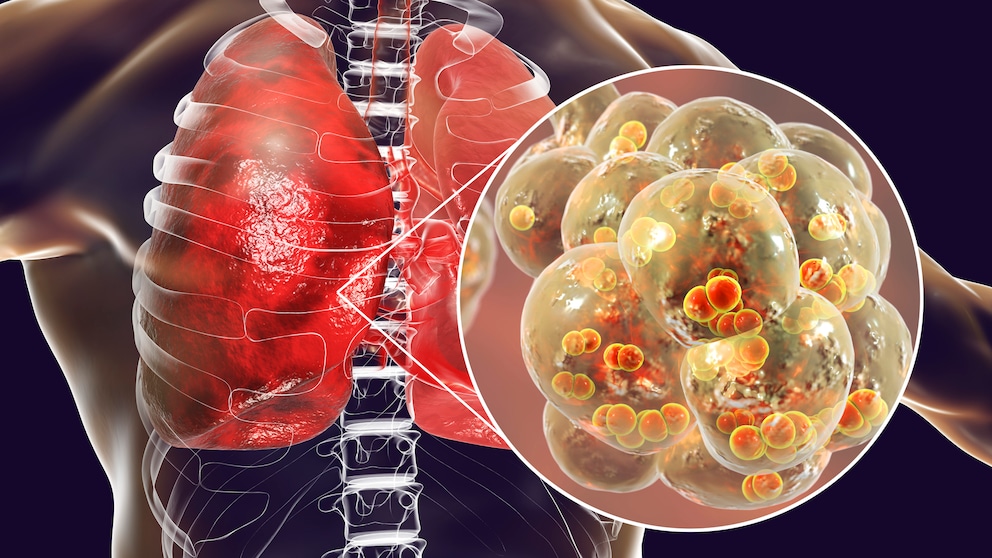
The problem with pneumonia is that gas exchange in the lungs is impaired. As a result, less oxygen can enter the blood, leading to oxygen deficiency. The body then tries to compensate for this, causing breathing to become rapid and shallow, especially in severe pneumonia.
Cough and Strained Breathing
Additionally, the effort of breathing is evident as the nostrils flare with each breath. If the oxygen deficiency is not compensated, lips and fingertips may turn bluish, a condition known as cyanosis. The cough in pneumonia can be dry or accompanied by sputum, which may be yellowish or greenish. Each cough can cause severe chest pain, sometimes radiating to the abdomen. If there is already a lung disease like asthma or chronic bronchitis, its course can worsen significantly due to pneumonia.
Also interesting: Pancreatic cancer–typical symptoms, risk factors, and therapy
Two Types of Pneumonia
Pneumonia, also known as pneumonitis, refers to an infection of the lungs. Depending on which area of the lung is primarily affected, two forms can be distinguished:
- Inflammation of the alveoli (alveolar pneumonia)
- Or inflammation of the lung tissue (interstitial pneumonia)
The disease can be acute or chronic. Characteristic of the disease are swelling and increased blood flow to the affected lung area. Often, fluid accumulates in the lung tissue.2
Alveolar Pneumonia
Alveolar pneumonia can be divided into two forms depending on its spread:
- Lobar pneumonia: Usually, an entire area of the lung is affected, such as a whole lobe.
- Focal pneumonia: Individual or multiple inflammatory foci develop in a lobule–small individual areas in the lung are inflamed.
There is another variant: “Bronchopneumonia”–where the inflammation originates in the bronchi and spreads to the surrounding lung tissue. The most common causes of pneumonia are bacteria, but viruses can also cause pneumonitis. Fungi are a less common cause.
How Common Is Pneumonia?
In Germany, over 500,000 people are affected by pneumonia each year. Nearly 250,000 of them require hospitalization. About 20,000 people die annually from the consequences of the disease, mostly older individuals over 65 or those with pre-existing conditions.3
Causes of Pneumonia
Airborne Transmission
Typically, the pathogens originate from the individual’s own nasal and throat area or are transmitted through droplets from other infected individuals during coughing, speaking, or sneezing. The lungs usually protect themselves with various defense mechanisms against the intrusion of pathogens. Additionally, tiny cilia in the mucous membrane of the airways prevent dust particles from reaching the alveoli and settling there. If particles do reach the alveoli, they are normally removed and neutralized by immune system cells. When these defense mechanisms are weakened, microorganisms can remain in the airways and cause inflammation.4
Toxic Gases or Medications
Pneumonia can also be promoted by toxic gases, radiation therapy, or certain medications. Additionally, inhaling foreign objects can trigger a so-called “aspiration pneumonia,” an infection of the lungs caused by inhaling tiny particles or secretions. In rare cases, pathogens can also reach the lungs through the bloodstream and cause inflammation there.
Common Pathogens
In adults, pneumonia is often caused by an infection with pneumococci. Additionally, in adults, mycoplasmas, legionella, and Chlamydia pneumoniae are potential pathogens. Less commonly, viruses, fungi, or parasites can cause pneumonitis. In children, the age often determines which pathogens are most likely to cause pneumonia. Besides bacteria like pneumococci, various viruses are also possible triggers, especially in younger children. The responsible pathogen often cannot be determined solely based on age or symptoms.
Hospital Pathogens
The pathogens that cause pneumonia in hospitals–known as nosocomial pneumonias–are often different from those acquired in everyday life. In clinics, bacteria like Pseudomonas aeruginosa, Klebsiella, or staphylococci are often involved. Many hospital patients have weakened immune systems, making them more susceptible to such infections. Treatment is further complicated by the fact that many of these hospital germs have become resistant to common antibiotics, a condition known as antibiotic resistance.
Course of the Disease
The course of the disease varies for each person. In older individuals, it may progress slowly and cause few or mild symptoms. As mentioned earlier, sudden fever and chills are among the first signs of the disease.
Defervescence Phase
In untreated bacterial pneumonia, fever can persist for several days and then partially drop rapidly. This classic course is now observed much less frequently, as bacterial pneumonias are usually treated with antibiotics. How quickly the fever subsides and the health improves depends on the cause, severity, and general health of the affected person.
Even after successful treatment, fatigue and weakness may persist for some time. The cough may also last longer. The duration of complete recovery varies individually.
Early diagnosis and treatment can often prevent the pronounced classic course of bacterial pneumonia today. Nevertheless, it is important to rest adequately after the illness–those who exert themselves too soon risk relapses or further health complications.5
Consequences of Pneumonia
Pneumonia can affect not only the lung tissue itself but also damage other organs. One of the most dangerous complications is severe oxygen deficiency, which occurs when the lungs can no longer absorb enough oxygen. In such cases, it is referred to as respiratory failure–affected individuals can no longer breathe independently and require artificial support.
Another serious condition is a so-called blood poisoning (sepsis). Here, the pathogens spread throughout the body and cause inflammation in multiple organs. Both complications–respiratory failure and sepsis–require immediate treatment in the intensive care unit, often with the help of a ventilator.
When the Inflammation Becomes Chronic
In some cases, pneumonia does not heal completely but becomes chronic. The inflammation persists for a long time and can permanently damage the airways. Pathological expansions of the bronchi, known as bronchiectasis, can form. These often lead to recurrent infections and can even cause bleeding in the lungs. In the long term, lung tissue can scar, reducing the lung’s elasticity and performance.
Increased Risk of Thrombosis and Embolism
Since people with severe pneumonia often have to stay in bed for extended periods, there is also an increased risk of blood clots in the veins–known as thrombosis. If such a clot dislodges, it can travel through the bloodstream to the lungs and block a vessel there. This is called a pulmonary embolism, which is a medical emergency.
Additionally, pneumonia can also affect the nervous system. In rare cases, it leads to meningitis or pus accumulations in the brain (brain abscess). Inflammation can also affect the heart, joints, or bones, making the disease even more complicated.
Diagnosis of the Disease
Pneumonia can usually be suspected based on typical symptoms. During the subsequent physical examination, the lungs are typically carefully listened to with a stethoscope, and pulse and blood pressure are checked.
CT and Ultrasound
Additionally, a chest X-ray can be used to determine how severely the lung tissue is affected. Sometimes, further examination using computed tomography (CT) is necessary. There is also the option to visualize changes in the peripheral lung area using ultrasound.
Blood Sample
A blood sample can also be taken to determine inflammation levels. Since oxygen uptake may be impaired in pneumonia, the oxygen content in the blood is often checked. To identify the exact pathogen causing the disease, blood, urine, or expectorated mucus is additionally examined in the lab.
Treatment
Medication Therapy
At the onset of pneumonia, the exact pathogen is often initially unknown. If bacterial pneumonia is suspected, it is usually treated with an antibiotic. Antibiotics do not help against pneumonia caused solely by viruses. The duration of antibiotic therapy depends on the course of the disease and the severity of the pneumonitis. In uncomplicated cases, a short treatment duration of a few days may be sufficient. If the fever persists after two days and there are no signs of improvement, both the diagnosis and chosen therapy should be reviewed.
Inpatient Treatment
If someone has severe pneumonia and is treated in the hospital, oxygen deficiency can occur. Regular oxygen supply is often necessary–for example, through a nasal cannula. If the inflammation is particularly severe, artificial ventilation in the intensive care unit may be necessary.
Pneumonia: What to Watch for in Children

Recognizing a Lingering Cold: These Signs Are Critical
Who Is Affected?
Apart from the already mentioned risk groups, individuals with an immature or already weakened immune system are particularly susceptible to pneumonia. This includes primarily infants and young children, whose immune defenses are still developing, as well as older people over 60, whose immune function declines with age. People with chronic conditions like heart failure, chronic bronchitis, diabetes mellitus, or severe neurological disorders also carry an increased risk.
Additionally, HIV-infected individuals, alcohol-dependent persons, and patients undergoing chemo- or radiation therapy are considered particularly vulnerable. The same applies to people who are artificially ventilated–they often lack the necessary cough reflex that contributes to the natural cleaning of the lungs. Due to the weakened immune defense, these patients can also be affected by pathogens that usually do not play a role in healthy individuals, such as fungi or so-called atypical mycobacteria.
Chronic Conditions Can Increase Risk
The risk of developing community-acquired pneumonia is further increased by existing underlying conditions like chronic lung diseases. In some cases, pneumonia also arises as a complication of other infectious diseases–for example, during the course of influenza or a measles infection.
Pneumonia Is Often Underestimated
How dangerous pneumonia can be, especially for people with pre-existing conditions–and how often it is underestimated–was demonstrated in 2025 by the death of a prominent actor: Hollywood legend Val Kilmer died on April 1, 2025, at the age of 65 from the consequences of pneumonia. In 2014, the actor was diagnosed with throat cancer, after which he underwent chemotherapy and a tracheotomy–both procedures that can weaken the immune system in the long term.
Can Pneumonia Be Prevented?
Yes, pneumonia can be prevented to some extent. The Standing Committee on Vaccination (STIKO) recommends vaccination against pneumococci for all infants from two months of age and people over 60. For people over 60, STIKO currently recommends a one-time vaccination with the 20-valent pneumococcal conjugate vaccine (PCV20). Pneumococcal vaccination may also be recommended for people with certain underlying conditions or increased health risks. Additionally, general hygiene measures like regular handwashing can help prevent infections. Depending on personal risk and infection situation, wearing a mask can also help reduce the transmission of respiratory pathogens.6