

September 11, 2021, 4:35 am | Read time: 8 minutes
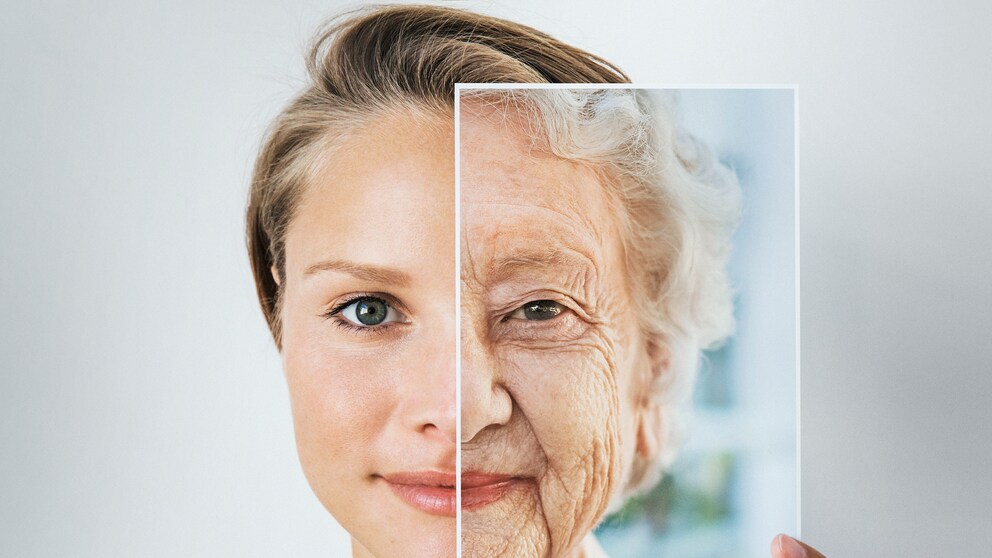
As we age, hair turns gray, hearing diminishes, and climbing stairs becomes more difficult. But why? FITBOOK consulted a doctor to explain how and when different body parts and organs begin to change—and how this natural process can be (somewhat) slowed down.
These are the unmistakable signs of aging: wrinkles form on the skin, memory and muscle strength decline, and general frailty sets in. We experience the aging of the body in ourselves and others every day. Dr. Matthias Riedl, a specialist in internal medicine and nutritional medicine, explained to FITBOOK how this process manifests in humans.
Overview: How Does the Body Age?
Skin
By around age 30, you notice that the skin is no longer as elastic and firm as it was in your twenties. Over time, visible skin changes occur—small lines that eventually become full-fledged wrinkles, and soon pigment changes (“age spots”). The process continues but can be somewhat controlled by protecting against external influences that negatively affect cell renewal, such as free radicals from UV rays, smog, and cigarette smoke.
Also interesting: Environmental Influences or Genes? The Causes of Wrinkles
Hair
As we age, hair structure changes, partly due to hormones. In women, the decrease in estrogen production causes the hair on the head to thin, but unwanted hair may appear in new places, such as on the face. In men, the hormone dihydrotestosterone causes hair on the head, chest, and back to thin. Graying hair results from a decline in melanin production, typically starting in the late 30s. Melanin is the pigment responsible for personal hair color.
Also interesting: Walking Speed Reveals How Much You’ve Aged
Muscles
Starting around age 30, sarcopenia sets in, meaning the muscle mass of the entire body gradually decreases. This process accelerates after age 50 and again significantly after age 70. At this point, going several days without exercise can have serious consequences, making regular targeted muscle-building exercises essential. However, it’s important to know that due to the natural atrophy process, the energy metabolism within muscles responds less quickly to stimuli.
Also interesting: Sarcopenia – What Can Be Done Against Muscle Loss?
Bones
As we age, the strength and density of bones decrease, making them more prone to injury. Medical professionals also refer to age-related changes in the musculoskeletal system, including ligaments, tendons, cartilage, and joints. Hormonal changes and lifelong wear and tear contribute to this. Regular exercise, protein-rich nutrition, and possibly vitamin D supplementation are essential to counteract this development.
Also interesting: Can Collagen Supplements Slow Aging?
Hair
As we age, hair structure changes, partly due to hormones. In women, the decrease in estrogen production causes the hair on the head to thin, but unwanted hair may appear in new places, such as on the face. In men, the hormone dihydrotestosterone causes hair on the head, chest, and back to thin. Graying hair results from a decline in melanin production, typically starting in the late 30s. Melanin is the pigment responsible for personal hair color.
Also interesting: Walking Speed Reveals How Much You’ve Aged
Muscles
Starting around age 30, sarcopenia sets in, meaning the muscle mass of the entire body slowly decreases. The process accelerates at age 50 and again significantly at age 70. At this point, going several days without exercise could have serious consequences, making regular targeted muscle-building exercises essential. However, it’s important to know that due to the natural atrophy process, the energy metabolism within muscles responds less quickly to stimuli.
Also interesting: Sarcopenia – What Can Be Done Against Muscle Loss?
Bones
As we age, the strength and density of bones decrease, making them more prone to injury. Medical professionals also refer to age-related changes in the musculoskeletal system, including ligaments, tendons, cartilage, and joints. Hormonal changes and lifelong wear and tear contribute to this. Regular exercise, protein-rich nutrition, and possibly vitamin D supplementation are essential to counteract this development.
Also interesting: Can Collagen Supplements Slow Aging?
Cardiovascular System
Starting around age 30, blood vessel elasticity decreases, affecting heart muscle strength. This process—technically beginning right after birth—continues to progress. The natural decline in muscle mass also affects the heart, which is largely made of muscle. More fat accumulates in the heart as we age. The bronchial tubes lose elasticity with age, making the heart more susceptible to high blood pressure and other cardiovascular diseases.
Also interesting: Can You Overtrain the Cardiovascular System?
Brain
As we age, brain mass decreases, and changes occur in nerve cells. This makes us more forgetful, slows our ability to process new information, and affects our cognitive abilities in general. However, not only age but also lifestyle can influence the condition of nerve cells and brain function. Smoking, alcohol, lack of exercise, and social isolation are believed to have negative effects.
Also interesting: Your Lifestyle Can Be Seen in Your Brain!
How the Body Ages in the Video
Immune System
As we age, the skin’s ability to fend off pathogens decreases, wound healing processes slow down, and (immune) cells weaken over the years. In short, the entire immune system becomes less active with advancing age.

Possible Reasons for Gray Hair at a Young Age

The 12 Most Bizarre Menopause Symptoms
Senses
Vision and light sensitivity decrease, and the eyes have more difficulty adjusting to light or darkness. Hearing also declines, with high-pitched sounds becoming harder to perceive. Hearing loss typically becomes a problem only after age 50. Even the sense of taste diminishes because the receptors in the taste buds don’t function as well over time. Interestingly, the sense of taste declines because the receptors in the taste buds don’t work as well over time. However, hearing loss usually doesn’t become a problem until after age 50. Interestingly, the sense of taste declines because the receptors in the taste buds don’t work as well over time. Interestingly, the sense of taste declines because the receptors in the taste buds don’t work as well over time. Interestingly, the sense of taste declines because the receptors in the taste buds don’t work as well over time. Interestingly, the sense of taste declines because the receptors in the taste buds don’t work as well over time. Interestingly, the sense of taste declines because the receptors in the taste buds don’t work as well over time. Interestingly, the sense of taste declines because the receptors in the taste buds don’t work as well over time. Interestingly, the sense of taste declines because the receptors in the taste buds don’t work as well over time. Interestingly, the sense of taste declines because the receptors in the taste buds don’t work as well over time. Interestingly, the sense of taste declines because the receptors in the taste buds don’t work as well over time. Interestingly, the sense of taste declines because the receptors in the taste buds don’t work as well over time. Interestingly, the sense of taste declines because the receptors in the taste buds don’t work as well over time. Interestingly, the sense of taste declines because the receptors in the taste buds don’t work as well over time. Interestingly, the sense of taste declines because the receptors in the taste buds don’t work as well over time. Interestingly, the sense of taste declines because the receptors in the taste buds don’t work as well over time. Interestingly, the sense of taste declines because the receptors in the taste buds don’t work as well over time. Interestingly, the sense of taste declines because the receptors in the taste buds don’t work as well over time. Interestingly, the sense of taste declines because the receptors in the taste buds don’t work as well over time. Interestingly, the sense of taste declines because the receptors in the taste buds don’t work as well over time. Interestingly, the sense of taste declines because the receptors in the taste buds don’t work as well over time. Interestingly, the sense of taste declines because the receptors in the taste buds don’t work as well over time. Interestingly, the sense of taste declines because the receptors in the taste buds don’t work as well over time. Interestingly, the sense of taste declines because the receptors in the taste buds don’t work as well over time. Interestingly, the sense of taste declines because the receptors in the taste buds don’t work as well over time. Interestingly, sweet flavors are perceived the longest. When the sense of smell diminishes, it usually has pathological causes and is not due to the natural aging process.
Also interesting: 6 Foods That Are Good for Eyesight
Prevent Inflammation and Slow Aging
While you can’t stop the process, you can influence the speed and manner in which the body ages. According to Dr. Riedl, “silent inflammations” accelerate the aging process. Knowing what triggers or reduces inflammation can help counteract it. Additionally, there are many interactions among the factors. Exercise and sports, for example, help maintain muscle strength, which in turn allows you to remain an active part of society for longer, benefiting mental well-being. It’s not just about the fact that the body ages, but also about how it ages.