

August 23, 2025, 6:49 am | Read time: 3 minutes
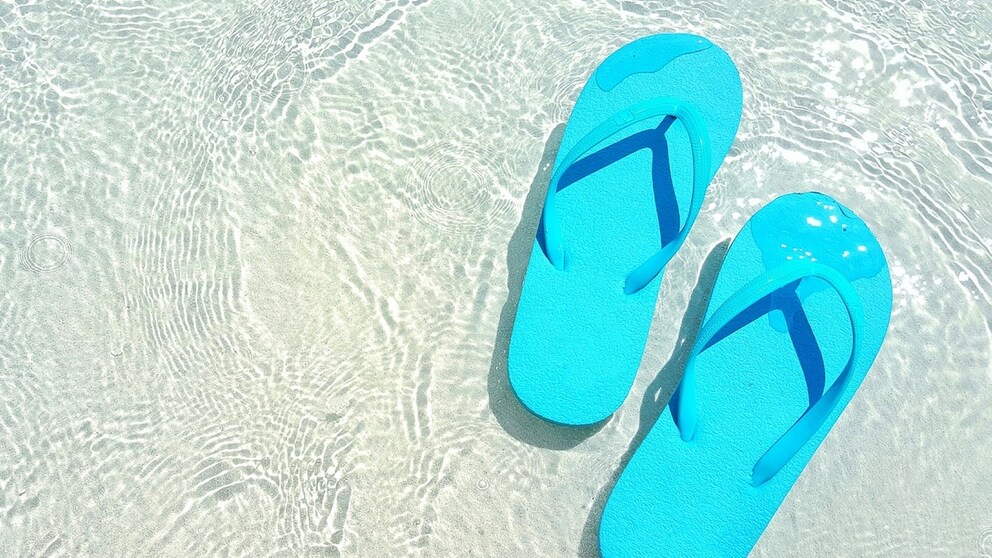
Warm air caresses the toes: For many, no shoe represents summer quite like the flip-flop. However, for several reasons, they can pose a problem for our feet. An orthopedist explained to the “dpa” why and for whom flip-flops can be harmful.
Flip-flops bring a vacation vibe into everyday life for some. But living in these sandals all summer isn’t necessarily a good idea, especially if, like many, you have a foot deformity.
Quick Check to See if You Have a Foot Deformity
For an initial check, you can stand on a towel with wet feet. “If the imprint is very wide on the towel, there is a foot problem,” says orthopedist and author Michael Lehnert (“Good Posture, All’s Well”). This includes, for example, splayfoot, where the transverse arch of the foot collapses and the metatarsal bones spread apart–the front part of the foot becomes wider.
Also interesting: Stretching exercises for the Achilles tendon and flexible ankles
Why Constant ‘Clawing’ in Flip-Flops Harms Tendons and Toes
Key Tips for Healthy Feet
Why Flip-Flops Are Harmful for Foot Deformities
If you frequently wear flip-flops, you should expect the foot deformity to worsen. After all, these sandals have no side support–inviting the foot to become even wider.
Over time, the pressure shifts “to areas of the sole that are not suited for it,” says Michael Lehnert. The consequences can be pain and nerve irritation, even leading to numb toes. A bunion, known as hallux valgus, can also be promoted by this.
From an Orthopedic Perspective, Flip-Flops Have Two More Disadvantages:
- Many of them have only a flat, thin sole, meaning no footbed to relieve the foot and strengthen its muscles.
- And: “To avoid losing the flip-flops while walking, you have to grip a bit with your toes,” says Michael Lehnert. This causes the toes to cramp, which can also lead to pain over time.
What Flip-Flop Fans Can Do
While flip-flops aren’t ideal for the foot, the orthopedist doesn’t want to demonize them. He advises wearing them in moderation, “not eight or ten hours a day.” If you’ve bought a new pair for an upcoming vacation, it’s best to break them in at home for an hour first.
What also benefits the feet–not just during flip-flop season–are regular exercise sessions. One suggestion from the author and orthopedist: place a towel on the floor and pull it toward you with your toes. This exercise trains the many small muscles in the foot, contributing to its stability.
According to Lehnert, what’s also beneficial for the small muscles in the foot is “walking barefoot a bit more, at home, but also outside, for example, in the sand.”
With material from dpa