

August 15, 2026, 4:02 pm | Read time: 4 minutes
What exactly lurks beneath our covers? A microbiologist explains which bacteria, viruses, critters, and fungi might be lurking in our beds, what can be done about it, and how often you should change your bedding.
We all love crawling under the covers at night, snuggling into the pillows, and gently drifting off to sleep. As wonderful as it feels, what you can’t see might be anything but wonderful, because “in fact, the bed is akin to a petri dish,” explains London microbiologist Dr. Manal Mohammed. The expert published an article on the topic in “The Conversation.”1 FITBOOK followed up with Mohammed to get her specific tips for clean beds, so our nightly journey to dreamland doesn’t turn into a nightmare.
Which Bacteria Sleep with Us
No one sleeps alone. First, there are a variety of bacteria, including Staphylococcus bacteria. “These bacteria are more commonly found on hospital bedding and are usually harmless, but they can cause serious illnesses if they enter the body through an open wound,” warns Dr. Mohammed. These include acne, skin infections, or pneumonia. Some strains are even antibiotic-resistant. In fact, about one-third of people carry Staphylococcus aureus in their bodies, meaning they can easily make their way into the home bed. Diarrhea-causing E. coli strains can also settle between the pillows. “For this reason, it’s important to wash your hands properly after every nighttime bathroom visit,” the expert advises.
Mites Feed on Skin Cells
But that’s just the tip of the iceberg. Each person loses about 500 million skin cells a day—the favorite food of mites, which also inevitably reside in our beds. The droppings of these tiny creatures end up in the bedding, which can trigger allergies and even asthma. “Bedbugs are also a threat. Although these tiny, five-millimeter bugs don’t transmit diseases, they can cause itchy red bite marks, leading to anxiety and insomnia.” The nasty part: They cling to clothing or backpacks and can be brought in by overnight guests or partners.
A Messy Household Leads to a Dirty Bed
Microbes, viruses, and germs have the unpleasant habit of clinging to fabrics. They find cotton or fur particularly cozy. “They hide on towels, kitchen towels, survive there for up to two weeks, and can also be brought into the bed by pets,” warns the microbiologist. Certain types of fungi, which can cause unpleasant genital infections, can survive on terry cloth or other fabrics for up to a month. That’s not all: “Some other types of viruses, like the Vaccinia virus (part of the poxvirus family), can cling to wool and cotton for up to 14 weeks.”

The Biggest Health Risks Lurking in Hotel Rooms

Good Night! Michelle Obama’s Routine for Healthy Sleep
How Often Should You Change Your Bedding According to the Expert?
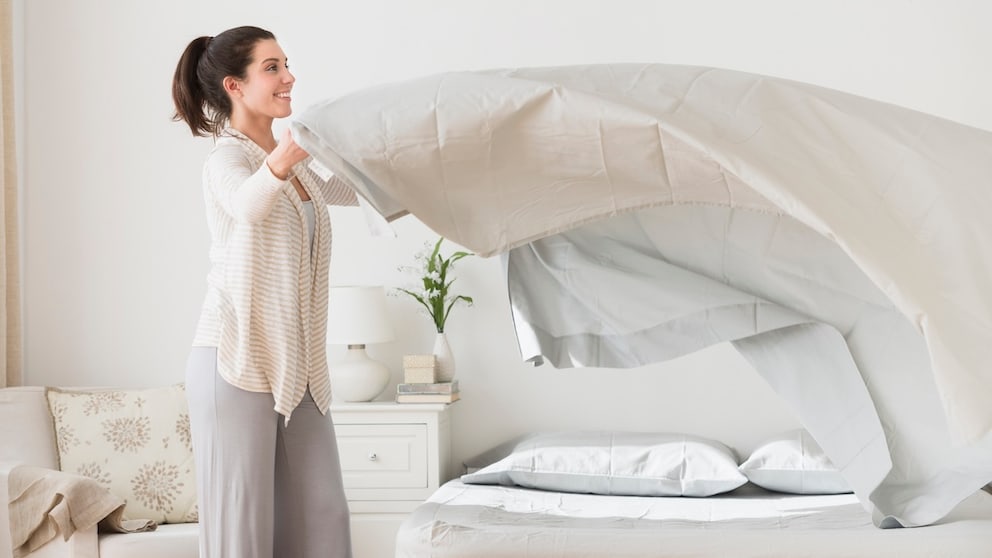
None of this sounds particularly inviting. But so these gross facts don’t keep you up at night: Here is the most effective opponent of germs and mites—the washing machine. So how often should you change or wash your bedding? Mohammed’s answer: “At least every two weeks at 60 degrees Celsius. This effectively kills germs and mites.” If you sweat a lot, you should run the machine once a week, and pillowcases can even be changed every three days. “Make sure the bedding is completely dry before use.”
More Expert Tips for Bed Hygiene
Consider your bed a kind of sanctuary with strict rules. According to microbiologist Dr. Manal Mohammed, these are:
- No pets in bed
- Shower right before bed
- Don’t leave daytime clothes in bed
- Wear pajamas or stay naked
- Don’t wear daytime socks; put on fresh socks if needed
- Don’t bring towels into bed
- Completely remove makeup; don’t apply creams or lotions before bed
- Air out/shake out the comforter daily
- Vacuum the mattress once a month
- Invest in a new mattress every ten years
Following these rules creates a good foundation for a hygienic sleep environment. It’s not about excessive cleanliness, but about habits that can be easily integrated into daily life. The key is to maintain them consistently.