


July 21, 2025, 2:12 pm | Read time: 7 minutes
Breathe less, achieve more? What initially sounds paradoxical seems quite logical when you delve into the principles of the Buteyko method. While we usually breathe unconsciously and automatically, this technique shows how deliberately reducing breaths can enhance our well-being. Breathing is more than a reflex. It directly influences how we handle stress, pain, and recovery. FITBOOK shows you how to consciously control your breathing patterns to support your body in surprising ways.
Overview
Breathing: Basic Knowledge
In external respiration, oxygen is absorbed from the air, and carbon dioxide is released into the environment. Internal respiration occurs in the cells. Here, the cells use the absorbed oxygen to generate energy, producing carbon dioxide as a waste product. A balance between oxygen and carbon dioxide is important for the body’s health and performance. When you exert yourself physically or mentally, your body burns more energy, producing additional carbon dioxide, which causes more oxygen to be released from the blood to the cells.
The Bohr Effect
The strength of the bond between oxygen and hemoglobin (a transport protein) in red blood cells depends, among other things, on carbon dioxide. The higher the CO₂ concentration in the blood, the weaker the oxygen bond, allowing it to be more easily released from the blood cells to the tissues (such as muscles, brain, and other organs). Conversely, the oxygen bond is stronger at low CO₂ concentrations. This is the case in the lungs, where red blood cells can absorb a lot of oxygen and then distribute it throughout the body.
When the body burns energy through physical or mental exertion, CO₂ is produced, causing oxygen to be released from the blood to the cells. This effect is known as the Bohr effect. With too deep inhalation, known as over-breathing or hyperventilation, too much air is exchanged, and consequently, more carbon dioxide is released. Hemoglobin binds oxygen more strongly, making it less easily released. As a result, muscles, tissues, and organs may not be optimally supplied.
While this state may initially feel pleasant, with lots of air and long inhalations, it can—but doesn’t have to!—lead to reduced performance in the medium and long term. This also happens, for example, when you breathe through your mouth continuously, as the intake of oxygen and the ratio of respiratory gases change. This is where Buteyko breathing comes in.
Where Does Buteyko Breathing Come From?
Buteyko breathing is a special breathing method named after the scientist and doctor Konstantin Pavlovich Buteyko. It is particularly used in connection with respiratory diseases, such as asthma. The Buteyko method aims to consciously breathe less; as a result, less carbon dioxide is exhaled, achieving a balanced CO₂ level in the blood, which means less constricted airways.1
The method assumes that deep abdominal breathing with little air allows for better oxygen supply than chest breathing with a lot of air. The focus is on breathing through the nose—both when inhaling and exhaling. This way, the inhaled air is humidified, cleaned, and warmed. The goal is to achieve relaxation of the diaphragm and to reduce both the number of breaths and the volume of air inhaled and exhaled.
What Is Behind the Breathing Method?
Buteyko breathing is increasingly used in complementary and alternative medicine, as well as in training and competitive sports.
As early as 1998, a study showed that asthmatics could reduce their medication through this breathing training.2 Additionally, the effectiveness of the Buteyko method has been demonstrated in connection with back pain, heart dysfunctions, and pain.3 The method is used for sleep disorders, anxiety, and fatigue.4 Its effect is mainly based on the (deep) relaxation effect. The breathing method can reduce muscular and, thus, psychological tension. In asthma, conscious breathing can also lead to relaxation of the bronchial muscles, making breathing easier.
Also interesting: FITBOOK Editor Now Wears a Nose Clip: “Incredible, So This Is What Breathing Feels Like!”
What Influence Does Buteyko Breathing Have on the Body?
The goal is to improve oxygen release at the cellular level and create a balance between tension and relaxation. Breathing can directly influence the body. Inefficient breathing, such as during constant stress, releases stress hormones. This leads to tension and immobility, reducing the body’s ability to regenerate.
What Can Be Achieved Through Improved Breathing
- Improvement of the blood gas profile
- Hormone production and the functioning of many cells change positively
- The increase in CO₂ partial pressure leads to a decrease in pH, making the environment in peripheral tissues more acidic! (Bohr effect)
- Stress levels decrease, making you feel more balanced and calmer
- Increase in performance
- Increase in coordination ability
- Fewer tensions in the neck-shoulder area as a result of the relaxation technique/mindfulness exercise
- The body becomes more flexible, especially in the upper body and shoulder area, due to the relaxation effect
- Oxygen supply in the cells is optimized
The following effects are also claimed, but not scientifically proven:
- Alleged change in digestion (more nutrients can be absorbed)
- The body’s detoxification capacity is said to increase
- Supposedly less sensitive to pain

Reduce Stress Instantly With Box Breathing: Here’s How the Technique Works
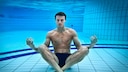
29 Minutes Without a Breath Underwater! How Is That Possible?
Criticism of Buteyko Breathing
Critics point out that the effects attributed to Buteyko breathing are not clearly scientifically proven. Besides gas exchange, mindfulness exercises and improved body awareness also play an important role. Many of the observed improvements may not be solely due to the changed breathing. The conscious perception of one’s own body and learning relaxation techniques may also contribute to the positive experiences.
Learn Buteyko Breathing in Three Steps
The following exercises are based on the Buteyko method. It is important to approach the training individually. As with all training methods, you should start step by step and be patient. Initially, the exercises may feel unfamiliar and difficult. Therefore, do not push into pain, dizziness, or discomfort during the following exercises.
It is recommended to start with five to ten minutes of training time and increase it to 30 minutes.
1. Nasal Breathing
Breathe consistently through your nose.
In everyday life, keep your mouth closed. If you catch yourself breathing through your mouth, close it and hold your breath for ten seconds. Increase the intensity by focusing on nasal breathing while walking, i.e., during light exertion. For the ambitious: During training (higher exertion), also focus on breathing only through your nose, both when inhaling and exhaling. Initially, this feels extremely unfamiliar. However, you will notice quick improvements, and with a little training, you will see how quickly your performance increases.
2. Breathing Pause
If nasal breathing is easy for you, increase the training with a breathing pause after exhaling. Perform this exercise relaxed while sitting. Hold your breath for a few seconds after exhaling so that you can then inhale again, relaxed. For most, this is only one to three seconds at first. Start slowly and gradually increase.
3. Reduced Breathing
Reduce your breathing by taking smaller and slower breaths. Again, you should increase slowly and carefully.
It is best to sit down and place one hand on your chest and the other on your stomach. When inhaling, the stomach should bulge outward against the hand, and when exhaling, the stomach should pull back inward. You can apply slight pressure with your hands to enhance and feel the movement of the stomach more clearly. Focus on reducing your breathing breath by breath. It’s not about deep inhalation and exhalation. On the contrary, it’s about reducing breathing and gradually getting used to the air hunger. During the exercise, focus on relaxing and consciously loosening the shoulder-neck area. Ideally, perform the exercise for three to five minutes.