

November 7, 2022, 10:10 am | Read time: 5 minutes
A child’s immune system needs training. Only contact with various pathogens makes it robust–and there’s a lot to learn here. Much to the dismay of the little ones and their parents.
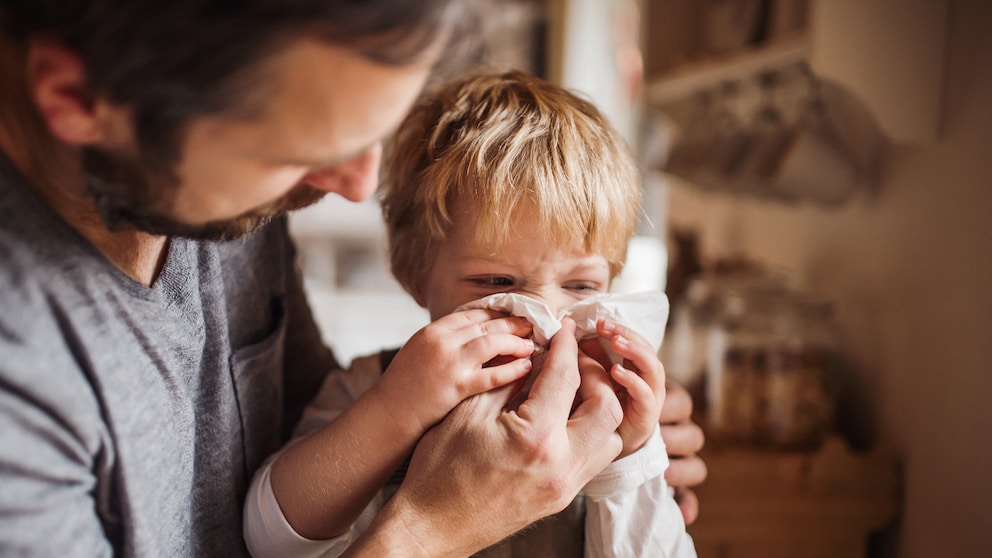
Parents know: Especially during kindergarten age, it feels like the little ones have runny noses all winter. Sometimes it really knocks them out. With coughs, high fever, earaches, vomiting, or diarrhea. Such infections in children are unpleasant but normal, according to the German Society for Pediatric and Adolescent Medicine.1
Overview
High risk of infection at the start of kindergarten age
“In the first year of kindergarten, little ones can have 10 to 15 infections, some lasting up to four weeks,” says Berlin pediatrician Jakob Maske. But the longer the child attends daycare and later school, the more this susceptibility decreases. Because the child’s immune system has encountered more pathogens and thus reacts more robustly to them.
Corona lockdown issue–no contact, no immunity
The pandemic and the accompanying corona rules meant that children had less contact with pathogens and became less sick. With the easing of restrictions, infections returned, and children essentially caught up on what they “missed.” This effect is still ongoing.
Wave of respiratory infections
“We are currently experiencing a wave of respiratory infections among teenagers and children,” Maske told the RedaktionsNetzwerk Deutschland (RND). At the same time, he reassured: “These are common infections that were merely postponed by wearing masks and are now being experienced belatedly.”
RS viruses on the retreat
About a year ago, it became apparent that RS viruses were on the rise, earlier than usual. The Respiratory Syncytial Virus (RSV) typically circulates in the months just before and after the turn of the year. But last year was different: Doctors observed many infections with the pathogen as early as fall. “It initially causes only mild cold infections. However, smaller children with pre-existing conditions and premature babies can become more seriously ill,” said pediatrician Maske in October 2021.
But at the start of this year’s fall/winter season, the situation has eased, as Maske confirms: “We still see RS viruses in children, but not to the same extent as earlier in the year.”
Also interesting: How to correctly interpret pain in children
What helps with colds?
But it’s not just the RS virus that’s around. Many cold viruses also spread among children in winter. Pediatrician Professor Reinhard Berner explains what helps the little ones. Parents should give them plenty of rest and, above all, fluids, as this helps thin out thick mucus, making it easier to cough up.
https://oembed/fitbook/affiliate/d676690682d84b53288e140b281ebc4ac50b7c2a363e3cdad62818d531b2921c/900b495e-d27d-429e-892a-029abf95d223/embed
Sometimes inhalation helps to expand the bronchi, says Berner. If the cough (e.g., in acute bronchitis) is very painful, as can occur with an RSV infection, painkillers can be prescribed for the child. Fresh air is also advisable–as always.
Also interesting: Cold or flu? The differences
Ear infections can be very painful
As a result of a cold, children often get an ear infection. It’s really nasty. Often the little ones cry from pain. Medications like acetaminophen or ibuprofen provide relief–administered as suppositories or syrup, in age-appropriate doses.
Decongestant nasal sprays or the home remedy of onion poultices may help somewhat against the ear inflammation. According to Maske, this is often viral, in which case antibiotics do not help. It’s different if the inflammation is caused by bacteria.
Also interesting: Home remedies that help with ear infections
Gastrointestinal problems in little ones
Stomach pain, vomiting, thin to watery stool, and fever can indicate a gastrointestinal infection.2 It is one of the most common infections in children, alongside respiratory diseases, and can be caused by both viruses and bacteria. One such pathogen is the highly contagious norovirus. In this case, the illness is usually accompanied by fever.
Initially, parents should give their child only liquids, without carbonation and not too warm. If the child is no longer vomiting, rusks or soups are recommended as the first food. Important: Especially in infants, the risk of dehydration from such an infection is high. Medical advice is always recommended here.
Also interesting: Childhood illnesses parents should know about
Influenza virus
The annual flu wave can also affect children. The high season for the influenza virus is usually at the beginning of the year.
Also interesting: This vaccination is available from October in the pharmacy
Flu vaccination possible from six months
Berner recommends a preventive vaccination for young children. “Severe courses are possible, especially in the first and second years of life,” he explains. Including the kindergarten age group in the vaccination is sensible. “That’s where the highest numbers and disease burdens are.”
The flu vaccination can be administered from the age of six months. Alternatively, for children between 2 and 17 years, a live vaccine against influenza is available, which is given as a nasal spray.
The influenza vaccination is recommended by the Standing Committee on Vaccination (Stiko) for children with certain underlying conditions–but that doesn’t mean it’s excluded for healthy children. In them, influenza usually proceeds without serious complications, according to the Robert Koch Institute (RKI).

These Three Pathogens Are Currently Making Germany Sick

Why Children Are Particularly Frequently Affected by Middle Ear Infections
Other infections and diseases in children
Parents whose children are in kindergarten or elementary school can also expect the following infections and diseases:3
Sources
- 1. German Society for Pediatric and Adolescent Medicine e. V. Parent Info Infections (accessed on 11/3/2022)
- 2. Gesundheit.GV.AT. Emergency in Children: Gastrointestinal Infection. (accessed on 11/3/2022)
- 3. Bankhofer H. KDoes your child constantly come home sick from kindergarten? Here’s what you can do! Volksverband Apotheke. (accessed on 11/3/2022)
- With material from dpa