

December 6, 2023, 2:44 am | Read time: 3 minutes
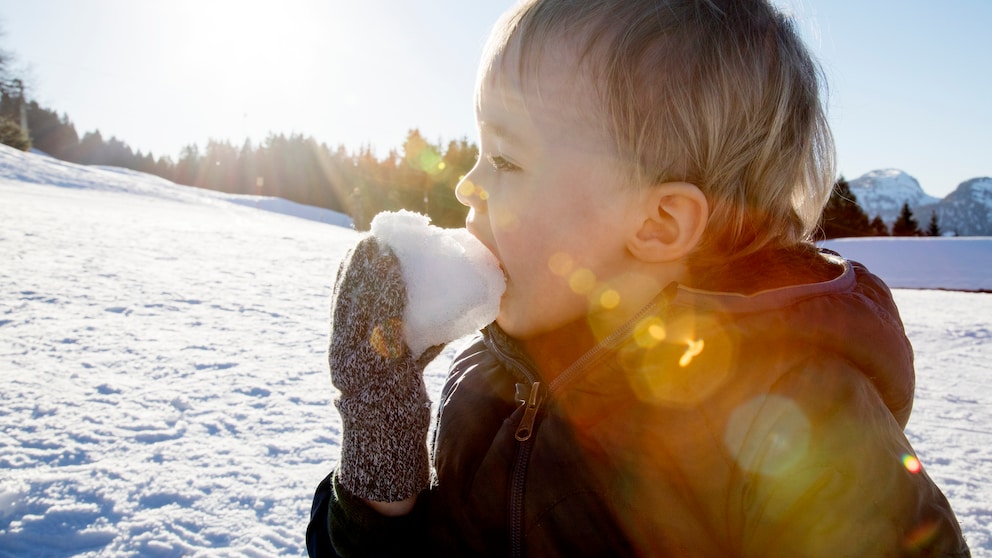
Freshly fallen snow visually resembles cotton candy. This might be one reason why children are eager to grab it with both hands. However, eating snow is quite unhealthy. FITBOOK reveals the unexpected dangers. Additionally, we’ve melted fresh snow to show what’s inside.
“Yellow snow doesn’t taste like lemon.” This is a saying in various Eastern European countries. Of course, no one would want to eat dirty or trampled snow. But eating snow is unhealthy even when it’s freshly fallen.
Overview
Why eating snow isn’t harmless
While snow is made of water, which is generally healthy, pollutants from the air can mix with precipitation, just as with rain.
“Contamination is conceivable via airborne pathways with combustion products, dust, or microbial aerosols,” Ökotest quotes a spokesperson from the Federal Environment Agency.1 On its way to the ground, snow can pick up fine dust and germs. A 2016 study found significant contamination with foreign substances in (fresh) snow that had been exposed to gasoline exhaust for an hour.2 In 2018, researchers found a variety of bacteria in a microbial examination of 37 different freshly fallen snow samples from Northern Ireland (collected from public places, open spaces, and home gardens—places where children play). Some of these bacteria can cause infections in humans.3
Also interesting: Diabetes insipidus renalis – Marc needs eight liters of water a day: “As if I had a leak”
FITBOOK video shows what’s in melted fresh snow
All this shows: Snow is definitely not a food! The video above provides visual proof: To find out how clear or cloudy melted fresh snow is, FITBOOK melted a pot of fresh snow from a home balcony. You probably imagined the result differently, didn’t you?
Snow water also contains no minerals
Even if snow weren’t polluted, it lacks the essential minerals that water should contain to nourish the body. Unlike tap water, which contains significant amounts of minerals, snow has none. We’re talking about electrolytes like magnesium, calcium, potassium, and sodium. Snow water is most comparable to distilled water.
If you were to melt large amounts of snow to meet your fluid needs, you would risk water intoxication. Accidents have occurred in the past when athletes tried to compensate for their significant water loss from sweating with large amounts of sodium-free water (as reported by FITBOOK). In very large quantities, water without minerals can increase the osmotic pressure in cells. Osmolarity (also called osmotic concentration) describes the concentration of substances at a specific location. Through reverse osmosis, mineral-free water is forced into the cells, causing them to swell and further reducing the relative sodium content in the blood.
Also interesting: How long can you drink from an opened water bottle?

When Does Sweating Become Dangerous?
3 Supplements You Can Make at Home
Why parents shouldn’t be too worried if their child eats snow
Parents need not be overly concerned if their little ones swallow a bit of snow. Our stomach acid helps our body fend off germs as best as it can. Of course, with heavily contaminated snow, this defense can be overwhelmed. It’s best to avoid eating snow altogether.