

November 10, 2019, 4:43 pm | Read time: 5 minutes
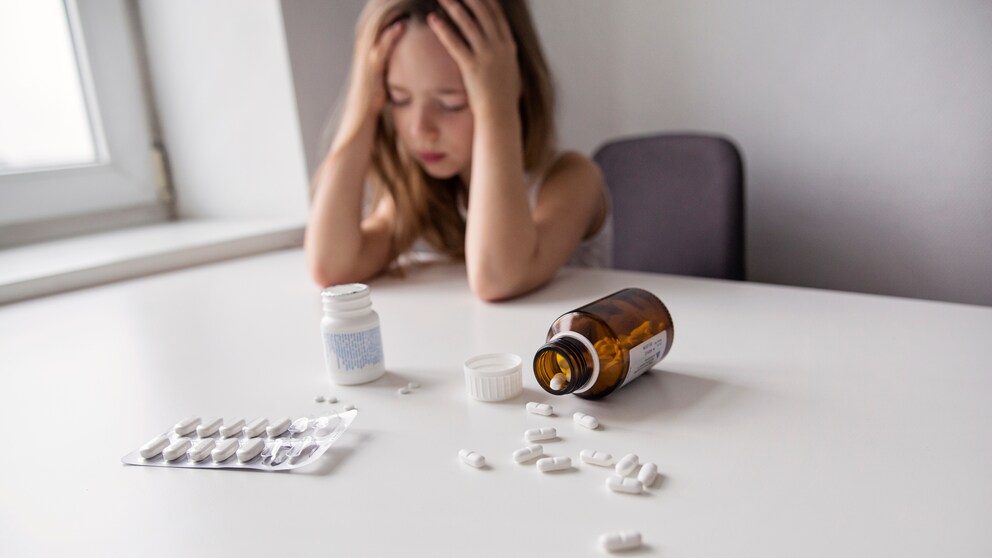
School stress, bullying, lack of exercise–the causes of headaches in children and adolescents are varied. For years, more and more young people have been complaining about symptoms but rarely seek medical help. This can have dire consequences.
When her daughter Tabea starts blinking or suddenly finds her siblings’ noise overwhelming, Kathrin Schenk knows what’s coming: a migraine attack. “My daughter becomes extremely sensitive to light and noise,” says the 38-year-old mother.
For the 10-year-old girl, retreating to bed, preferably with darkened windows, often helps. “Tabea has a migraine attack about every two weeks,” says the mother. And the student from Löningen in Lower Saxony is not alone.
The proportion of children with headaches has been increasing for years
“More than two-thirds of all schoolchildren regularly have headaches,” reports Dresden neurologist Gudrun Goßrau. The proportion of children and adolescents with headaches has been rising for years. “More children today are reaching headache frequencies that typically only adults experience.”
In a survey of students in Dresden, nearly 37 percent of the 2,700 boys and girls reported having headaches once a month, and almost 32 percent said it occurred more than twice a month, according to Goßrau. “Notably, almost all children who had headaches only once a month, and about 80 percent of those who had headaches more than twice a month, had not seen a doctor,” Goßrau noted.
According to Goßrau, young patients can easily fall into a vicious cycle: “School absences can lead to a decline in performance, school failure, and school anxiety. Many affected individuals socially isolate themselves, and mental illnesses can occur more frequently,” warns the doctor. “However, only a few headache patients seek medical help,” the expert criticizes. “Headaches are often not perceived as a ‘real’ illness in our society. The affected children rarely stand out; they are not loud and aggressive.”
Not all headaches are the same
A study published in June by the German Center for Pediatric Pain at the Vestische Children’s and Youth Clinic Datteln (North Rhine-Westphalia) also showed that chronic headaches are widespread among students. More than one in four students (27 percent) reported having headaches at least once a month. Girls were much more affected at 35 percent compared to boys at 18 percent.
Not all headaches are the same: According to estimates by the German Migraine and Headache Society (DMKG), about one in ten children has migraines. The hereditary neurological disorder can have numerous symptoms–in addition to severe headaches, it can also cause visual disturbances, nausea, and vomiting. However, so-called tension headaches are more common among children and adolescents.
The main cause is considered to be tense muscles in the shoulder and neck area. But increased media consumption, compressed knowledge delivery in schools, emotional stress such as bullying, and physical inactivity are also considered risk factors. “Those who sit a lot at school and in their free time, looking at their phones or computers, are more likely to react with headaches than those who regularly go outside and are physically active,” explains Goßrau.
Also interesting: Keeping your children’s baby teeth can save lives

What Does a Diabetes Diagnosis Mean for Children?

Eighty percent of children and adolescents do not get enough exercise.
Prevention: Avoid stress and increase physical activity
According to experts, migraine attacks cannot be completely eliminated. However, those affected can ensure they occur less frequently by avoiding stress, staying active, and maintaining a regular daily routine. “Regular endurance training, about two to three times a week, also helps with migraines. It has a certain distraction function and reduces stressors,” says Goßrau.
Because there are many triggers and causes for headaches, Goßrau, along with colleagues, has developed an interdisciplinary program that addresses the problem in various ways–including therapies for physical activation, stress management, and relaxation techniques.
Also interesting: There is an exercise that makes you happier in one minute
Kathrin Schenk tries to provide her daughter with a stress-free and structured daily routine. During migraine attacks, Tabea stays home. “We catch up on schoolwork later. So far, it’s been working quite well,” says the mother. Unfortunately, the teachers do not understand. “They expect Tabea to attend school despite her migraines.” As a fellow sufferer, she knows firsthand how the illness feels and fully supports her daughter.
Students turn to medication too often
Since 2015, the prevention program “Aktion Mütze–Childhood without Headaches” has been aimed specifically at students, teachers, and parents. The goal is to inform, raise awareness of the risks of unreflective medication use, prevent headaches, and address the causes. According to the initiators, students turn to medication far too often.
According to co-initiator Karin Frisch, 110,000 students have already participated in the program. The accompanying research shows how effective the program is: Six months after the lesson, the symptoms improved for two-thirds of the headache-affected students who applied the knowledge they gained.