


August 22, 2025, 11:40 am | Read time: 8 minutes
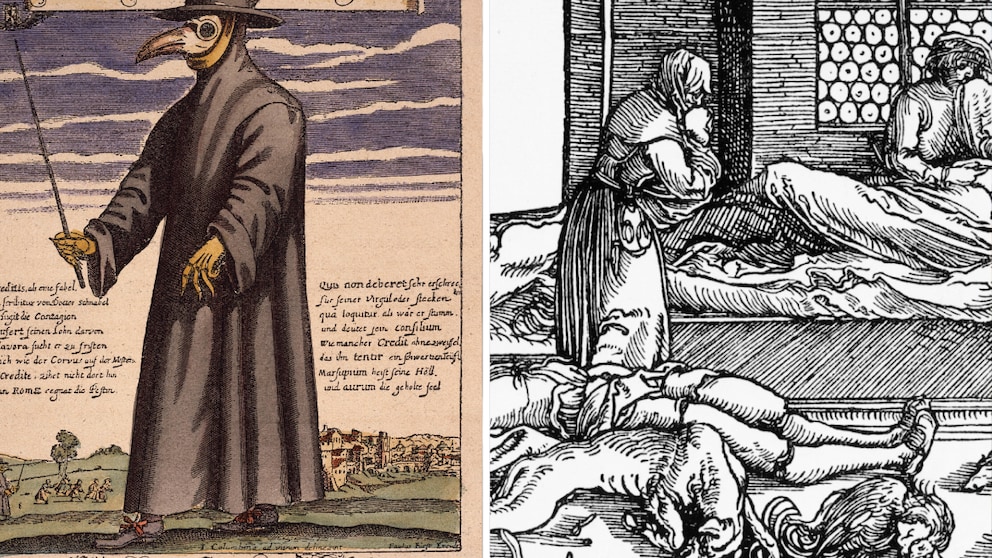
A creepy beak, old masks, two holes to look through—the old plague masks worn by doctors in the 17th century to treat the sick remind one of a horror film. It is considered a disease from long-gone times—something that disappeared with the Middle Ages. But now a case in the U.S. is making headlines: In California, a person apparently contracted the plague while camping from the bite of an infected flea. How widespread is it today—and could something like this happen in Germany?
Current Case in California–Infection While Camping
A case of plague has been confirmed in the South Lake Tahoe region of California. According to local health authorities, the affected person is believed to have been infected by a flea bite while camping. The infected person is currently under medical supervision at home.1
What Exactly Is the Plague?
The bacterium Yersinia pestis primarily infects wild rodents such as rats, squirrels, and marmots. These animals usually do not die from it, but carry the pathogen for a long time. In most cases, the plague is transmitted by fleas: They become infected while feeding on the blood of a sick animal and can then transmit it to other animals or humans with their next bite. Thus, flea bites are among the most common ways it is spread—especially in affected areas.2
How the Plague Tricks the Immune System
Yersinia pestis is not only highly contagious but also has a particularly insidious trait: It can specifically undermine certain immune system defense cells—called phagocytes. These cells are actually responsible for “swallowing” and neutralizing pathogens. However, the plague bacterium survives this process, even multiplying within the defense cells, thereby deliberately weakening the immune response. This makes the infection particularly dangerous and explains its high mortality rate—especially if left untreated.
How Is the Plague Transmitted?
The plague is caused by the bacterium Yersinia pestis, which primarily infects wild rodents like rats, marmots, and squirrels. These animals usually do not die from the infection but carry the bacterium for a long time, serving as a reservoir.
Fleas as Main Transmitters
The pathogen is most commonly transmitted via fleas. These become infected while feeding on the blood of sick animals and pass the pathogen on to other animals or humans with their next bite. In regions where Yersinia pestis occurs, flea bites are thus one of the central transmission routes.
Risk from Contact with Infected Animals
In addition to transmission by fleas, the infection can also occur directly from animal to human—for example, through the bite of an infected cat or when skinning and butchering diseased game. If body fluids enter open skin wounds, there is a risk of infection.
Human-to-Human Transmission Possible
In certain forms, the plague can also be transmitted from person to person, such as when infectious body secretions from burst buboes come into contact with the skin. Pneumonic plague is particularly dangerous—here, it can be transmitted through droplet infection. When coughing or sneezing, tiny pathogen particles are released into the air and can be inhaled by others. This allows the plague to spread quickly over short distances.
No Acute Risk in Europe
According to the Federal Office of Public Health, the plague is considered eradicated in Europe today. There is currently no danger from native wild or domestic animals.3
The Three Forms of the Plague
The plague can spread in different ways in the body. Doctors distinguish three main forms:
Bubonic Plague
Bubonic plague is the most common form of the disease and usually begins abruptly with high fever, chills, severe headaches, body aches, and a strong general feeling of illness. Characteristic are painful, swollen lymph nodes—typically in the groin, armpits, or neck. These so-called “buboes” can turn blue and become necrotic. Without treatment, there is a risk that bubonic plague will progress to septicemic plague.
Septicemic Plague
In septicemic plague, the pathogens enter the bloodstream and cause a life-threatening blood poisoning. The health condition deteriorates rapidly: Typical symptoms include high fever, severe lethargy, confusion, circulatory collapse, damage to internal organs, and shock states. This particularly severe form usually develops as a result of untreated bubonic or pneumonic plague.
Pneumonic Plague
Pneumonic plague arises either directly through droplet infection or develops as a complication of existing bubonic plague. Symptoms usually appear within 24 hours and include fever, severe headaches, shortness of breath, bloody cough, chest pain, and a pronounced feeling of weakness. Nausea, vomiting, and abdominal pain are often added. Patients are considered highly infectious—without immediate medical treatment, pneumonic plague is almost always fatal.
Incubation Period and Course
The time between infection and the first symptoms is only one to two days for pneumonic plague, and up to six days for bubonic plague.
If the infection is detected and treated early, most patients survive. With therapy, the mortality rate for bubonic plague is about 10 to 15 percent. Without treatment, 40 to 60 percent of those affected die—for pneumonic plague and septicemic plague, the lethality is up to 90 percent if untreated.
How Is the Plague Treated?
In the Middle Ages, the plague was a death sentence—today, there are effective treatment options. Therapy is carried out with antibiotics. The drug of choice is streptomycin, which is administered intramuscularly. Gentamicin, doxycycline, tetracycline, ciprofloxacin, ofloxacin, and chloramphenicol are also considered effective.
Time is crucial: To prevent severe complications like septicemic plague, treatment should begin within the first 18 hours after the onset of symptoms. In cases of suspected pneumonic plague, antibiotics are administered immediately—even before laboratory confirmation. Patients are isolated to prevent further spread.
Despite treatment, people still die from the plague today—especially if the diagnosis is made too late, the pathogen does not respond to the antibiotic, or the immune system is weakened.
Historical Background: The Black Death
The plague was one of the most devastating epidemics in human history. In the Middle Ages, it claimed an estimated over 100 million lives during several pandemics. The name “Black Death” comes from the dark discolorations of the skin that appeared in many patients in the final stages.
For a long time, the cause of the disease was unknown. It was not until the late 19th century that Yersinia pestis was identified as the cause—a milestone in the fight against epidemics. Since then, targeted diagnostics and therapy have been possible.4
Worldwide Distribution: Where Are There Still Cases?
The World Health Organization (WHO) recorded 3,248 plague cases worldwide between 2010 and 2015, with 584 deaths. The number of unreported cases is likely much higher—over 80 percent of known cases come from Africa, where many countries do not fully report plague infections.5
The plague is currently found in certain endemic areas—primarily in:
- Madagascar
- Peru
- Democratic Republic of the Congo
Cases also occur less frequently in the following countries:
- Vietnam
- Zimbabwe
- Mozambique
- Uganda
- Tanzania
- Malawi
- India
- USA (particularly in the rural West)
- China

How Dangerous Is Tularemia for Humans?

Is the Risk of a Bird Flu Pandemic Increasing? This Is What an Expert Says
Is There a Danger for Germany?
According to the Robert Koch Institute, there is currently no significant risk for Germany. There are no animal reservoirs of the pathogen in this country, and no cases have been introduced by travelers in recent decades.6
While it cannot be ruled out that an infected person might enter during the incubation period, the likelihood of further spread is extremely low. In the event of an infection, effective containment measures would be immediately available.
How Can an Infection Be Prevented?
Currently, no vaccine against the plague is approved worldwide. However, in contact with people suffering from it, an antibiotic can be administered prophylactically to prevent infection.
Travelers should avoid contact with potentially infected animals in countries where cases occur—especially with rats and other rodents. Stray cats that may have eaten infected prey can also pose a risk.
Important protective measures in endemic areas include:
- wearing body-covering clothing
- applying insect repellents against fleas
- avoiding direct contact with dead or sick animals
- practicing careful hygiene when camping, hunting, or working outdoors
If flu-like symptoms appear after returning, travelers should seek medical help immediately. Additionally, the following measures help to deter rodents and prevent flea bites:
- wearing gloves when handling potentially infected animals, such as when skinning
- using insect repellents like DEET when there is possible contact with rodent fleas–such as when camping, hiking, or working outdoors
- controlling fleas on pets with appropriate products
- pets that roam freely in affected areas should not sleep in human beds
- removing potential rodent hiding places near homes–such as underbrush, gravel piles, scrap metal, woodpiles, or openly stored food7