

August 5, 2025, 4:49 pm | Read time: 2 minutes
The joy of a piercing can quickly fade if the skin doesn’t heal properly. In some cases, the skin around a piercing starts to grow excessively—this is known as “proud flesh.” A specialist explains how this happens and what can be done about it.
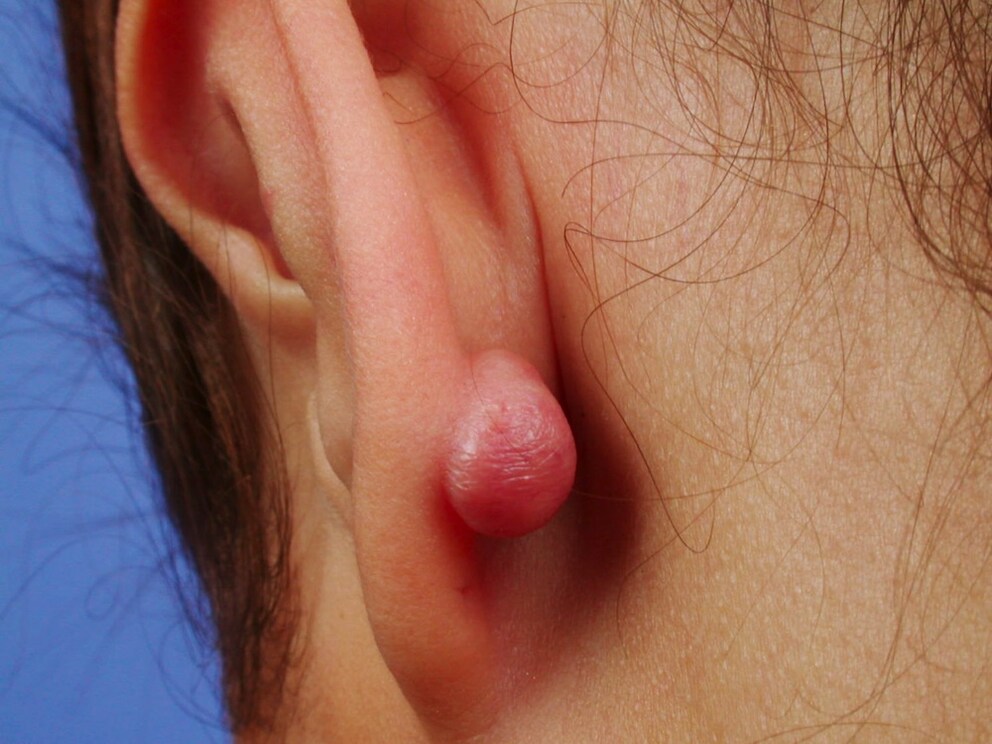
Proud flesh is the colloquial term for the medical word keloid. Generally, it refers to tissue overgrowth. “This means that the skin in that area is open. The upper layers of skin cells are missing,” explains Dr. Alice Martin, a dermatologist and co-founder of the telemedicine practice Dermanostic. If the skin around the piercing becomes irritated, this so-called proud flesh can develop. Dr. Martin illustrates this with an example: “With a belly button piercing, a pants button can exert significant pressure on the piercing and thus on the skin. Then, with walking, friction is added, and an open area can quickly form.”
Properly Preventing Proud Flesh
This means, conversely, that any form of friction and irritation on the piercing should be avoided. “Some people also like to play with their piercing, twist it—but that can also lead to pressure, friction, and open areas,” warns the dermatologist. It’s also important to regularly disinfect and care for the skin around the piercing. If you notice that the skin is reacting sensitively, you should remove the piercing temporarily or replace it with another. Sometimes the size of a piercing can cause unfavorable friction.

Small Pimples on the Buttocks–What Helps Against “Buttne”?

What Helps with Sagging Earlobes?
Are Skin Overgrowths Dangerous?
While proud flesh may sound unpleasant, it is mostly harmless. The skin can heal on its own, but it usually doesn’t fully revert. “It becomes dangerous if an infection occurs,” says Dr. Alice Martin. “That would need to be treated with antibiotics.”
What Helps Against Proud Flesh?
If someone is bothered by the overgrowth for purely cosmetic reasons, they can take action. “It can be removed—surgically or by injecting cortisone,” explains the dermatologist. Health insurance usually covers the costs. However, this must be clarified on a case-by-case basis. “The cause was ultimately self-induced by the piercing, but of course, none of the patients did it intentionally,” says Dr. Martin.
It is also possible that one has a genetic predisposition for proud flesh. Some people’s skin tends to form keloids when injured. “In that case, the proud flesh reappears despite surgery,” explains the specialist.