


July 25, 2025, 12:02 pm | Read time: 5 minutes
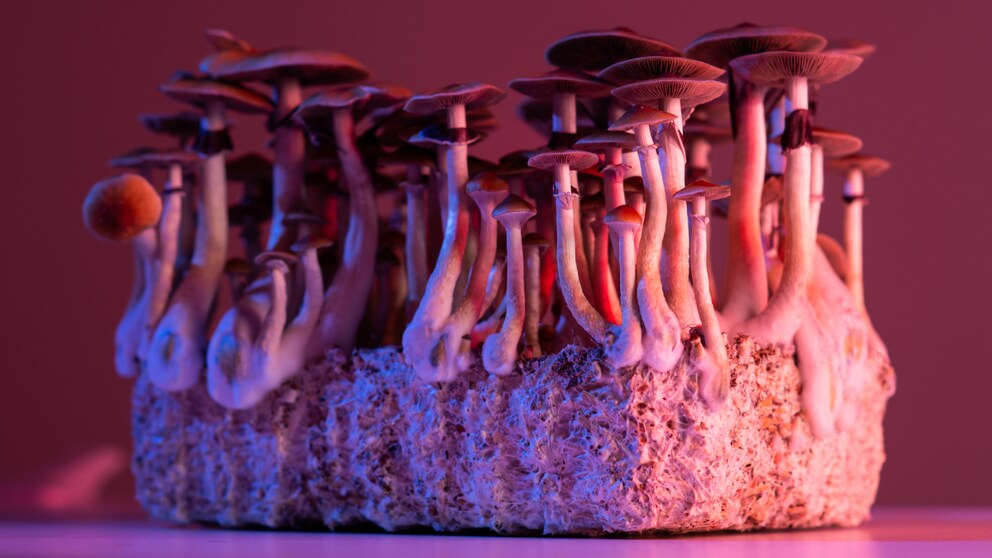
Psilocybin–known to many as the hallucinogenic compound in “magic mushrooms”–often appears in films depicting psychedelic trips with vibrant colors and visual patterns. But what few realize is that psilocybin could also be a key to longevity, meaning a longer, healthier life. A new study shows that the substance not only expands consciousness but can also slow the aging process.
Follow the FITBOOK channel on WhatsApp now!
Psilocybin is a natural compound found primarily in the mushroom genus Psilocybe. Traditionally, its effects on psychiatric and neurodegenerative disorders have been the focus of research. Psilocybin has already shown long-lasting effects after a single application, such as in depression.1 The U.S. Food and Drug Administration (FDA) has even granted psilocybin “Breakthrough Therapy” status, allowing clinical studies on psilocybin-assisted therapy for depression to be reviewed in an accelerated process.2 The study authors hope for approval by 2027 if results are positive.
How Far Does the Spectrum of Psilocybin’s Effects Reach?
In the psychiatric field, psilocybin already has a foothold, but how does the psychedelic substance work outside the nervous system? Some scientific hypotheses, such as the “Psilocybin-Telomere Hypothesis,” suggest that psilocybin could have positive longevity effects by influencing biological age markers like telomeres. Telomeres are the protective caps of our chromosomes that shorten with age–a sign of aging. However, experimental data supporting this connection has been lacking.
The current study aimed to investigate for the first time the direct effects of psilocybin (or its active metabolite psilocin) on cell aging and survival.3
Also interesting: Cannabis or Alcohol–Which Is More Harmful to Health?
Study Conducted in Two Parts
Scientists from Emory University and Baylor College of Medicine conducted the study in two parts: laboratory experiments with cells and a long-term study on mice.
In the cell study, human lung and skin fibroblasts–connective tissue cells–were continuously treated with psilocin. Researchers tested two concentrations (ten and 100 micromoles) and observed the cells until natural aging (“senescence”). They examined classic aging markers such as telomere length, cell division rate, oxidative stress markers, and the protein SIRT1, which plays a central role in regulating aging processes.
In the animal model, scientists chose 19-month-old mice, roughly equivalent to 60 to 65 human years, to evaluate the therapeutic potential as a clinically relevant anti-aging intervention. The dosage was based on clinical data: first a low dose (five milligrams per kilogram), then monthly 15 milligrams per kilogram over ten months. Some animals received a placebo for control. The goal was to record survival rates and visible aging signs like coat changes. All animals were euthanized after exactly ten months–when the control group reached median survival time–to compare the data.
Psilocybin as a Potential Longevity Agent
The results show significant anti-aging effects of psilocin and psilocybin in both study parts.
In the cell experiments, psilocin significantly extended the lifespan of human cells. At a dose of ten micromoles, lifespan increased by 29 percent. At 100 micromoles, the life-extending effect was even 57 percent. Treated cells showed reduced aging signs, including increased activity of SIRT1, a “longevity protein.” Oxidative stress–a key driver of aging–was also reduced. Crucially, the impact on telomeres was significant. Their length remained intact in psilocin-treated cells, while it was significantly shortened in controls.
The mouse model provided equally impressive findings. After ten months of treatment, 80 percent of the psilocybin mice survived, compared to only 50 percent in the control group. In other words, the survival rate of treated mice was 30 percent higher than that of control mice. Additionally, treated animals showed a healthier physical appearance. They had better coat quality, fewer gray hairs, and regrowing hair.
Significance of the Results
This study provides the first experimental evidence that psilocybin can slow cell aging processes and increase lifespan.
Scientifically significant is the influence on telomeres, oxidative stress, and the activation of the SIRT1 protein. These mechanisms are among the recognized “hallmarks of aging”–central features of aging–and could explain why psilocybin shows such long-term therapeutic effects in studies.
Particularly exciting is that the positive effects occurred even when treatment began in “old age.” In the future, psilocybin could be used as a potential anti-aging therapeutic in later life. This makes psilocybin potentially interesting for other age-related diseases like Alzheimer’s.
Safety seems assured: The dosage used was based on clinical studies with older adults, where no severe side effects occurred.

In These Individuals, Drinking Three to Four Cups of Coffee Daily Slows Biological Aging

Certain forms of intermittent fasting can prolong life
Study Evaluation
The study impresses with its solid, two-stage design. The results are statistically significant, methodologically comprehensible, and suggest a systemic longevity effect of psilocybin.
However, there are limitations. Only female mice were used, so gender-specific effects remain unclear. Also, the maximum lifespan was not investigated, only survival after ten months. Long-term effects like a possible cancer risk with delayed cell aging still need to be examined–although no indications of tumor formation have been found so far.
Another point is the regulatory hurdle. Psilocybin remains a strictly controlled substance in many places. Despite growing clinical evidence, large-scale studies on systemic effects are still lacking.
Potential for More Quality of Life–Even in Old Age
The study concludes that psilocybin has the potential to revolutionize anti-aging therapies and could be an effective therapeutic for an aging population–even though clinical human studies are still in the future. Dr. Ali John Zarrabi, co-author of the study and head of psychedelic research at the psychiatric department of Emory University, emphasizes the potential in a press release: “This study provides strong preclinical evidence that psilocybin can contribute to healthier aging–not just to a longer lifespan, but also to better quality of life in old age. As a palliative care physician and scientist, one of my greatest concerns is life extension at the expense of dignity and functionality. But these mice not only lived longer–they aged better.”