


March 22, 2026, 7:27 am | Read time: 4 minutes
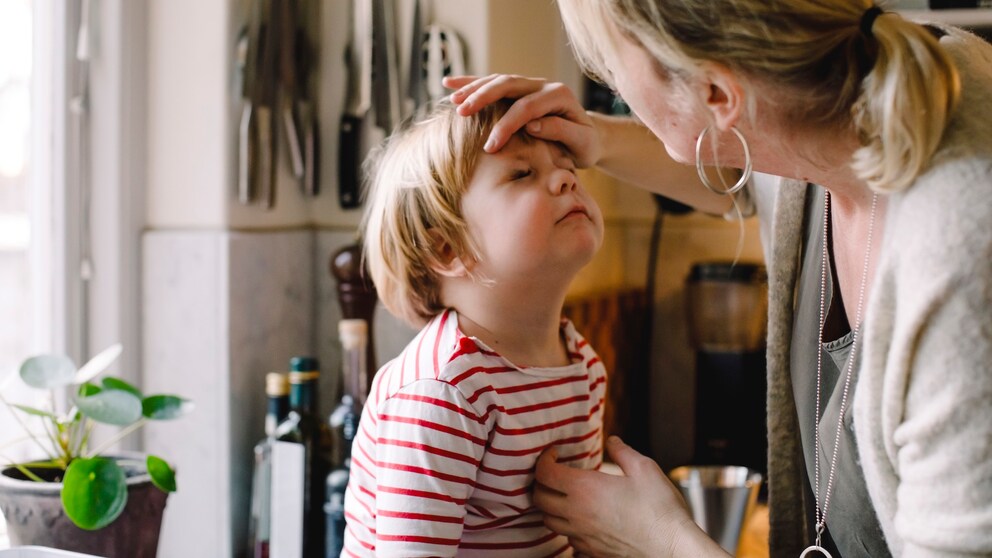
The edge of the table is out of sight, a turn—bam! Toddlers often bump their heads. But how severe was the impact? A simple test helps children and parents assess whether a concussion has occurred.
Concussion in Children–Symptoms
Because young children have little awareness of danger, concussions are particularly common among them. According to the German Society for Pediatric Surgery (DGKCH), the symptoms of a concussion can differ between infants and older children. In infants, the signs are often harder to detect. Possible symptoms include:
- vomiting
- excessive fatigue
- and behavioral changes.
Since infants cannot express typical complaints like headaches, extra caution is necessary. Older children, on the other hand, more often show clear signs such as headaches, nausea, or vomiting.
Does My Child Have a Concussion? The KEKS Test Helps Parents
The problem is that young children often cannot express themselves well, making it difficult for parents to recognize and assess concussion symptoms. To accurately evaluate a child’s health after a head bump, experts from the LMU Klinikum Munich and the ZNS Foundation–Aid for People with Traumatic Brain Injury developed the so-called KEKS test.1
The KEKS test includes the most important complaints that may indicate a concussion after a head injury.
The individual letters stand for:
- K stands for “Kopf” (head). Headaches, dizziness, and nausea are signs of a concussion.
- E stands for “Empfindlichkeit” (sensitivity): Bad mood, irritability, and sensitivity to light and noise are typical symptoms.
- K stands for “Konzentration” (concentration): Forgetfulness, a feeling of being dazed, and general concentration problems are warning signs.
- S stands for “Schlaf” (sleep): More tired than usual—and somehow exhausted? Poorer sleep after a head injury can also indicate a concussion.
If one or more of these symptoms appear after a head injury, it suggests a concussion. In that case, see a doctor promptly.
What to Do if You Can Stay Home
“Physical and mental rest are crucial, and activities like screen time or loud, stimulating stimuli should be avoided. At least 24 to 48 hours of rest are necessary before the child resumes normal activities,” says Dr. Peter Zimmermann, a pediatric surgery senior physician at the University Hospital Leipzig, as quoted on the website of the Professional Association of German Surgeons (BDC).2

Pneumonia: What to Watch for in Children
What Parents Should Know About the Vaccination Schedule
What Happens During a Concussion
The brain is well-protected in the skull and surrounded by fluid that shields it from minor bumps against the skull bone. However, a harder, usually dull blow to the head—such as from a fall or, more commonly, in contact sports like boxing, soccer, football, or ice hockey—can cause the brain to hit the skull bone. This results in a concussion—the mildest and by far the most common form of traumatic brain injury (known as commotio cerebri).
Tips for Parents to Prevent Concussions
According to the German Society for Pediatric and Adolescent Surgery, about 50,000 to 60,000 children suffer a traumatic brain injury or concussion each year. Most of these cases are mild. In about five to ten percent of cases, treatment in a clinic is required.
How parents can act preventively to avoid falls in infants and children is explained by pediatric surgeon Peter Zimmermann on the BDC website. In the home, …
- install safety gates on stairs and windows
- pad furniture edges
- and eliminate tripping hazards.
“Babies and toddlers should never be left unattended on elevated surfaces like changing tables or beds. Outdoors, wearing a helmet during activities like cycling or skateboarding is essential. On playgrounds, parents should ensure safe play equipment and adherence to play rules,” Zimmermann is quoted as saying. The use of age-appropriate child seats in cars is also an important safety measure.