

March 10, 2025, 2:42 am | Read time: 7 minutes
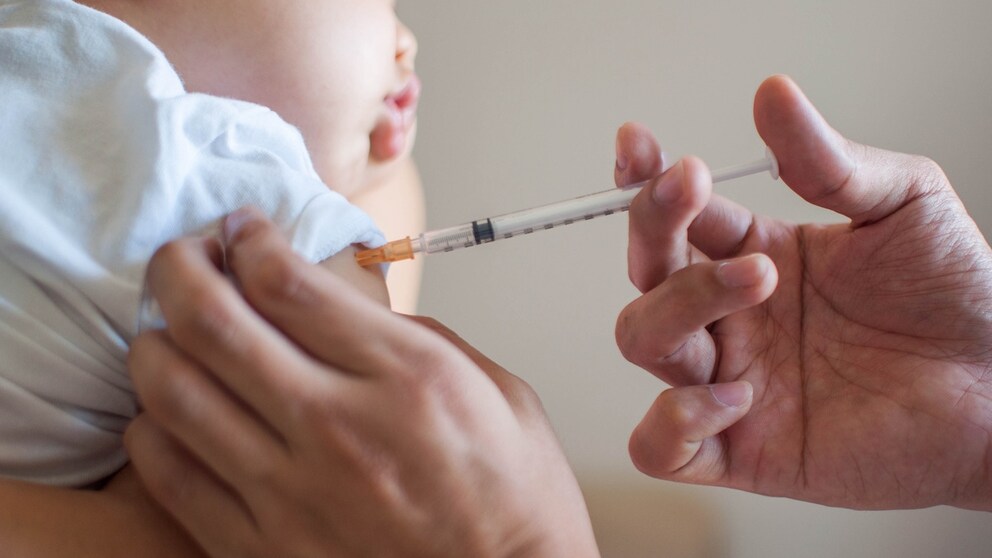
Just a few days after birth, it can become a topic: the vaccination schedule. But how binding is it, and where do the recommendations come from? FITBOOK author Sabine Winkler consulted experts at the Federal Institute for Public Health and reveals which diseases you should vaccinate against according to the recommendations of the Standing Committee on Vaccination (STIKO) and, most importantly, why.
Pro or con vaccination? As early as the U2 examination between the third and tenth day of a newborn’s life, parents may find themselves confronted with this essential question. To help them find information and make decisions, they often receive the so-called vaccination schedule from the Standing Committee on Vaccination (STIKO) at the Robert Koch Institute. This schedule provides parents with all the vaccination recommendations to ensure their children are protected against most dangerous childhood diseases.1 But where do these recommendations come from, and what should be considered? Dr. Christoph Peter, head of the Department of Infection Protection, Risk, and Crisis Management at the Federal Institute for Public Health, can explain.
Overview
- What Exactly Is the Vaccination Schedule?
- Effective Protection: Why Vaccinations Are So Important for Children
- Vaccination Protection: Recommendations for Children Up to Twelve Years
- Measles, Rubella, and More: Which Vaccinations Are Mandatory and Which Are Voluntary
- What Happens If Parents Miss a Vaccination
- Risks and Effectiveness of Vaccines
- Sources
What Exactly Is the Vaccination Schedule?
Also known as the vaccination plan, the table lists most vaccinations recommended by STIKO, an independent panel of experts, for each age group. It is updated annually because the occurrence of infectious diseases fluctuates yearly. “Some diseases occur more frequently, others become rarer,” explains Dr. Peter. Additionally, new vaccines are continuously developed. “Vaccination recommendations consider both the individual benefit for vaccinated persons and the benefit for the entire population,” says the head of the Department of Infection Protection, Risk, and Crisis Management at the Federal Institute for Public Health.
The recommended age for vaccinations depends on two factors: the pathogen you want to protect against and the vaccine itself. Some vaccinations require multiple doses to achieve basic immunization. Parents can easily lose track, which is why experts developed the vaccination schedule.
Effective Protection: Why Vaccinations Are So Important for Children
“Infectious diseases, such as measles, whooping cough, or mumps, are highly contagious, can spread very quickly, and have severe consequences,” says Dr. Peter. For example, a measles infection can lead to a severe brain inflammation as a complication, which can be life-threatening. Therefore, vaccination recommendations are crucial to establish early protection against the most important infectious diseases, according to the expert.
The best way to achieve this is if basic immunization occurs in early childhood. However, diseases that have become rare in this country still pose a serious threat. “Viruses and bacteria know no borders,” Dr. Peter clarifies. There is always a risk that these diseases will return to us. “Vaccination is the best protection here as well,” the vaccination expert asserts.
Vaccination Protection: Recommendations for Children Up to Twelve Years
For infants and young children, the STIKO vaccination schedule lists vaccinations against RSV, rotaviruses, tetanus, diphtheria, whooping cough (pertussis), Haemophilus influenzae type b, polio, hepatitis B, pneumococci, meningococci B and C, measles, mumps, rubella, and varicella, which can cause chickenpox.
For children up to twelve years, in addition to booster vaccinations for tetanus, diphtheria, whooping cough, and polio, the HPV vaccination is recommended.2 Human papillomaviruses (HPV) enter the body mainly through tiny injuries in the skin or mucous membranes. Transmission of HP viruses most commonly occurs during sexual contact. Therefore, vaccination at the recommended time (from the age of nine) is crucial–incidentally, the vaccine is recommended equally for boys and girls and should be administered by the 14th birthday.
If you’re worried that this is quite a lot of vaccinations, Dr. Peter can reassure you: “Through combination vaccines, such as the six-in-one vaccine against diphtheria, tetanus, polio (poliomyelitis), Haemophilus influenzae type b (Hib), whooping cough (pertussis), and hepatitis B, many vaccinations can now be administered simultaneously.” Here you can find the current STIKO vaccination schedule for 2025.
Also interesting: Which Medicinal Teas Are Suitable for Children
Measles, Rubella, and More: Which Vaccinations Are Mandatory and Which Are Voluntary
Currently, there is only one disease for which vaccination is mandatory, and only under certain circumstances: measles.3,4 The measles vaccination is mandatory for children and adolescents if they attend community facilities such as daycare centers, certain forms of child day care, schools, and other educational institutions where mostly minors are cared for. They must prove sufficient protection against measles. This requirement applies even to children who are cared for in a children’s home from four weeks of age.
The law has been in effect since March 1, 2020. Individuals who cannot provide sufficient proof of measles protection are not allowed to work in the affected facilities. Children without measles vaccination cannot be cared for there. Regardless of this, the legal obligation to attend school remains, and if a vaccination is missing, the responsible authority, usually the health department, will contact the parents.

These benefits are available to every child–but hardly anyone knows them all.
Tetanus Vaccination – When It Is Necessary and How It Protects
What Happens If Parents Miss a Vaccination
Primarily, this means the vaccination protection is incomplete and possibly not comprehensive.5 This means your child could potentially contract measles, chickenpox, or polio. Missed vaccinations should be caught up as soon as possible, advises Dr. Peter. There are usually no excessively large gaps between vaccinations. Generally, even if basic immunization has been interrupted for many years, the vaccination series does not need to be restarted. “Every vaccination counts!” emphasizes the department head.
However, there are no legal consequences, except for the measles vaccination, if your child attends a care or educational facility. If parents violate this, it is at the discretion of the respective responsible authority whether to impose a fine.
Risks and Effectiveness of Vaccines
“A secure vaccination protection exists when a vaccination is fully administered,” explains Dr. Christoph Peter. This is the case when a person has received all necessary vaccine doses at the specified intervals.6 “In pediatric and general medical practices, vaccinations are usually administered according to the schedule recommended by STIKO, which meets international standards,” he adds. Some vaccinations also need to be refreshed in adolescence and adulthood.
Vaccination complications are rare today but can never be completely ruled out. “In Germany, there is a comprehensive monitoring system that records complications that are more severe than usual,” says the health expert. Any suspicion of an unusual vaccination reaction is carefully analyzed and investigated through a legally regulated reporting system. The Paul-Ehrlich-Institute (PEI) is responsible for this. Mild vaccination reactions, such as redness or swelling at the injection site or mild fever, headache, and body aches, are not a cause for alarm and should be initially observed. These general symptoms indicate that the body is responding to the vaccine. “Such vaccination reactions are harmless and subside after a few days,” says Dr. Peter. “In case of doubt, however, you should always consult a doctor.”
You can view the complete STIKO vaccination schedule on the website at this link: Vaccination Schedule 2025. Alternatively, you can order a flyer with all the information from the Federal Institute for Public Health. The Federal Institute for Public Health also offers further general information on vaccination and infection protection on the homepage impfen-info.de.