

October 7, 2019, 2:33 pm | Read time: 3 minutes
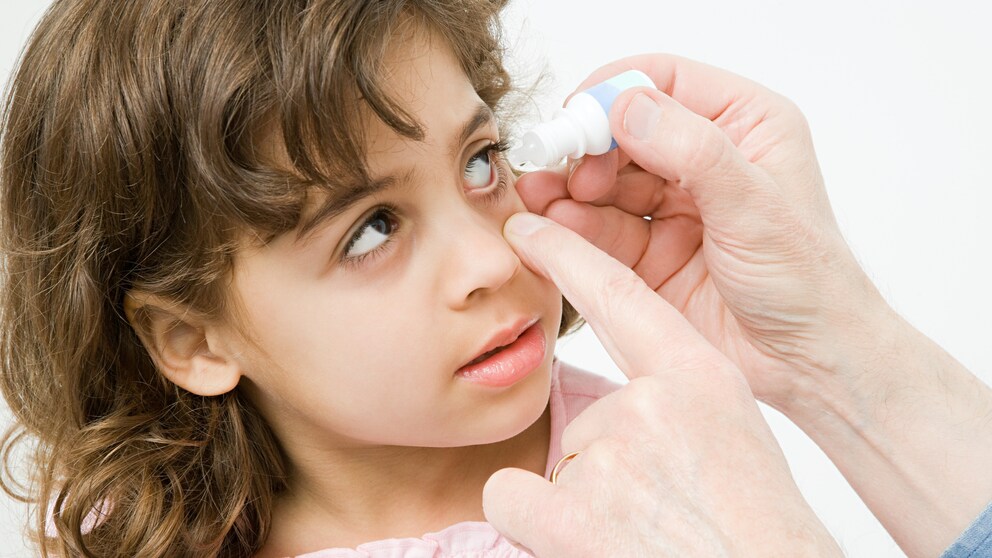
Large studies have shown that eye drops containing a compound from the belladonna plant can slow the progression of myopia, or nearsightedness, in children. And this is possible without side effects–if the concentration is right.
When children start school and need to read important information on the board, they often see: nothing. Nearsightedness (myopia) typically begins in elementary school, and by the end of this period, nearly 15 percent of children in Germany develop nearsightedness, according to the German Ophthalmological Society (DOG) in a press release. It also states that eye drops can help with childhood nearsightedness. This has now been confirmed by large and significant studies from Asia.
What the Studies Found
To halt nearsightedness, the DOG generally recommends two hours outdoors daily and reading with sufficient distance. However, the most effective treatment has been a therapy with special eye drops. Specifically, those containing the active ingredient atropine (a substance from the belladonna plant) in a very low concentration (0.01 percent). For more than 100 years, atropine has been said to halt nearsightedness, but “due to its side effects (glare and near vision impairment), atropine drops were rarely prescribed for this purpose,” explains Professor Dr. Wolf Lagrèze from the Department of Ophthalmology at the University Medical Center Freiburg.
This has since changed, as researchers from Singapore have found a concentration that can reduce the progression of nearsightedness by up to 50 percent without serious side effects. “Mild sensitivity to glare and near vision impairment completely resolve upon discontinuation, so no harm is done,” adds Prof. Lagrèze.
Since the first studies on the effectiveness of low-dose atropine eye drops were published, they have been increasingly used by many ophthalmologists in clinics and practices in Germany.

Surprising Effect of Smoking on This Organ
Eye Cancer in Children – a Noticeable Sign Indicates Illness
How the Drops Are Administered
Children aged six to 14, whose nearsightedness increases by half a diopter or more each year, are candidates for atropine therapy. “Parents administer one drop in each eye before bedtime,” explains Lagrèze. Involuntary blinking ensures good distribution of the active ingredient. It is also important to use a drop preparation without preservatives, the expert emphasizes.
Also of interest: If you experience these symptoms, see an ophthalmologist immediately
Important: The ophthalmologist must inform parents that this type of treatment is considered an off-label use–meaning it is not officially approved for nearsightedness. “After two years of therapy, the ophthalmologist decides whether the treatment should continue,” says Lagrèze.
Halting Nearsightedness Early
Those who become nearsighted face not only inconveniences and obstacles in daily life but are also at risk: “Nearsightedness, along with age, is the main risk factor for serious eye diseases such as glaucoma and cataracts, or even retinal detachment. Therefore, it is highly desirable to slow the progression of nearsightedness during its onset,” explains Professor Dr. Claus Cursiefen, president of the DOG, and adds: “The earlier nearsightedness begins, the more severe it will be in adulthood–another reason for early intervention.”
As the DOG further reports, a treatment study is currently being planned in Germany to demonstrate that atropine eye drops are just as effective in a non-Asian population.