


January 25, 2025, 5:02 pm | Read time: 9 minutes
Vacation in the sun–fun in the snow! Of course, you apply sunscreen to avoid sunburn. But many people are unaware that the eyes can also be damaged by the sun: Too much sun can lead to photokeratitis, or snow blindness. FITBOOK provides all the important information about this painful eye inflammation.
The eyes itch, it feels like sandpaper when you blink, and please, no lights! Some call these symptoms “flashed” when the eyes burn and itch like crazy after a sunny day at the beach or on the ski slopes. But this phenomenon has nothing to do with flashes: It’s snow blindness.
Follow the FITBOOK channel on WhatsApp now!
Overview
What is snow blindness?
Not only can the skin get sunburned, but the eyes can too. Snow blindness is literally “a sunburn in the eye,” more precisely on the cornea. The cornea is the clear layer at the front of the eye–essentially the shield. If it receives too much UV radiation, it becomes inflamed. The medical term for snow blindness is “photokeratitis,” which means “light-induced inflammation of the cornea of the eyes.” This inflammation leads to light sensitivity, burning eyes, redness, and vision disturbances.1
Snow blindness should not be confused with sunstroke: Sunstroke is not caused by UV rays but occurs when the meninges in the head and cervical spine become increasingly warm due to sun exposure. This overheating leads to increased intracranial pressure, severe headaches, nausea, fever, dizziness, and ringing in the ears–these inflammatory reactions affect the entire body. Snow blindness, on the other hand, only affects the eyes.2
Also interesting: Chickenpox–symptoms, contagion, and why vaccination is so important
How snow blindness occurs
Snow blindness occurs when the eyes are exposed to intense UV radiation. UV light is more energetic than visible light and infrared light–and also more harmful to the cornea and retina. That’s why children are taught not to look directly at the sun. Special glasses are also used during a solar eclipse for this reason.
On vacation at the beach or on a trip to the mountains, the harmful UV impact on the eyes is often overlooked. In Central Europe, you can easily spend time outdoors without sunglasses. For one, the eyes have protective mechanisms for “normal” summer sunlight: eyebrows, blinking, squinting, and pupils that constrict. Additionally, the familiar environment “absorbs” most of the light. Buildings or surrounding mountains cast shadows, and green spaces absorb almost 95 percent of the incoming light.
But in snow-covered mountains and at the sea, this changes: Snow and ice absorb only five percent of the light and reflect up to 95 percent back. Sand and water are also highly reflective surfaces. Clouds can also be a problem: They reflect light back to the Earth’s surface. The highest UV exposure occurs with light cloud cover when the horizon is visible and the ground surface is highly reflective. The eyes then quickly receive a large amount of UV light for which they have no protection. You get “flashed.”3
Discoverer of snow blindness
As early as 1910, Edward Atkinson, a doctor on an expedition to the South Pole with the famous explorer Robert Scott, complained that he had red, burning eyes after just 15 minutes the next day. At the North and South Poles, the reflective surfaces are compounded by the fact that the protective Earth’s atmosphere is thinner there–allowing even more dangerous UV radiation to reach the Earth.4
Special caution is advised in the following cases
- On open water surfaces (such as on a boat or during water sports) and on frozen lakes
- On glaciers and in the snow. In addition to strong light reflection in the snow, UV intensity increases with every meter of altitude: up to 20 percent per 1,000 meters.
- On bright sandy beaches and dunes.
Snow blindness can also be caused by artificial light: A study reports a theater performance in Istanbul where four children became snow blind–powerful spotlights were used during the performance.5 In the UK, several people had to visit the emergency room of an eye clinic after replacing the lamps in their home aquariums. The lamps had a high UV-C radiation content and were used for disinfection. You can also get flashed in a tanning bed or during certain activities (such as welding).6
Symptoms that occur
The common issue is that, like a sunburn on the skin, photokeratitis is usually only noticed once the damage has occurred–often not until the next day. Typical complaints include:
- Painful, swollen eyes: It feels like having sand in your eyes.
- Redness: The eyes are irritated and inflamed.
- Tearing: The eyes try to compensate for the irritation by increased tearing.
- Light sensitivity: Even dim light becomes uncomfortable.
- Vision disturbances: Blurred images, “halos” around light sources, incorrect color perception; in severe cases, vision may temporarily disappear completely.
The good news: The symptoms are usually temporary. After 24 to 48 hours, the cornea typically regenerates on its own, provided the eyes are rested.
What to do if you suspect snow blindness?
If your eyes hurt and burn, the first step is to protect them from further UV radiation as quickly as possible. So: Get indoors or at least into the shade, avoid light, and wear sunglasses if available. Contact lens wearers should remove their lenses. Then:
- Don’t rub: Even though it’s hard–rubbing only worsens the irritation.
- Cool: Place cold, damp cloths on the closed eyes.
- Relieve pain: Ibuprofen can alleviate the pain and reduce inflammation.
- Eye drops or ointments: Mild eye drops (artificial tears) or ointments can help soothe the cornea.
- No pain-relieving eye drops on your own!: Incorrect use can permanently damage the cornea.7
- See a doctor: If symptoms don’t improve after a day, you should definitely see an ophthalmologist–they can decide on further medication options.
An eye inflammation can also have other causes, such as an allergy or an infection with bacteria or viruses. A diagnosis using fluorescent eye drops can provide certainty.
What are the long-term effects of snow blindness?
Snow blindness usually heals without consequences. However, repeated UV damage to the eye can cause long-term problems, such as:8
- Cataracts (gray star): The lens becomes cloudy, leading to vision impairment. UV radiation increases the risk.
- Macular degeneration: This is a retinal disease where sharp vision declines with age. UV damage can accelerate this process.
- Pterygium (also: “surfer’s eye”): Conjunctival tissue grows over the cornea, clouding vision. The tissue must be removed surgically.
- Pinguecula (also: “lid fissure spot”): Another conjunctival growth–a gray-yellowish white spot or bump forms on the conjunctiva next to the cornea.
- Chronic UV exposure to the eyes is also associated with eye melanomas, eyelid skin cancer, and squamous cell carcinomas of the eye surface.
- Treatment sometimes requires the removal of the eye.
Why are children particularly at risk?
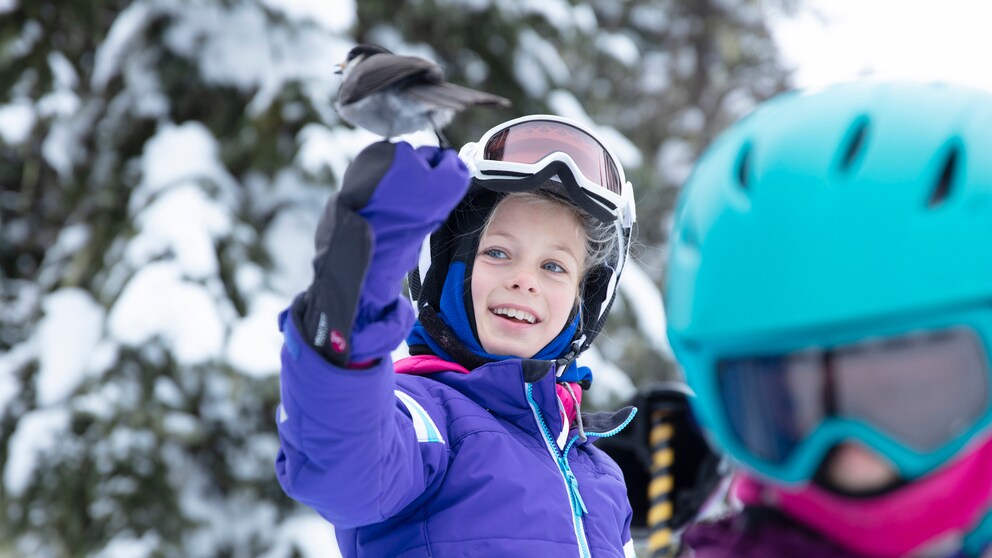
Children’s eyes are more sensitive to snow blindness and UV eye damage because their eyes’ natural protection is not fully developed: Their eyelids are thinner, and the lens in children allows 70 percent more UV rays to reach the retina than in adults. Just one day without adequate protection can cause irreversible eye damage. Additionally, children are often closer to reflective surfaces for longer periods–whether building snowmen, sledding, or playing by the water. Children receive three times as much UV radiation per year as adults! Many children don’t voluntarily wear sunglasses or ski goggles, either out of convenience or ignorance of their importance. According to a 2023 survey, only one in five children wears sunglasses when spending more than ten minutes in the sun.9

Good Sun Protection for Children’s Eyes: What Parents Need to Know

Can you also get sunburnt underwater?
How can you prevent snow blindness?
Once your eyes are “flashed,” there’s little you can do about the pain and visual impairments. Prevention is therefore key.
Good sunglasses
The glasses must offer at least 99 percent UV-A and UV-B protection and fit snugly against the face. Glasses with side protection are ideal. Expensive glasses aren’t always the best, but counterfeit brand frames or cheap market stalls are not a good idea.
Lens replacement
There are also contact lenses that block 98 percent of UV-B and 85 percent of UV-A radiation.
Head covering
Baseball caps, wide-brimmed hats, or hoods help shade the eyes. There are also helmets with a prominent visor for skiing.
Protection when welding
Anyone welding should definitely get a special protective helmet.
Time limitation
During midday, when UV radiation is strongest, it’s better to go indoors.
Sun and rain umbrella
Take a sun or rain umbrella on walks in bright light. It may seem odd to us, but in Asia, for example, it’s already quite normal.
Don’t look
Don’t look at the sun through a camera or binoculars.
Be a good example
Studies on UV protection in children suggest that children whose parents set a good example in terms of UV protection are also more likely to pay attention to it themselves.
How to choose the right glasses for children?
A good children’s sunglasses should:
- Provide UV protection: 100 percent UV-A and UV-B protection is mandatory.
- Be durable: Children’s glasses need to withstand a lot. Materials like polycarbonate are ideal.
- Fit comfortably: The glasses shouldn’t pinch or slip.
- Look cool: The cooler the glasses, the more likely they are to become part of everyday life.
Polarized lenses are a bonus, as they further reduce glare. For skiing, glasses with anti-fog coating are a good choice–otherwise, they tend to be removed when the view inside becomes cloudy.